
Reviewed by Larry Forman, Attorney.
Kentucky is a no-fault state for the first $10,000 of medical bills and lost wages, but fault still matters a great deal. It decides who pays for everything beyond PIP, including pain and suffering, and how much. Here is how fault is determined and actually decided after a Kentucky crash.
Key takeaways
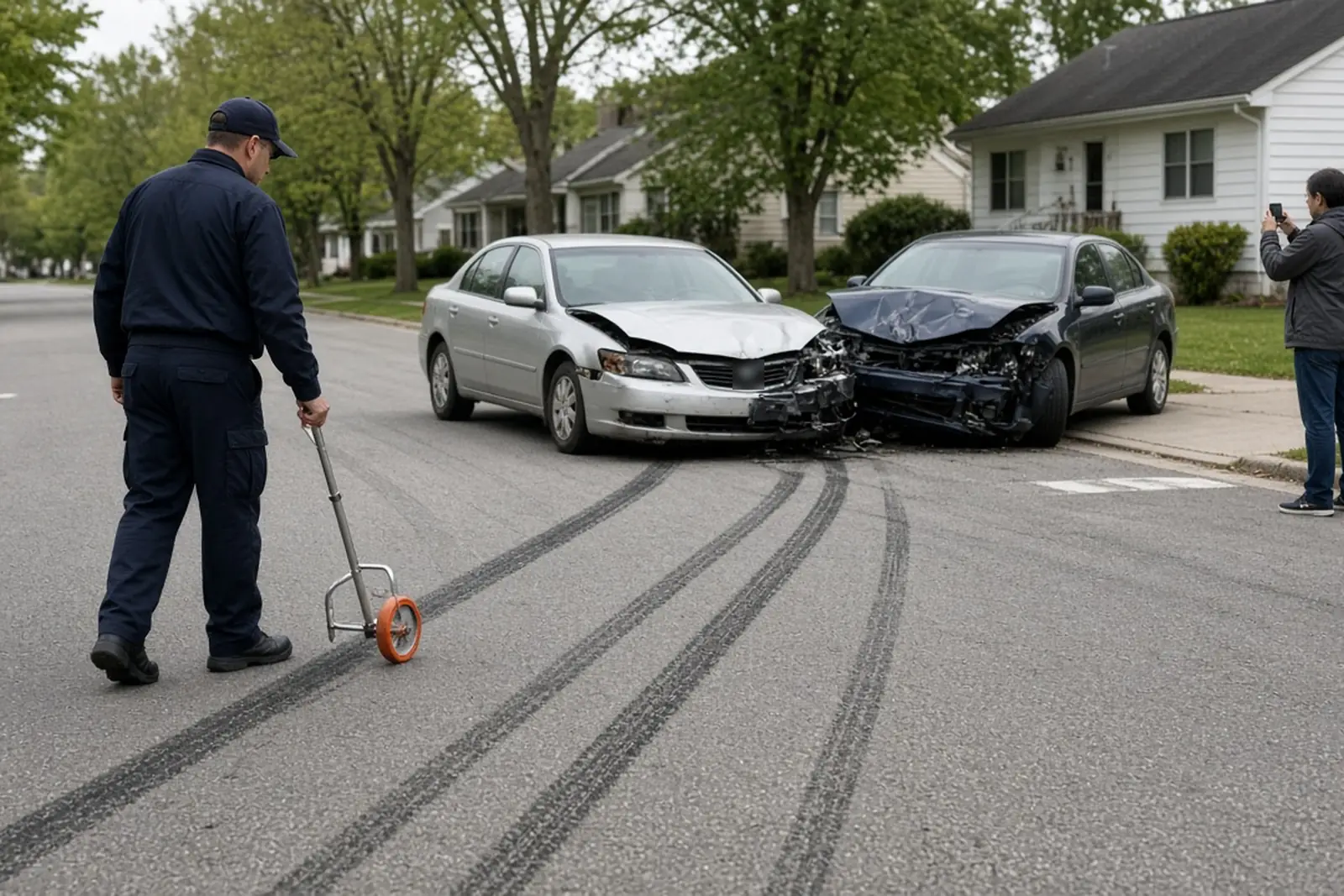
Our guide to evidence to preserve after an accident lists what to save.
More rules are collected in our Kentucky traffic laws guide.
Kentucky uses pure comparative fault: your share of fault reduces your recovery but doesn’t bar it (KRS 411.182). If a jury finds your damages are $100,000 and you were 20% at fault, you can recover $80,000. Even if you were mostly at fault, you can still recover the share caused by the other driver. See Kentucky’s pure comparative fault rule and what to do if you were partly at fault.
Sometimes the at-fault driver says they blacked out, had a seizure, or had a heart attack or diabetic episode behind the wheel. It happens. Kentucky State Police counted 692 collisions in 2024 where a driver lost consciousness or fainted, 16 of them fatal, plus 234 involving a sick driver and 149 involving medication.
Kentucky still recognizes a “sudden emergency” argument in some cases (Regenstreif v. Phelps, 142 S.W.3d 1 (Ky. 2004)). Insurers use it to argue their driver couldn’t have prevented the crash. But the defense has real limits, and it often fails when:
Proving this means getting the driver’s medical and pharmacy records, the treating doctors’ notes and any prior episodes, usually through a lawsuit. Truck drivers must also have a valid DOT medical certificate. See truck driver medical cards and sleep apnea. Either way, your own PIP benefits pay medical bills and lost wages regardless of fault (see how Kentucky PIP works).
Unless you rejected it in writing, your own PIP (personal injury protection) coverage pays up to $10,000 of medical bills and lost wages regardless of fault. See how Kentucky PIP works. To recover pain and suffering from an at-fault driver, Kentucky’s no-fault law generally requires more than $1,000 in medical expenses, or an injury such as a fracture, permanent injury, permanent disfigurement or permanent loss of bodily function (KRS 304.39-060).
Most Kentucky motor vehicle injury claims must be filed within two years of the crash or the last PIP payment, whichever is later (KRS 304.39-230). Use our statute of limitations calculator.
Not always, but often. Kentucky allows a sudden-emergency argument in some cases, but it usually fails if the driver had warning signs, a known condition they didn’t manage, or skipped medication.
No. It’s important evidence, but insurers and juries decide fault based on all the evidence.
Yes. Kentucky’s pure comparative fault rule reduces your recovery by your share of fault but doesn’t bar it.
That is an opening position, not a final decision. Evidence can change it, and a jury makes the final call if the case goes to trial.
The same way: evidence, traffic laws and, if needed, a jury that assigns a percentage to each driver.
Let us look at the evidence and push back. The consultation is free.
Get a free case evaluation or call 502-931-6788.
This page is general information about Kentucky law as of October 2026, not legal advice. Every case is different.