Reviewed by Larry Forman, Attorney
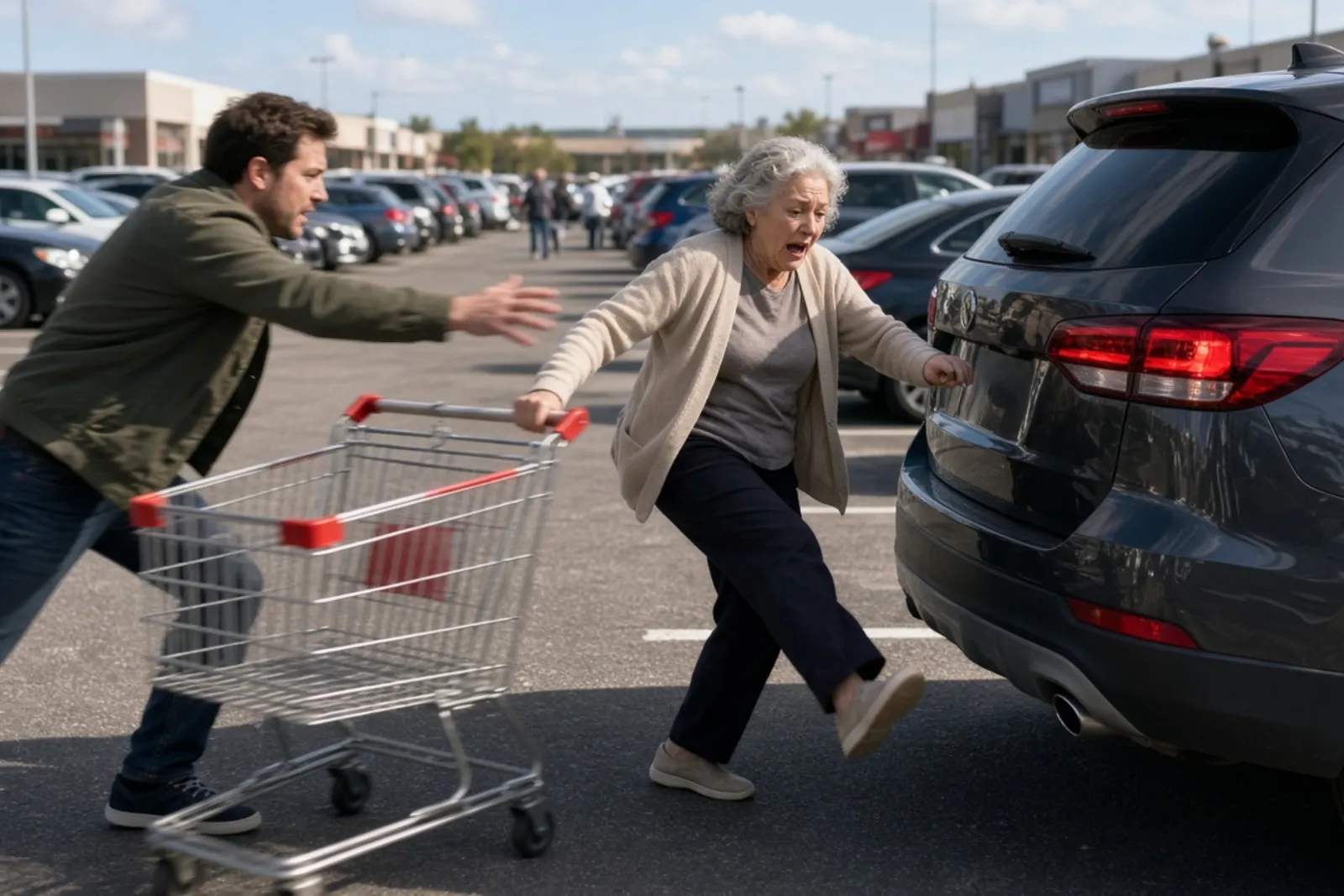
Parking lots feel low-risk. Everyone is driving slowly, right? But lots combine cars backing out with limited visibility, drivers hunting for spaces while checking their phones, and people on foot weaving between vehicles with shopping carts and kids. Serious injuries happen, especially to pedestrians.
Parking lot claims also raise questions ordinary crashes don’t. Does traffic law even apply on private property? Will police write a report? Is the property owner responsible? Forman & Associates helps people hurt in parking lot crashes across Louisville and Kentucky answer those questions and build a claim.
Common parking lot crashes and injuries
Backing collisions: two cars backing out at once, or a driver backing into a car or person behind them
Pedestrians struck while walking to or from a store, often by a backing or turning vehicle
Through-lane crashes, where a driver speeds down the main lane and hits someone pulling out
Space conflicts, with two drivers turning into the same spot
Cut-throughs: drivers cutting diagonally across empty rows
Entrance and exit crashes where the lot meets a busy road
Often, yes. Kentucky’s traffic code defines “highway” to include more than public roads. Under KRS 189.010(3), it includes “off-street parking facilities offered for public use, whether publicly or privately owned,” except certain for-hire (paid) parking facilities.
That matters because many of Kentucky’s driving duties apply on a “highway,” including the duty to drive carefully (KRS 189.290) and the duties after an accident (KRS 189.580). In a typical store or shopping-center lot open to the public, a driver who backs out without looking can’t simply claim the rules of the road don’t apply.
Even where a statute doesn’t fit, every driver still owes a duty of ordinary care to the people around them.
Who is at fault in a parking lot crash?
Fault depends on the facts, and Kentucky uses pure comparative fault, so it’s often shared (KRS 411.182). Common factors include:
Backing drivers generally have to make sure the path is clear. Backing is one of the most common causes of lot crashes.
Drivers in through lanes may have the practical right of way over cars leaving a parking row, but speeding or cutting across rows can shift fault.
Stop signs, arrows and painted markings in the lot help show who should have yielded.
Distraction: phones, searching for a space, or watching for a family member.
Pedestrians are expected to watch for traffic too, but drivers must look out for people on foot, especially near store entrances.
Inadequate lighting that makes pedestrians hard to see at night
Overgrown landscaping or signs blocking sight lines
Potholes, broken curbs and debris that cause a driver to swerve or a pedestrian to fall
Inadequate security where a crime causes injury. See negligent security.
Kentucky premises law has shifted in the injured person’s favor. In Kentucky River Medical Center v. McIntosh, 319 S.W.3d 385 (Ky. 2010), Shelton v. Kentucky Easter Seals Society, 413 S.W.3d 901 (Ky. 2013), and Carter v. Bullitt Host, LLC, 471 S.W.3d 288 (Ky. 2015), the Kentucky Supreme Court held that an “open and obvious” hazard doesn’t automatically excuse a property owner. Fault is compared instead. See our premises liability page and our post on proving property owner negligence. If you fell in a lot without a vehicle involved, see our slip and fall page.
Will the police write a report?
Not always. For a minor crash on private property, police may not come out, or may not write a full report. Don’t let that stop you from documenting the crash yourself.
Kentucky law also puts duties on drivers. After an accident involving injury or damage, a driver must stop, render reasonable assistance, and give the other person their registration number and the names and addresses of the owner, occupants and driver on request (KRS 189.580(1)). If someone hits a parked, unattended car, they must stop and either find the owner, leave a secure written notice with their name, address and registration number, or report it to the local police department (KRS 189.580(2)). For accidents covered by the statute that cause injury or death, or at least $500 in damage, and that no officer investigates, a driver must file a written report with Kentucky State Police within 10 days (KRS 189.580(7)).
If a report was made, here’s how to get your Kentucky accident report.
Who pays your medical bills?
Kentucky’s no-fault PIP coverage applies to injuries “arising out of maintenance or use of a motor vehicle” (KRS 304.39-030). Parking lots aren’t excluded. Under KRS 304.39-050:
If you were in a vehicle, PIP usually comes from the policy on the vehicle you were in.
If you were a pedestrian, PIP usually comes from the policy on the vehicle that hit you. If that vehicle has no coverage, your own auto policy or a household relative’s may apply.
PIP pays up to $10,000 per person for medical bills and lost wages, regardless of fault. See how Kentucky PIP works. Claims against the at-fault driver, and sometimes the property owner, cover the rest. For pedestrian cases, see our bicycle and pedestrian collision page.
Hit and run in a parking lot
Drivers who hit someone in a lot sometimes just leave. If that happens:
Look for cameras right away: store entrances, light poles, nearby businesses, other drivers’ dashcams.
Ask witnesses for what they saw and their contact information.
Report it to police.
Check your own policy’s uninsured motorist coverage, which may apply to hit-and-run drivers depending on policy terms.
Store and shopping-center cameras often cover the lot, but footage may be recorded over quickly. The property’s management company may also have incident reports, maintenance logs and complaints about the same spot.
What to do:
Call 911 if anyone is hurt, and ask for police to respond.
Photograph everything: vehicles, positions, lot markings, stop signs, lighting, potholes and the surrounding area.
Get the other driver’s information, including insurance, and witness names.
Ask the store manager to preserve video and to make an incident report. Get the manager’s name.
Get medical care right away.
Call a lawyer so a formal preservation letter goes out before footage is overwritten.
A claim against a driver for a motor vehicle injury is generally subject to Kentucky’s two-year MVRA deadline, measured from the crash or the last PIP payment. A claim against a property owner may fall under the one-year personal injury statute. When both are possible, plan around the earliest date. See the Kentucky statute of limitations guide.
How we handle parking lot cases
Send preservation demands to the property owner, manager and nearby businesses
Investigate both the drivers and the lot itself
Identify every policy: the driver’s liability, your PIP, UM and UIM, and the property’s liability coverage
Build the medical case and handle the insurers
File suit when needed. Larry Forman has tried 50+ jury trials and won 95% of them.
Who is at fault in a parking lot accident in Kentucky?
It depends on the facts: who was backing, who had the through lane, signage and markings, speed and distraction. Fault is often shared under Kentucky’s pure comparative fault rule.
Do traffic laws apply in parking lots in Kentucky?
Often. Kentucky’s traffic code defines “highway” to include off-street parking facilities offered for public use, whether publicly or privately owned, with an exception for certain paid lots (KRS 189.010(3)).
Will the police come for a parking lot accident?
Not always. If no officer investigates a covered accident with injury or $500 or more in damage, Kentucky law requires a written report to Kentucky State Police within 10 days. Document the scene yourself either way.
I was hit by a car while walking in a parking lot. Who pays?
PIP from the policy on the vehicle that hit you usually pays first, up to $10,000. You may also have claims against the driver and, in some cases, the property owner.
Can I sue the store or property owner?
Possibly, if poor lighting, design, signage or maintenance contributed. Under Kentucky premises law, an open and obvious hazard doesn’t automatically excuse the owner.
How long do I have to file a parking lot accident claim?
Generally two years for a claim against the driver, but possibly one year against a property owner. Act early.
Hurt in a parking lot? Call us
We’ll move quickly to save the video and figure out everyone who’s responsible. No fee unless we win. Get a free case evaluation or call (502) 931-6788. Our office is at 1139 S. 4th St., Louisville, KY 40203.
This page is general information about Kentucky law, not legal advice.