
Reviewed by Larry Forman, Attorney
A hit-and-run leaves you hurt and confused, and angry that the person who did this just drove away. You might not have a name, a plate number or an insurance company to call.
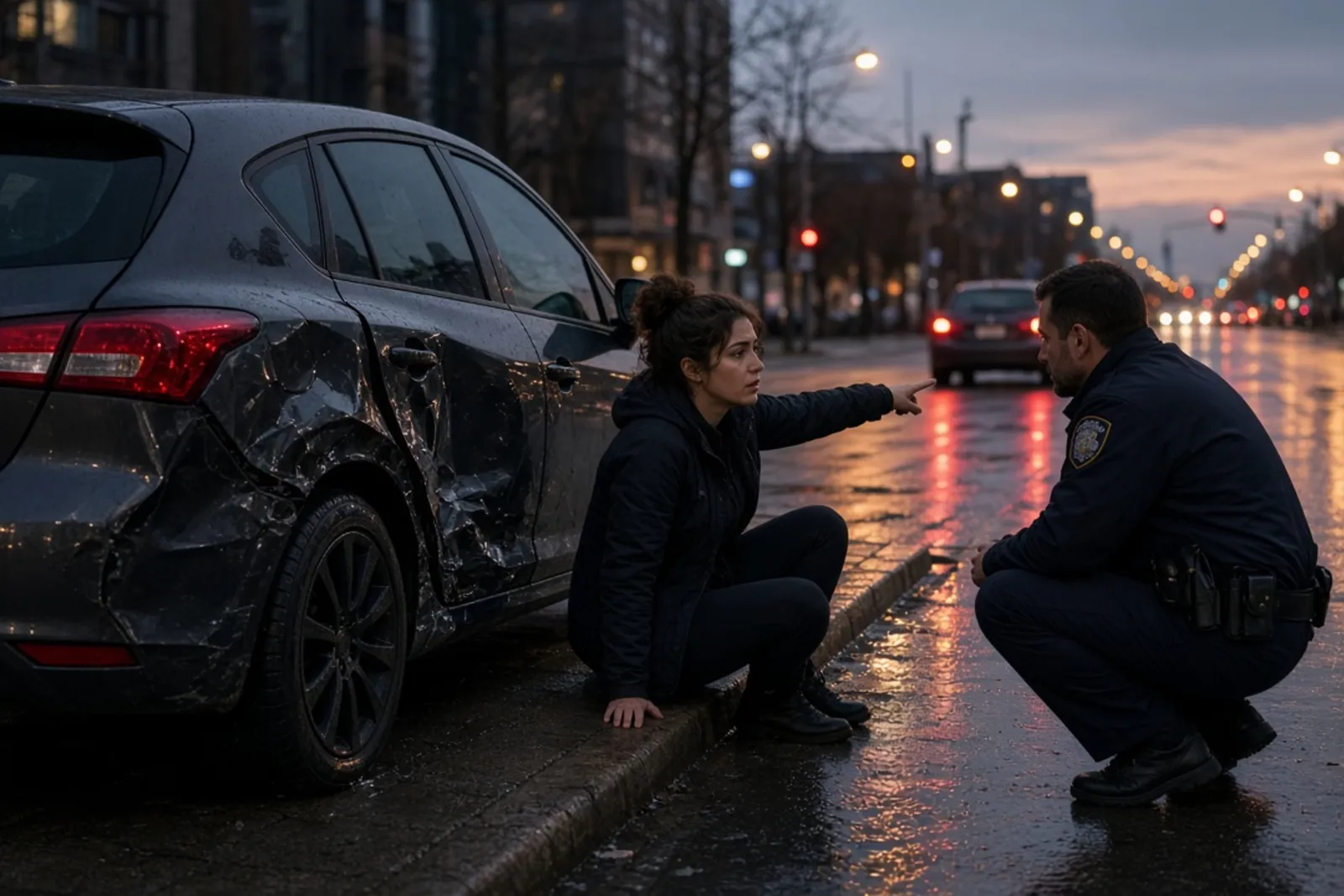
That doesn’t mean you’re out of options. In Kentucky, people injured by hit-and-run drivers can often recover through their own insurance, and sometimes the driver can still be found. Forman & Associates helps hit-and-run victims in Louisville and across Kentucky do both.
Hit-and-runs aren’t rare. According to the Kentucky State Police’s 2024 Kentucky Traffic Collision Facts report (the most recent annual report):
For more Kentucky crash data, see our Kentucky car crash statistics page.
Under KRS 189.580(1)(a), a driver involved in a crash that injures or kills someone, or damages an attended vehicle or property, must immediately stop, check the extent of the injury or damage, and give reasonable help. That includes arranging medical care when it’s clearly needed or requested. If asked, the driver must also share their registration number and the names and addresses of the owner, occupants and driver.
Kentucky law also requires the driver in a crash with a death, a known or visible injury, or a disabled vehicle to notify police or 911 right away, if they’re physically able and have a working phone (KRS 189.580(6)).
A driver who flees breaks those duties. The police investigation is separate from your injury claim. Your claim focuses on getting your medical bills, lost income and other losses paid.
Most hit-and-run cases draw on one or more of these sources:
Kentucky’s no-fault system pays up to $10,000 per person in basic personal injury protection (PIP) for medical bills, lost wages and similar losses, regardless of fault (KRS 304.39-020).
Our Kentucky PIP guide explains how these benefits work.
When the driver can’t be identified, most Kentucky auto policies treat the hit-and-run vehicle as uninsured. That means your own UM coverage can pay for injuries, including pain and suffering, up to your UM limit.
Kentucky requires UM coverage in auto policies unless a named insured rejected it in writing (KRS 304.20-020), so many people have it without realizing it. Learn more on our uninsured motorist lawyer page.
If police or our investigation identify the driver, you can bring a claim against the driver’s liability insurer, just like a normal crash. If their coverage is too low, your underinsured motorist coverage may cover the difference.
Sometimes the fleeing driver was using someone else’s vehicle, or driving for work. The owner or an employer may have insurance that applies. We look for every source.
Claims against your own policy after a hit-and-run often come with conditions the insurer will hold you to. Depending on the policy, these may include:
Insurers deny hit-and-run claims when these steps are missed. Read your policy, or let us read it for you, as early as possible.
Many people assume a hit-and-run driver is impossible to find. Sometimes that’s true. Often, though, there’s more evidence than you’d think, if someone moves quickly to save it.
Video. Businesses, gas stations, homes with doorbell cameras, and other drivers’ dashcams can capture a fleeing car. Much of that footage is recorded over within days. Public traffic cameras are less helpful than people expect. Our guide to TRIMARC cameras and Louisville interstate crashes explains why.
Physical evidence. Paint transfer, broken mirror pieces, headlight fragments and other debris can point to a make, model or color. Body shops may later see a car with matching damage.
Witnesses. People who stopped to help may have seen a partial plate, a bumper sticker or the direction the car went. Their memories fade quickly.
The police file. We follow up on the report and the investigation, and we share what we find. Here’s how to get your Kentucky accident report.
Your own vehicle’s data. Newer cars may store crash data and camera footage. Don’t let the car be repaired or scrapped until that’s been checked.
Our checklist on evidence to preserve after an accident has more detail on saving video and photos the right way.
People outside a car get hurt worst in hit-and-runs. In 2024, more than four in ten of the people killed in Kentucky hit-and-run crashes were pedestrians (12 of 27), according to the KSP Collision Facts report.
If you were walking, biking or riding a motorcycle, your own auto policy, or a household member’s, may still provide PIP and UM coverage even though you weren’t in a car. See our bicycle and pedestrian collision and motorcycle wreck pages.
If a hit-and-run driver took the life of someone you love, our wrongful death lawyers can explain how a claim works through the estate.
A crash injury lawsuit in Kentucky generally must be filed within two years after the injury or the last PIP payment, whichever is later (KRS 304.39-230(6)). Your insurance policy may set much shorter notice deadlines for a hit-and-run UM claim.
See every deadline in our Kentucky statute of limitations guide.
If the crash just happened:
Our step-by-step hit-and-run checklist walks through each of these in more detail.
When you hire us after a hit-and-run, we:
Often, yes. Your PIP benefits apply regardless of fault, and your uninsured motorist coverage may pay for injuries caused by an unidentified driver, subject to your policy’s terms and limits.
Kentucky auto liability policies must include UM coverage unless a named insured rejects it in writing (KRS 304.20-020).
It may. PIP and UM coverage can apply to insured people even when they’re not in a vehicle. That depends on the policy language, so it’s worth having your policy reviewed.
You may be able to make a claim against the driver’s liability insurance, and possibly an underinsured motorist claim if their coverage is too low. Deadlines still apply, so don’t wait for an arrest to get advice.
Not always. In a hit-and-run UM claim, your insurer evaluates fault and damages and may dispute both. Meeting every notice and proof condition gives the claim its best chance.
As soon as you can. Video from businesses and homes is often recorded over within days, and your policy may have short notice deadlines.
You shouldn’t have to carry the cost of someone else’s decision to drive away. Tell us what happened, and we’ll explain your options. Get a free case evaluation or call 502-931-6788.
More answers: our Personal Injury FAQ and the Kentucky Injury Resource Center.
This page is general information about Kentucky law, not legal advice. Past results do not guarantee a similar outcome.