
Reviewed by Larry Forman, Attorney
You did everything right. You paid for insurance, you followed the rules of the road, and then someone with no insurance crashed into you.
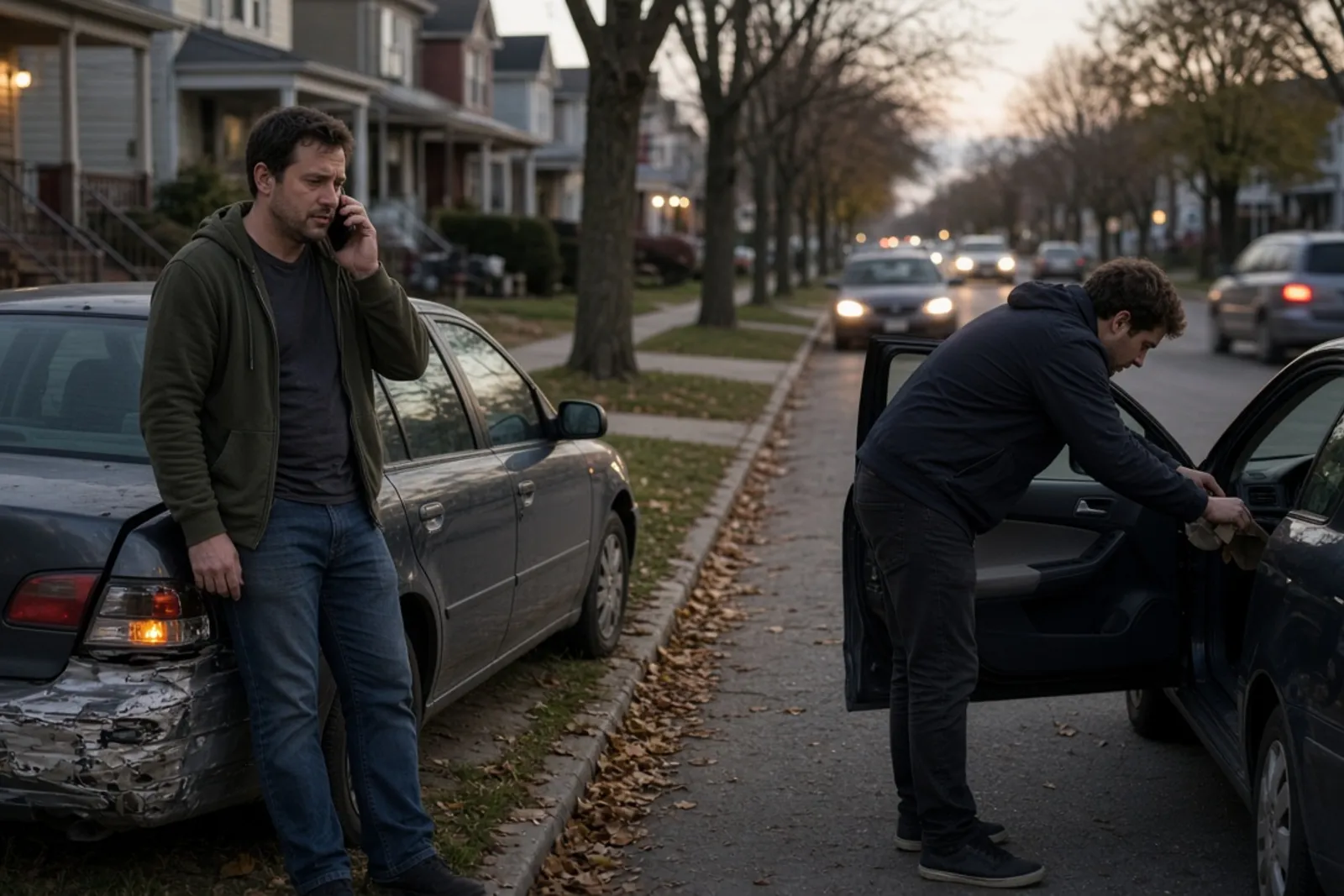
Now you have medical bills, missed work, and a driver who may have nothing to pay you with. It’s an unfair spot to be in. But Kentucky law gives you a way forward: in most cases, your own auto policy includes uninsured motorist (UM) coverage built for exactly this.
Forman & Associates helps people in Louisville and across Kentucky bring UM claims. This page explains how that coverage works, what it pays for, where people get tripped up, and what to do next.
The obvious case is a driver with no liability insurance at all. Kentucky’s UM statute goes further than that. Under KRS 304.20-020(2), an “uninsured motor vehicle” can also include:
Most Kentucky auto policies also treat a hit-and-run vehicle whose driver can’t be identified as uninsured, subject to the policy’s own terms. If that’s what happened to you, see our hit-and-run accident lawyer page.
Uninsured or underinsured? If the other driver had insurance but not enough to cover your losses, that’s a different claim with different rules. See our underinsured motorist lawyer page, or read how UM and UIM coverage differ in Kentucky.
In Kentucky, UM coverage is part of the auto policy by default. KRS 304.20-020(1) says a motor vehicle liability policy for a vehicle registered or principally garaged in Kentucky cannot be issued unless it includes UM coverage, at least at the bodily injury limits in KRS 304.39-110. Those limits are $25,000 per person and $50,000 per accident, or a $60,000 single limit.
There are two important catches:
If your insurer says you don’t have UM coverage, ask for a copy of the signed written rejection. Also check your declarations page, which lists the UM limit if you have it. Sometimes the paperwork doesn’t match what the adjuster says.
It’s also worth checking every policy in your household. Depending on the policy wording, a UM claim may be possible under a policy that covers a spouse or a relative you live with, not just the car you were in.
UM is bodily injury coverage. The statute protects insured people who are “legally entitled to recover damages from owners or operators of uninsured motor vehicles because of bodily injury, sickness or disease, including death” (KRS 304.20-020(1)).
Depending on your policy and your case, a UM claim can cover the same kinds of losses you could claim against the at-fault driver:
What it usually doesn’t cover is damage to your car. Vehicle repairs normally go through collision coverage on your policy, if you have it.
The limit matters. A UM claim is capped by the UM limit on the applicable policy. If your losses are bigger than the limit, we look at every other policy that might apply.
Before UM comes into play, Kentucky’s no-fault system usually pays first. Basic personal injury protection (PIP) pays up to $10,000 per person per accident for medical expenses, lost wages and similar economic losses, regardless of fault (KRS 304.39-020).
Which policy pays PIP depends on how you were hurt (KRS 304.39-050):
You can also choose how your PIP is spent. For example, you can direct it toward lost wages while health insurance pays medical bills (KRS 304.39-241). We explain why that can help in how health insurance paying first can increase your net recovery. For the basics, see our Kentucky PIP guide.
This part surprises people. In a UM claim, the insurer you’ve paid premiums to stands in the shoes of the uninsured driver. To get paid, you still have to prove two things:
Your policy also likely has a cooperation clause. That can mean giving your insurer a statement, records, or even an exam under oath. Cooperating matters, but it’s smart to get advice before you give a recorded statement or sign broad medical authorizations.
If your insurer refuses to pay a valid claim, drags it out, or won’t investigate fairly, that may be a separate legal issue. See our insurance bad faith page.
Yes. You can bring a claim against the uninsured driver personally. The hard part is collecting. Many drivers without insurance don’t have assets to pay a judgment.
That’s why the UM claim is usually the main path to recovery. If your insurer pays you under UM coverage, Kentucky law lets the insurer seek repayment from the person who caused the crash, to the extent of what it paid (KRS 304.20-020(4)).
Sometimes other parties share responsibility, such as the driver’s employer, the owner of the vehicle, or a business involved in the crash. Part of our job is finding every source of recovery, not just the one that’s easiest to see.
Several clocks can run at once in an uninsured motorist case:
Our Kentucky statute of limitations guide lays out each deadline in one table.
When you hire us, we:
You can learn more about Larry Forman or see our case results. Past results don’t guarantee a similar outcome.
UM coverage must be included in Kentucky auto liability policies unless a named insured rejects it in writing (KRS 304.20-020(1)). If no one on your policy signed a rejection, you likely have it.
Generally no. UM coverage in Kentucky is bodily injury coverage. Vehicle damage is usually handled through collision coverage on your own policy.
Under KRS 304.20-020(2), a vehicle can be treated as uninsured to the extent its liability coverage is denied by the insurer. Your UM coverage may apply, depending on your policy and the reason for the denial.
Often, yes. Whether you’re an “insured” depends on the policy wording, which often covers household relatives and people riding in the insured vehicle. See our bicycle and pedestrian collision page for more.
It should. But in a UM claim, your insurer evaluates fault and damages just like the other driver’s insurer would. It can dispute your claim. Having a lawyer helps keep the process honest.
It depends. The crash lawsuit deadline is generally two years under KRS 304.39-230(6), and your policy may require prompt notice and set its own deadline. Check with a lawyer early.
You shouldn’t have to pay for someone else’s choice to drive without insurance. Tell us what happened, and we’ll review your coverage and explain your options. Get a free case evaluation or call 502-931-6788.
More answers: our Personal Injury FAQ and the Kentucky Injury Resource Center.
This page is general information about Kentucky law, not legal advice. Every policy and every case is different.