Reviewed by Larry Forman, Attorney
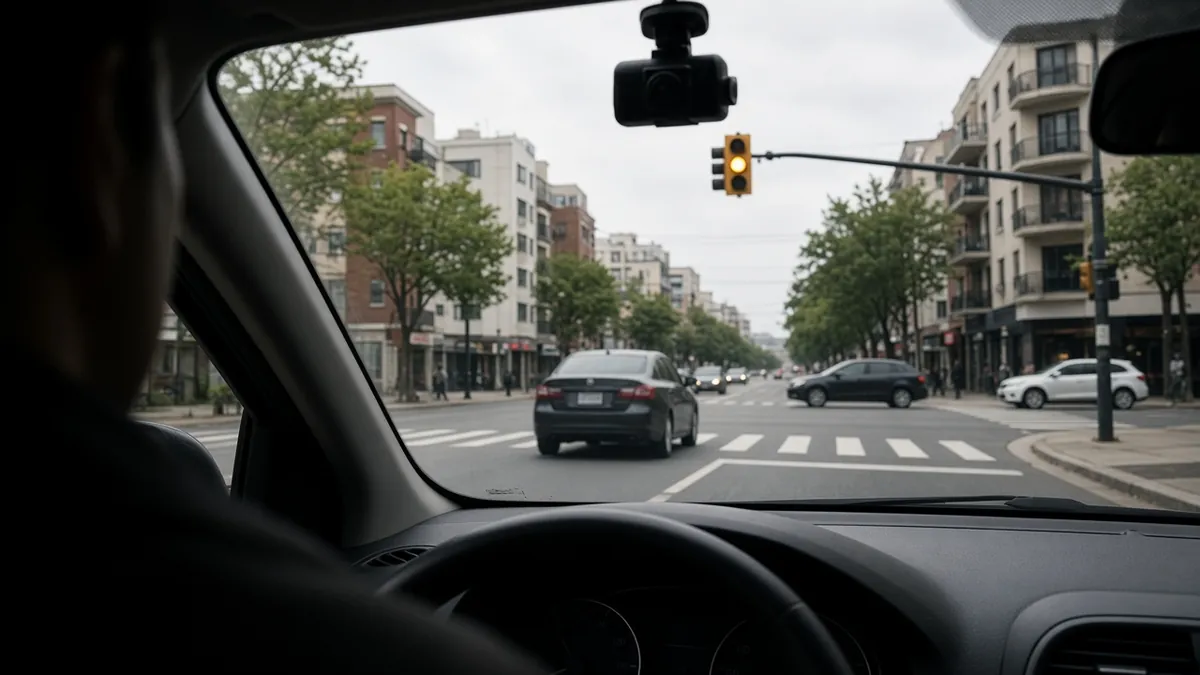
When two drivers tell different stories, dashcam footage can settle the question in seconds. It can show who ran the light, who drifted into the lane, and how fast everyone was going. But dashcams raise their own questions: whether they're legal in Kentucky, whether audio is a problem, and what happens when the video doesn't help you.
Are dashcams legal in Kentucky?
Generally, yes. Kentucky doesn't ban dashcams. There are two things to keep in mind.
Where you mount it
Kentucky's windshield statute is broad. It says a person may not drive "with any sign, sunscreening material, product, or covering attached to, or located in or upon the windshield," except for a few listed items like required stickers and certain tint (KRS 189.110(2)). Dashcams aren't on the list, and we haven't found Kentucky guidance specific to them.
The practical answer: mount the camera where it doesn't block your view, such as tucked behind the rearview mirror or on the dashboard, and keep cords out of the way.
Audio recording
Kentucky makes it a crime to "eavesdrop," defined as recording a conversation "of others without the consent of at least one (1) party" (KRS 526.010). Eavesdropping is a Class D felony (KRS 526.020).
Because Kentucky only requires one party's consent, recording a conversation you're part of is generally allowed. To stay on safe ground, tell passengers the camera records audio, or turn the audio off when you aren't in the conversation. If you drive for a rideshare or delivery app, check its rules too.
How dashcam footage is used in an injury claim
Video is often the clearest evidence in a crash case. It can show:
- Who had the right of way: signal color, stop signs, turn arrows. See intersection crashes in Kentucky.
- Lane position: who drifted, who changed lanes, who cut in
- Speed and following distance, worked out from timestamps and fixed landmarks
- Distraction: a car swerving or failing to brake at all
- What happened after: statements at the scene, injuries, the other driver leaving
- The vehicle and plate in a hit-and-run. See what to do after a hit-and-run.
Video also helps with injuries. The force of a collision, and how your body moved, can support what your doctors say about your neck, back or head.
Dashcam timestamps aren't always set correctly. Before relying on a clip, compare the camera's clock with the time on the police report. Here's how to get your Kentucky accident report.
Saving the footage
Many dashcams record over old files. Lock or save the clip right away, keep the original file unedited, and make a backup. Our post on evidence to preserve after an accident goes through the steps. Keep the memory card too. A lawyer or a forensic examiner may want the original.
Getting someone else's dashcam footage
Often the most useful video comes from another car. Places to look:
- Other drivers and witnesses. Ask at the scene whether anyone had a camera running, and get their contact information.
- Rideshare and delivery drivers. Many run dashcams. See our rideshare injury page.
- Commercial trucks and fleet vehicles. Many carry forward-facing or driver-facing cameras along with other electronic records. See truck black box evidence.
- Buses, businesses and homes with cameras facing the road.
Other people's footage disappears fast. A written preservation request, and in a lawsuit a subpoena, can keep it from being erased.
Should you give your footage to the insurance company?
Your own insurer may ask for it under your policy. The other driver's insurer will want it if it helps them. Before you send anything:
- Keep the original. Send a copy, never your only file.
- Send the whole clip, not just the impact. Editing invites accusations.
- Talk to a lawyer first if fault is disputed or you were hurt. See insurance adjuster tactics.
What if the video hurts your case?
Sometimes the footage shows you were speeding a little, or a step late on the brakes. Don't delete it. Destroying evidence can lead a jury to assume the worst about what was lost, and that can do far more damage than the video itself.
Kentucky's pure comparative fault rule means a share of fault reduces your recovery but doesn't end it. A clip showing you were 10% at fault may also show the other driver was 90% at fault. Video is often compared against Kentucky traffic laws to decide who broke which rule. See what to do if you were partly at fault.
Making footage count
Video usually needs someone who can confirm it accurately shows what happened, often the person who owned the camera. Keep a note of the camera model, where it was mounted, how you saved the clip, and who has had the file. That chain makes the video harder to attack.
How Forman & Associates helps
We secure and copy your footage, track down video from other drivers, businesses and fleet vehicles, send preservation requests before files are erased, and use the video with crash reports and vehicle data to prove fault. When an insurer won't be fair, we're ready for court: Larry Forman has tried 50+ jury trials and won 95% of them. Learn more about our Louisville car accident practice.
Dashcam footage FAQ
Is it legal to have a dashcam in Kentucky?
Generally, yes. Kentucky doesn't ban dashcams. Its windshield statute broadly restricts items attached to the windshield, so mount the camera where it doesn't block your view.
Can my dashcam record audio in Kentucky?
Kentucky is a one-party consent state, so recording conversations you're part of is generally allowed. Recording other people's private conversations without anyone's consent is illegal. Tell passengers, or turn audio off when you're not part of the conversation.
Can dashcam footage be used as evidence in Kentucky?
Yes. Dashcam video is regularly used in injury claims and lawsuits. It usually needs someone who can confirm it accurately shows what happened.
Do I have to give my dashcam footage to the other driver's insurer?
Not before a lawsuit, unless you choose to. In a lawsuit, relevant video can be requested through discovery. Talk to a lawyer before you share it, and never give away your only copy.
What if my dashcam shows I was partly at fault?
Keep it anyway. Kentucky's comparative fault rule reduces your recovery by your share of fault but doesn't bar it, and deleting evidence can do much more harm.
Talk to a Louisville car accident lawyer
If you have dashcam footage of a crash, or need help finding someone else's, call Forman & Associates Accident Injury Lawyers at (502) 931-6788 or get a free case evaluation. Our office is at 1139 S. 4th St., Louisville, KY 40203. No fee unless we win.
This post is general information about Kentucky law, not legal advice. Reviewed October 2026.