Child Pedestrian Accident Lawyer: When a Car Hits a Child in Kentucky
Child pedestrian accident in Kentucky? Drivers must take extra care around kids. How a child's fault is judged, who pays and how the claim is protected.
Reviewed by Larry Forman, Attorney
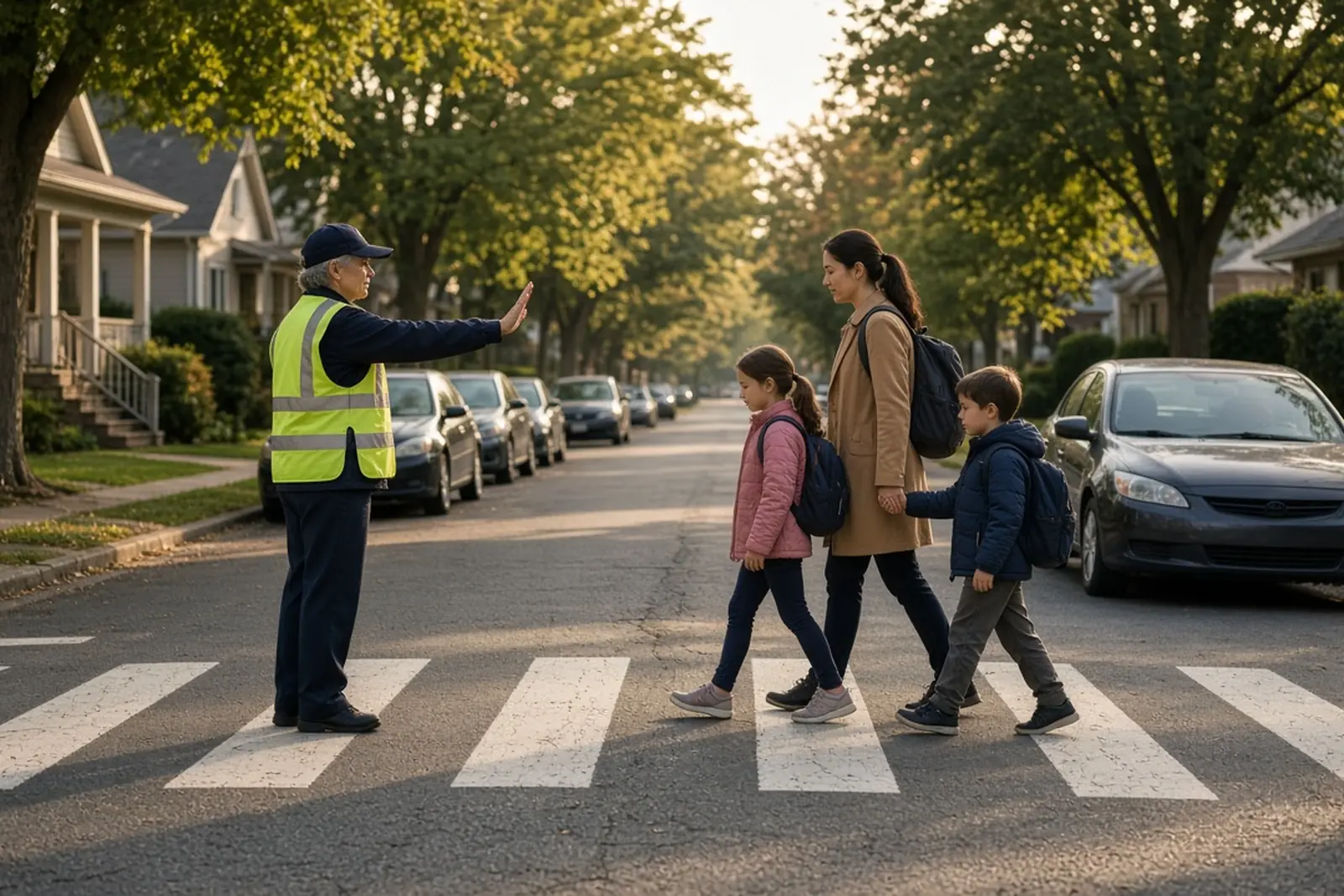
Children don’t judge speed and distance the way adults do, and drivers often don’t see them until it’s too late. When a car hits a child walking to school, playing near the street or crossing a parking lot, the injuries can be severe and the insurer may blame the child or the parents. This page explains what Kentucky law expects of drivers around children, how fault works in a child pedestrian accident, and how a child’s claim is handled and protected.
How a child pedestrian accident usually happens
Mid-block “dart-outs”: a child runs into the street from between parked cars, often chasing a ball or a friend.
Driveway and parking lot backovers: a driver backs up without seeing a small child behind the vehicle. See our parking lot accident page.
Neighborhood streets without sidewalks, where children walk or play along the road.
Turning drivers at intersections who are watching traffic, not the crosswalk.
Holidays and events: Halloween night, parades and summer evenings.
What Kentucky law expects of drivers around children
Kentucky’s pedestrian statute puts a specific duty on drivers when children are present. Every driver “shall exercise due care to avoid colliding with any pedestrian and shall give warning by sounding the horn when necessary and shall exercise proper precaution upon observing a child” (KRS 189.570). The same statute requires drivers to:
Yield to pedestrians crossing the road where traffic signals aren’t in operation, slowing or stopping as needed
Not pass a vehicle stopped at a crosswalk to let a pedestrian cross
Yield to any pedestrian on a sidewalk, which includes sidewalks across driveways
A driver who sees children near the road and doesn’t slow down, keep a lookout or sound the horn may be negligent. When a driver breaks a safety statute and causes injury, Kentucky law allows the injured person to recover for the harm the violation caused.
How fault is judged when the pedestrian is a child
Insurers often argue the child “came out of nowhere.” Kentucky’s statute does say a pedestrian shouldn’t suddenly leave a curb into the path of a vehicle so close it’s an immediate hazard. But a child isn’t held to an adult’s standard.
Kentucky courts measure a child’s conduct by what’s expected of an ordinary child “of like age, intelligence, and experience” (Williamson v. Garland, Ky. 1966). Whether a nine-year-old pedestrian met that standard was a question for the jury (Oldham v. Adkisson, Ky. 1969). In practice, the younger the child, the harder it is to argue the child was at fault at all.
Even if some fault is assigned to a child, Kentucky’s pure comparative fault rule reduces the recovery by that share; it doesn’t bar it (KRS 411.182). See how pure comparative fault works.
Insurers also sometimes argue that a parent wasn’t watching closely enough. That argument doesn’t erase the driver’s own duty to take proper precautions when children are around.
Who pays when a child is hit by a car
PIP first. A pedestrian’s no-fault benefits come from the insurance on the vehicle that struck them, up to $10,000 for medical bills and certain other losses (KRS 304.39-050). See how Kentucky PIP insurance works.
The driver’s liability insurance for losses beyond PIP, including pain and suffering for serious injuries.
Your family’s own uninsured or underinsured motorist coverage if the driver had no insurance, too little, or fled. See our uninsured motorist and hit-and-run pages.
Others who share responsibility, such as a property owner whose overgrown hedge blocked a driveway view, or a school or daycare whose drop-off procedures failed. See our daycare and school negligence page.
Injuries children suffer in pedestrian crashes
Because children are shorter, a car’s bumper and hood often strike them higher on the body than an adult, including the head and chest. Common injuries include:
A child’s injuries can affect growth and development in ways that only show up years later. That’s one reason to be careful about settling early.
How a child’s claim is handled and protected
An injury to a child usually creates two claims: the child’s claim (pain and suffering, permanent injury, scarring and lost future earning capacity) and the parents’ claim for the medical bills they’re responsible for.
Kentucky has special rules for settling a child’s claim. A parent with custody can settle without a court-appointed guardian or conservator only when the child’s share, after medical bills, liens and fees, is $25,000 or less, and the money must be deposited into a restricted account or used to buy an annuity (KRS 387.278). Larger settlements require a conservator and court oversight. Hospitals and health plans may also claim repayment; see medical liens in a Kentucky settlement.
Deadlines: don’t count on extra time because the injured person is a child. The parents’ claim and motor vehicle claims have their own deadlines, and evidence fades quickly. See our statute of limitations guide.
If the worst happened and a child died, see our wrongful death page.
What to do after a child is hit by a car
Get medical care right away, even if the child seems fine. Children can hide pain or not be able to describe it.
Call the police and make sure a report is made.
Photograph the scene: the street, crosswalk, parked cars, sight lines and the vehicle.
Don’t give the driver’s insurer a recorded statement, and don’t let anyone interview your child.
Keep a simple journal of your child’s pain, sleep, school and behavior changes.
How Forman & Associates helps
We investigate sight lines, speed and the driver’s attention, and we gather video, witness statements and medical records. We make sure the settlement protects your child as Kentucky law requires. We prepare every case for trial. Larry Forman has tried 50+ jury trials and won 95% of them. See our case results (past results don’t guarantee a similar outcome) and our main bicycle and pedestrian collision page.
Child pedestrian accident FAQs
The driver says my child ran into the street. Do we still have a case?
Possibly. Kentucky requires drivers to take proper precaution when they see a child, and a child’s fault is judged by what’s expected of a child that age. Any fault assigned reduces the recovery but doesn’t bar it.
Who pays my child’s medical bills after being hit by a car?
Usually the PIP coverage on the vehicle that struck your child first, up to $10,000, then the driver’s liability insurance and your own UM/UIM coverage.
Can I settle my child’s injury claim myself?
Only in limited cases. A custodial parent can settle without a conservator only if the child’s net share is $25,000 or less, and the money must go into a restricted account or annuity.
Is a child held to the same standard as an adult driver or walker?
No. Kentucky measures a child’s conduct against an ordinary child of the same age, intelligence and experience.
What if my child was hit in a school drop-off line?
The driver may be responsible, and the school or daycare may share responsibility if its procedures failed. Report it to the school in writing and keep a copy.
How long do we have to file a claim for a child?
It depends on the claim. Don’t assume the deadline waits until your child turns 18; talk to a lawyer soon.
Was your child hit by a car? Let’s talk
Call (502) 931-6788 or request a free case evaluation. No fee unless we win. Our office is at 1139 S. 4th St., Louisville, KY 40203.
This page is general information as of October 2026, not legal advice.