
Reviewed by Larry Forman, Attorney
A broken bone is rarely “just” a broken bone. It can mean surgery, plates and screws, weeks without driving, months away from a job that needs two good hands or two good legs, and the worry that the joint will never feel the same.
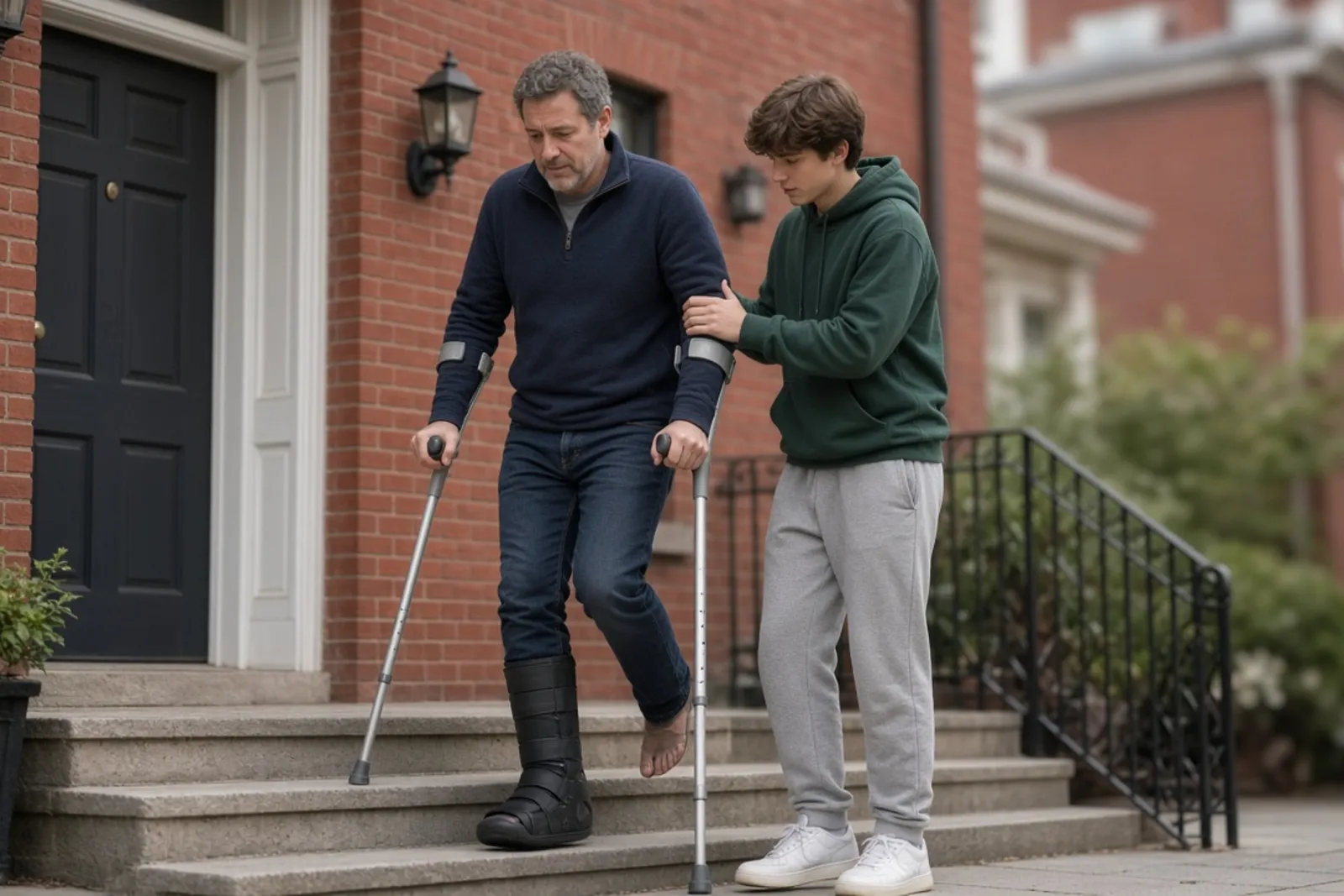
If you broke a bone in a crash, fall or other accident someone else caused, this page explains how fractures are treated, how long they take to heal, and why a fracture matters so much under Kentucky law. Forman & Associates can review your claim for free.
The American Academy of Orthopaedic Surgeons (AAOS) explains that “break” and “fracture” mean the same thing, and that how badly a bone breaks usually depends on the force involved. A car crash can shatter a bone. AAOS describes these common types:
Your medical records may also use words like “displaced” (the pieces moved out of line) or “compression” (the bone was crushed, common in the spine). Those words matter legally, as explained below.
Arm, wrist and hand. Many people break a wrist or forearm by putting a hand out to catch themselves in a fall. These fractures can affect grip, typing and lifting while they heal.
Leg, ankle and foot. Leg fractures can keep you off your feet and out of work. Thighbone (femur) and shinbone (tibia) fractures may be treated with rods, plates or external fixators, described below.
Hip and pelvis. Hip fractures are a major risk for older adults who fall. The CDC reports that about 300,000 older adults are hospitalized for hip fractures each year (CDC). Pelvic fractures can be serious. Cleveland Clinic notes that breaking large bones like the femur or pelvis can cause internal bleeding if fragments tear blood vessels. See our internal injuries page.
Ribs, collarbone and breastbone. These breaks can make breathing, sleeping and lifting painful. Tell a doctor about any chest pain or shortness of breath after an accident.
Spine. Vertebral compression fractures and other spinal fractures can be stable or can threaten the spinal cord. If there is numbness, weakness or paralysis, read our spinal cord injury page. For disc injuries without a fracture, see herniated disc and back injuries.
Face and skull. Airbags, steering wheels and falls can fracture the nose, cheekbone, jaw or eye socket. A skull fracture raises concern for brain injury; see our traumatic brain injury page. Facial fractures that leave visible scars are also covered on our scarring and disfigurement page.
AAOS lists trauma such as a fall or motor vehicle accident among the most common causes of fractures. The cases we see include:
AAOS describes several ways fractures are treated, depending on the bone and the break:
Afterward, AAOS explains that people commonly lose strength and range of motion in the injured area and need specific exercises, usually through physical therapy, to get it back.
AAOS says healing time depends on the extent and location of the injury, your age, other health conditions and how closely you follow your doctor’s advice. Some fractures, like those in the fingers, take three to four weeks. Others take six to eight weeks, several months (three to six months on average), or longer. AAOS also notes that pain often stops before the bone is strong enough for normal activity, and some fractures are known to be difficult to heal.
For your claim, that means the cast coming off is not the finish line. Many people still have therapy, work restrictions and follow-up imaging ahead.
Some fractures heal completely. Others leave lasting problems that should be part of any claim:
We ask your doctors directly about future care, because the first settlement offer usually ignores it.
Kentucky is a no-fault state for car crashes. Your own PIP coverage pays up to $10,000 for medical bills, lost wages and similar losses (KRS 304.39-020(2)), and to sue the at-fault driver for pain, suffering, mental anguish and inconvenience, your injury has to meet a threshold.
One way to meet it is having more than $1,000 in medical expenses. But the statute also lists injuries that qualify on their own, and a fracture is one of them. KRS 304.39-060(2)(b) covers an injury that consists “in whole or in part” of “a fracture to a bone, a compound, comminuted, displaced or compressed fracture.” So even a small, non-displaced fracture lets you pursue a claim for pain and suffering against the driver who caused the crash.
The threshold applies only to motor vehicle claims. A broken wrist from a fall at a store has no threshold.
Use your PIP benefits for early bills and lost wages. For policies issued or renewed on or after July 15, 2026, the weekly cap on lost wages and similar losses is $500 (KRS 304.39-130). Read how Kentucky PIP works and the 2026 PIP changes.
Insurers in fall cases often argue you should have watched where you were going. In crash cases, they look for speed or distraction. Under Kentucky’s pure comparative fault law, your share of fault reduces your damages but doesn’t bar your claim (KRS 411.182). See how to prove property owner negligence in a slip and fall.
Kentucky makes a dog’s owner responsible for damage the dog causes to a person (KRS 258.235(4)). That includes fractures from being knocked down, not only bites.
No one can predict a dollar amount from a diagnosis alone. Value depends on the specific fracture, your treatment and recovery, how the injury affects your work and life, the evidence of fault, and the insurance available.
We gather the medical proof, talk with your treating surgeons about future care, document your lost income and push back on low offers. In fall cases, we move quickly to preserve video and inspection records before they disappear.
We prepare cases for trial from the start. Larry Forman has tried 50+ jury trials. Read about Larry or see our case results. Past results don’t guarantee a similar outcome.
Yes, in most cases. A fracture meets Kentucky’s tort threshold under KRS 304.39-060(2)(b), so you can pursue pain and suffering from the at-fault driver even if your medical bills are modest. Your own PIP coverage still pays first for medical bills and lost wages.
It depends on the bone, the type of fracture, whether you needed surgery, how fully you recover, missed work, and the insurance available. A wrist fracture that heals in a cast is very different from a shattered femur with two surgeries. We don’t quote numbers before reviewing records.
According to AAOS, some fractures heal in three to four weeks, others take six to eight weeks, and many take several months (three to six months on average) or longer. Physical therapy often continues after that.
AAOS notes that osteoporosis makes bones more likely to break, even in a minor fall. That doesn’t mean you have no claim. The question is whether someone else’s carelessness caused the fall or crash that broke the bone. (See Flags.)
Possibly. Property owners in Kentucky must use reasonable care to keep their premises safe for customers. You’ll need to show a dangerous condition caused the fall and that the owner knew or should have known about it. The deadline for most fall claims is generally one year.
No. Many fractures heal without surgery and still meet Kentucky’s threshold and support a claim. Follow your doctor’s treatment plan; don’t make medical decisions based on a legal claim.
Yes. Kentucky’s pure comparative fault rule reduces your recovery by your percentage of fault but doesn’t eliminate it (KRS 411.182).
Call Forman & Associates at 502-931-6788 or 1-844-77-4-HURT, or contact us online for a free case evaluation. We’re at 1139 S. 4th St., Louisville, KY 40203.
This page is general information, not legal or medical advice.