
Reviewed by Larry Forman, Attorney
Your face takes the force in many crashes and falls: the airbag, the steering wheel, broken glass, the pavement. An eye injury or facial fracture can change how you see, eat, breathe and look, and it may need more than one surgery. This page explains the most common facial and eye injuries after an accident, the warning signs not to ignore, and how a Kentucky claim covers them.
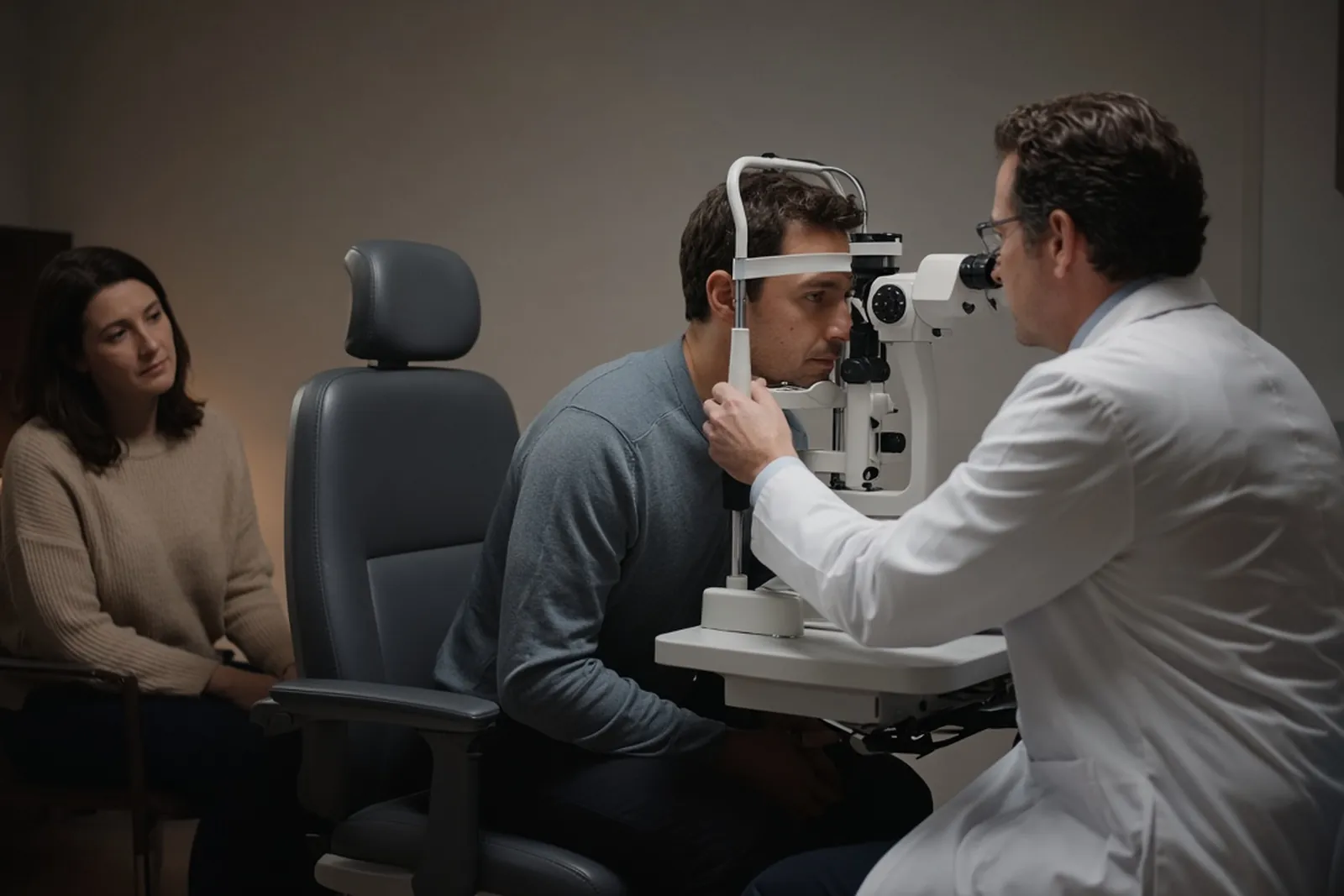
Orbital fractures. A break in the bones around the eye. The AAO describes three kinds: rim fractures to the thick outer edge (which take a lot of force), blowout fractures to the thin floor or inner wall, which can trap the muscles that move the eye, and indirect fractures where the rim is pushed back and the floor buckles. Symptoms can include double vision, numbness in the cheek, a sunken eye and trouble moving the eye.
Retinal tears and detachment. The retina can tear or pull away from the back of the eye after a blow. The AAO says even a light blow can cause a retinal detachment. Warning signs include sudden flashes of light, many new floaters, or a shadow or curtain across your vision. It needs care right away to protect your sight.
Corneal injuries. Scratches, cuts and embedded glass or metal on the clear front of the eye. Small scratches often heal, but deeper injuries can scar and blur vision.
Penetrating injuries. Glass, metal or other objects that enter the eye. These are emergencies.
Chemical and heat burns. Airbag deployment, battery explosions and workplace chemicals can burn the eye’s surface.
Vision loss. Partial or complete loss of sight in one or both eyes, from damage to the eye, the optic nerve or the brain. Some people are left with double vision, light sensitivity or a loss of side vision.
MedlinePlus describes facial trauma as injuries to the upper or lower jaw, cheek, nose, eye socket or forehead. Facial fractures are usually diagnosed with a CT scan, and surgery may be needed to restore function and appearance, sometimes followed by more surgery months later.
A blow hard enough to break facial bones can also injure the brain. If you have headaches, memory trouble or mood changes, tell your doctor; see our brain injury page.
A blow to the face from an airbag, steering wheel, fall or assault can damage the teeth and the jaw joints as well as the bones around them.
Dental repairs often aren’t one-time costs. Implants, crowns and bridges can need replacing years later, and that future work should be documented by your dentist and included in the claim. Kentucky’s no-fault law defines covered medical expense to include “all healing arts professions licensed by the Commonwealth of Kentucky,” so PIP can help with dental bills up to its limit (KRS 304.39-020).
The temporomandibular joints (TMJ) connect the lower jaw to the skull, one in front of each ear. The National Institute of Dental and Craniofacial Research (NIDCR) explains that temporomandibular disorders (TMDs) cause pain and dysfunction in the jaw joint and chewing muscles, and that injury to the joint “can lead to some TMDs.” Symptoms NIDCR lists include:
NIDCR also notes that in most TMD cases the exact cause isn’t clear, and that painless clicking is common and normal. That’s why insurers often dispute whether a jaw problem came from the accident. What helps: telling your doctor and dentist about jaw pain at the first visits, an exam that documents the problem, and a treating provider who can explain the connection to the injury. If you had jaw problems before, say so; Kentucky law allows a claim for the harm an accident adds to an existing condition.
The AAO says to have an eye injury examined as soon as possible, even if it seems minor. Go to an emergency room or an eye doctor if you have:
Getting checked quickly protects your eyesight. It also creates the medical record that connects the injury to the accident.
The AAO notes that vision can keep changing for months after retina surgery, and that some patients need a second surgery. Settling before your eye doctor knows the long-term result can leave future care unpaid. See what a Kentucky injury case is worth.
We gather the imaging, operative reports and eye exam records, work with your treating doctors to document what’s permanent, and find every source of insurance, including product makers and property owners when they’re responsible. We prepare every case for trial. Larry Forman has tried 50+ jury trials and won 95% of them. See our case results (past results don’t guarantee a similar outcome) and our broken bone injury page.
Kentucky gives you a right to your own chart. On your written request, a licensed hospital or health care provider must give you one copy of your medical record free of charge; a second copy can cost up to $1 a page (KRS 422.317). Federal privacy law adds a deadline: a provider generally has 30 days to act on your request, with one 30-day extension if it explains the delay in writing (45 CFR 164.524).
For a facial or eye injury, ask for more than the visit notes. Request the ophthalmology or optometry exam with visual acuity and visual field results, maxillofacial CT scans, oral surgery and dental records, and any plastic surgery consults. Keep the copies together with a simple log of every appointment, test and missed workday. That record is often what proves how the injury has changed your life.
Take dated photos in the same light every couple of weeks while you heal. Injuries to the face change quickly, and early photos are often the only proof of how serious the swelling, bruising or wound really was.
Yes. Airbags save lives, but their force and the chemicals released when they deploy can cause eye and facial injuries.
A break in one of the bones around the eye. Car accidents are one of the main causes of fractures to the rim of the eye socket.
It may be. Retinal tears and other injuries can show symptoms later. See an eye doctor right away and tell them about the accident.
A fracture to a bone is one of the categories that lets you sue for pain and suffering after a car crash.
Future surgery is part of the claim. That’s one reason not to settle before your doctors know the long-term outcome.
Usually the dog’s owner and their homeowner’s or renter’s insurance. Kentucky holds dog owners responsible for the damage their dog causes.
Call (502) 931-6788 or request a free case evaluation. No fee unless we win. Our office is at 1139 S. 4th St., Louisville, KY 40203.
This page is general information as of October 2026, not legal or medical advice.