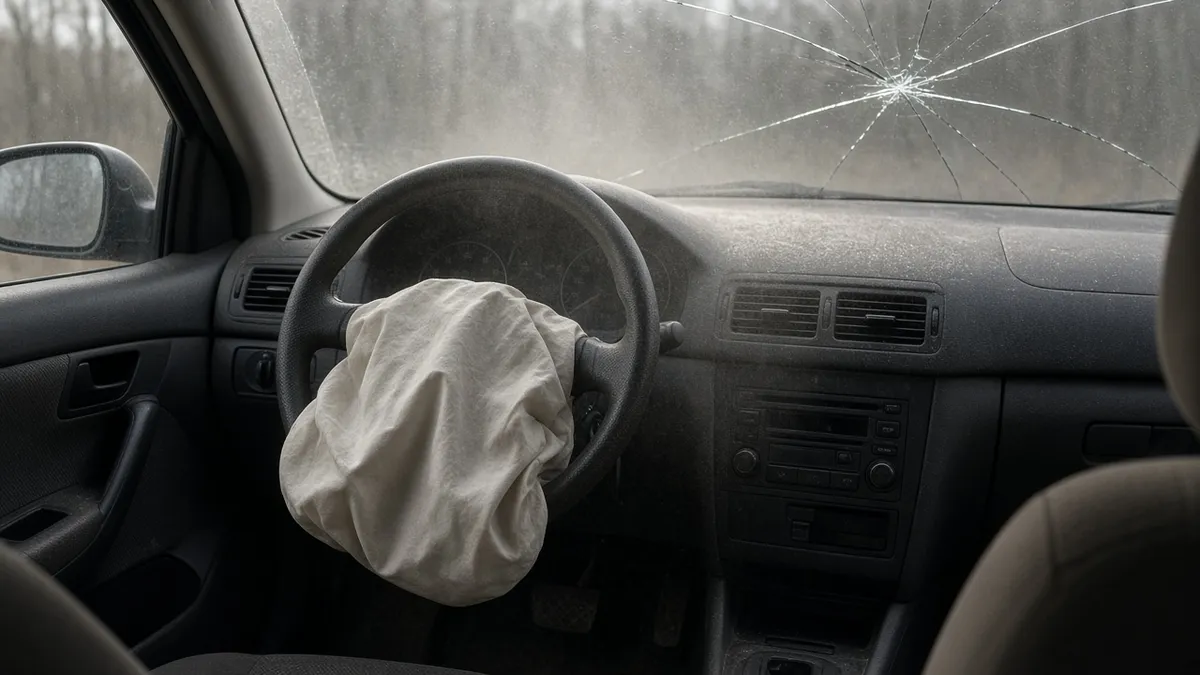
Airbags save thousands of lives, but they deploy with explosive force in a fraction of a second. Even when they work exactly as designed, they can burn, bruise and break bones. When an airbag is defective, deploying too hard, too late, not at all, or spraying metal fragments, an airbag injury can be life-threatening. Here’s what to watch for after a crash and how airbag injuries fit into a Kentucky injury claim.
Key takeaways: airbag injury
- Common airbag injuries include facial and eye injuries, chemical and friction burns, broken wrists and arms, chest injuries and hearing damage.
- Some symptoms, like eye damage, chest pain or hearing loss, can show up or worsen later.
- If the airbag worked properly, the at-fault driver is usually responsible for the injury.
- A defective airbag can support a product liability claim against the manufacturer, which may have a shorter deadline.
Common airbag injury symptoms
- Face and eyes: abrasions, broken nose, corneal scratches, retinal injuries. See facial and eye injuries.
- Burns: friction burns on the arms and face and chemical burns from the gases and powder released.
- Arms and wrists: fractures when hands are on the wheel.
- Chest: bruising, rib fractures and, rarely, heart or lung injuries.
- Ears: ringing (tinnitus) or hearing loss from the blast.
- Head and neck: concussion and whiplash, especially in short drivers sitting close to the wheel. See concussion after a car accident.
- Breathing problems from the powder, especially for people with asthma.
Get checked even if you feel fine. Delayed symptoms and gaps in treatment can hurt a claim.
Related: what to do after a car accident while pregnant.
When the airbag itself is defective
- Ruptured inflators that spray metal fragments, the problem behind the Takata recalls, the largest auto recall in U.S. history
- Failure to deploy in a crash severe enough to require it
- Late or unexpected deployment, sometimes without any crash
- Excessive force for the occupant’s size and position
- Sensor or wiring failures
Check your vehicle for open recalls with your VIN at NHTSA’s recall lookup. A defect claim is a product liability case. See also defective vehicle and crashworthiness claims.
Who pays for an airbag injury in Kentucky
If the airbag worked as designed, the injury is part of the crash, and the claim goes against the at-fault driver after your PIP pays first. If the airbag was defective, the manufacturer and sometimes the parts supplier can be liable. Kentucky presumes a product wasn’t defective if the injury happened more than five years after the first sale or eight years after manufacture, but that presumption can be rebutted with evidence (KRS 411.310).
Preserve the car
The airbag module and its crash data recorder are key evidence in a defect case. Don’t let the insurer salvage or crush the car until a lawyer has decided whether it needs to be inspected. Photograph the airbags, steering wheel and interior.
Deadlines
Crash claims against an at-fault driver generally have two years from the crash or last PIP payment (KRS 304.39-230(6)). A product liability claim against an airbag maker may have a shorter one-year deadline under KRS 413.140(1)(a), so don’t assume the two-year crash deadline covers it. See our Kentucky statute of limitations guide.
Airbag injury FAQs
Can an airbag cause injuries even if it works properly?
Yes. Burns, abrasions, broken wrists, eye injuries and hearing problems can all happen with a properly working airbag.
Can I sue if my airbag didn’t deploy?
Possibly. If the crash was severe enough that it should have deployed, a sensor or design defect may be to blame. The car’s crash data is key evidence.
How do I know if my airbag was recalled?
Enter your VIN on NHTSA’s recall lookup at nhtsa.gov/recalls.
How long do I have to file an airbag injury claim in Kentucky?
Claims against the other driver usually have two years under KRS 304.39-230(6). Claims against an airbag maker may have only one year, so act quickly.
Hurt by an airbag?
We’ll figure out whether the crash, the airbag or both caused your injuries, and preserve the vehicle before it’s gone. Call (502) 931-6788 or request a free consultation. No fee unless we win.
This post is general information about Kentucky law as of July 2026, not legal advice.