
Reviewed by Larry Forman, Attorney.
In a T-bone accident, the front of one vehicle slams into the side of another, usually in an intersection. There’s very little between the people on the struck side and the vehicle that hits them: a door, a window and a few inches of space. That’s why these crashes so often cause serious injuries, even at city speeds.
Forman & Associates represents people hurt in T-bone and side-impact crashes across Louisville and Kentucky. This page explains why these crashes are so dangerous, how Kentucky’s right-of-way laws decide fault, and the evidence to secure before it disappears.
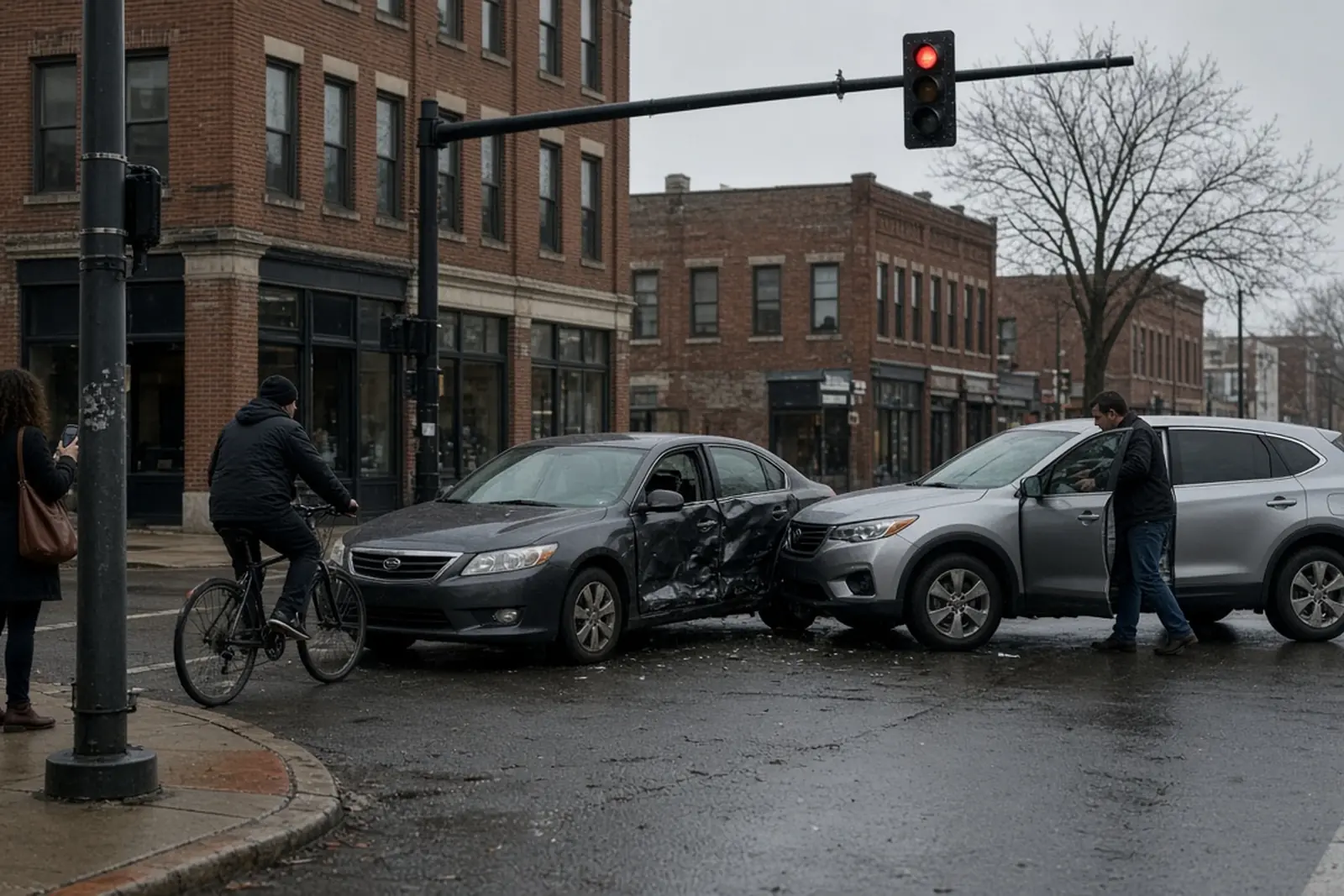
Kentucky State Police data shows these crashes are both common and deadly. In KSP’s 2024 Kentucky Traffic Collision Facts, angle collisions, the category that includes T-bones, made up about 32% of all two-vehicle collisions and about 44% of fatal two-vehicle collisions, the highest share of any crash type. See our Kentucky car crash statistics.
The reason is physics. The front of a car has a long crumple zone to absorb energy. The side doesn’t. Federal safety standards regulate side-impact protection specifically “to reduce the risk of serious and fatal injury to occupants … in side impacts” (FMVSS 214, 49 CFR 571.214). Side airbags and stronger doors help, but they can’t change how close the occupants sit to the point of impact.
“T-bone” describes what the crash looks like, not who caused it. Fault depends on who had the right-of-way. Our article on intersection crashes in Kentucky covers left turns and red lights in detail. In short:
Three more rules decide many T-bone cases:
A driver who violates a traffic statute and injures someone can be held liable for the resulting damages (KRS 446.070). But fault can be shared. A driver with the right-of-way who was speeding, distracted or “beating” a yellow may be assigned part of the fault under Kentucky’s comparative fault rule (KRS 411.182).
Watch: The Car Pulled Into His Path. He Had No Time to React.
Intersection crashes often turn into one driver’s word against the other’s: “My light was green.” That’s why objective evidence matters, and much of it disappears quickly:
Injuries depend heavily on where you were sitting:
When a side-impact crash is fatal, the family’s claim is brought by the estate’s personal representative. See our wrongful death page.
Most Kentucky car crash claims must be filed within two years of the injury or the last PIP payment, whichever is later. Claims involving government agencies and wrongful death follow different rules. See our statute of limitations guide. The video and signal records in a T-bone case can be gone in days, so don’t wait.
Learn more about Larry Forman, see our case results (past results don’t guarantee a similar outcome), or visit our main car crash page. Related crash types: head-on collisions and rear-end collisions.
A crash involving injury must be reported to the police agency with jurisdiction (KRS 189.635). Ask the officer for the report number before you leave. Kentucky crash reports can be bought online through BuyCrash.com, usually a few days after the crash.
Read the report carefully once you have it. In a T-bone crash, check the signal or sign controlling each direction, the diagram showing who entered the intersection, and the names of witnesses. If something is wrong, ask the officer about a supplement report; do not argue it with the other driver’s insurer.
Usually the driver who failed to yield the right-of-way: by running a red light or stop sign, turning left in front of oncoming traffic, or pulling out of a driveway. Fault can be shared if the other driver was speeding or distracted.
No. The shape of the crash doesn’t decide fault. It depends on who had the right-of-way, as shown by signals, signs, witnesses, video and vehicle data.
Then objective evidence decides it: video, signal timing records, independent witnesses and vehicle data. These can disappear quickly, so they need to be requested right away.
A yellow is a warning that the light is about to turn red. Entering on a yellow isn’t necessarily a violation. But the other side may argue you should have stopped, and a jury can divide fault.
The side of a vehicle has far less crush space than the front or rear, so the people on the struck side absorb more of the force. Head, chest, pelvis and internal injuries are common.
Generally two years from the injury or the last PIP payment. Government and wrongful death claims have different deadlines.
We’ll move quickly to lock down the video and signal records. Get a free case evaluation or call (502) 931-6788. No fee unless we win. Our office is at 1139 S. 4th St., Louisville, KY 40203.
This page is general information about Kentucky law as of October 2026, not legal advice.