
A truck load that shifts, spills or falls onto the highway can cause a crash in a split second. A steel coil rolls off a flatbed, a ladder or pallet bounces off a box truck, gravel pours from an uncovered dump bed, or a load shifts in a curve and tips the whole rig. If you were hurt in an unsecured load truck accident in Louisville or anywhere in Kentucky, the trucking company, the loader or the shipper may owe you for your injuries.
Cargo securement is one of the most detailed areas of federal trucking law. That's good news for an injured driver, because a falling load almost always means someone skipped a rule. Our job is to find out who loaded the truck, who checked it and who ignored the problem.
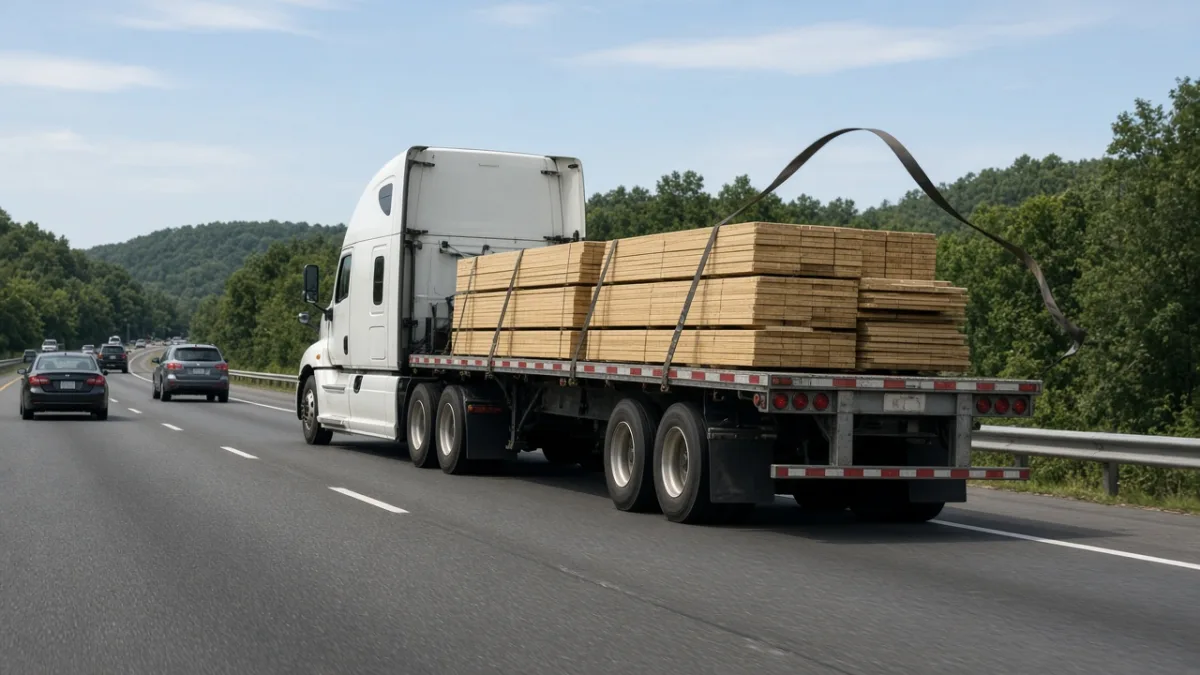
For crashes caused by debris when nobody can tell where it came from, see our road debris accident page.
Commercial trucks have to follow the Federal Motor Carrier Safety Administration's cargo securement rules in 49 CFR 393.100 through 393.136. The key requirements:
Kentucky's own rule covers every vehicle, not just big rigs. No vehicle may be driven on a highway unless it is built to keep its contents from escaping, and a load that can shift or spill must be covered if the vehicle travels more than one mile on a public highway (KRS 189.150). A violation of a safety statute like this one can support a negligence claim when it causes the kind of harm the law was meant to prevent (KRS 446.070).
Kentucky uses pure comparative fault, so fault can be divided among several of these parties and each pays its share (KRS 411.182).
Cargo and straps are often hauled away the same day. We send a preservation letter right away so the company can't throw them out.
Most Kentucky motor vehicle injury claims must be filed within two years of the crash or the last PIP payment, whichever is later (KRS 304.39-230(6)). Some claims against government entities, and claims involving a death, follow different rules. See our Kentucky statute of limitations guide.
Usually the driver and the trucking company, because federal rules make both responsible for securing the load and checking it during the trip. The shipper or loader can share fault if its crew loaded the truck, and an equipment maker can be liable if a strap or chain failed.
Witnesses, dashcams, traffic cameras and markings on the debris can often identify the truck. If it can't be found, your own uninsured motorist coverage may apply, depending on your policy terms. See what to do after a hit and run.
Yes. Under 49 CFR 392.9 the driver must inspect the cargo and tiedowns within the first 50 miles, then re-check at every change of duty status or every 3 hours or 150 miles, whichever comes first.
Yes. KRS 189.150 says a load that can shift or spill must be covered if the vehicle travels more than one mile on a public highway, and every vehicle must be built to keep its contents from escaping.
Generally two years from the crash or the last PIP payment, whichever is later, under KRS 304.39-230(6). Claims against government entities and death claims can follow different rules, so call early.
We'll find out who loaded the truck and lock down the cargo, straps and records before they disappear. Get a free case evaluation or call (502) 931-6788. No fee unless we win.
This page is general information about Kentucky law as of October 2026, not legal advice.