
Reviewed by Larry Forman, Attorney.
Dump trucks haul gravel, dirt, asphalt and demolition debris to and from construction sites and quarries across Kentucky. Loaded, they’re heavy and top-heavy, and they spend much of their time on two-lane roads, in work zones and backing up on job sites. Forman & Associates represents people hurt in a dump truck accident or by the debris these trucks spill.
Key takeaways
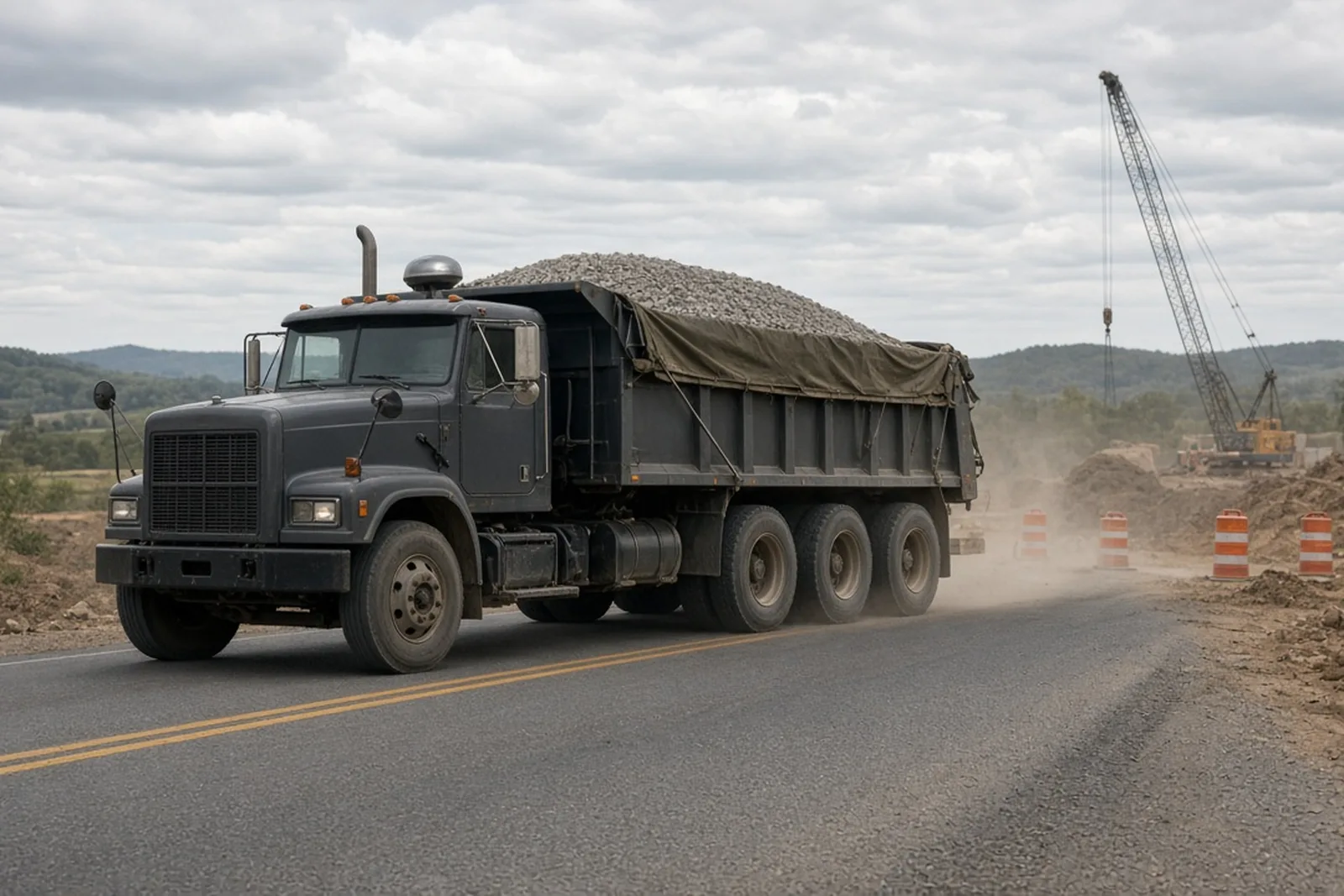
Kentucky prohibits driving a vehicle loaded so that its contents can drop, shift, leak or escape, and requires loads susceptible to spilling to be covered when traveling more than one mile (KRS 189.150). Federal cargo securement rules also apply to commercial motor vehicles in interstate commerce (49 CFR § 393.100). See unsecured load truck accidents and road debris accidents.
Kentucky sets maximum gross and axle weights (KRS 189.221, KRS 189.222). Off the interstate system, vehicles hauling only certain materials, including crushed stone, fill dirt, rock, sand, asphalt, concrete and coal, are allowed a 10% tolerance (KRS 189.222(11)). Trucks loaded beyond what the law allows take longer to stop, wear brakes faster and roll over more easily. Scale tickets and load records can show overloading.
Trucking cases often involve more than the driver: the motor carrier, the company that loaded the truck, a broker, a maintenance shop or a parts manufacturer may share responsibility. See trucking company liability and black box evidence.
For dump trucks, that may include the hauling company, the general contractor that hired it, and the quarry or site that loaded the truck.
Most Kentucky motor vehicle injury claims must be filed within two years of the crash or the last PIP payment, whichever is later (KRS 304.39-230). Wrongful death and claims against government entities can follow different rules. Estimate your dates with our statute of limitations calculator, then confirm them with a lawyer.
Possibly. If you can identify the truck, the hauler may be responsible for an unsecured or uncovered load. Your own comprehensive coverage may also pay for the glass.
Your uninsured motorist coverage may apply in some situations. Photos, dash cam video and witnesses help.
Many are, when used in interstate commerce and above federal weight thresholds. Kentucky rules apply on Kentucky roads either way.
The hauler’s insurance usually comes first; the contractor and others may share responsibility depending on the facts.
We find the hauler, the contractor and the load records. Free consultation.
Get a free case evaluation or call 502-931-6788.
This page is general information about Kentucky law as of October 2026, not legal advice. Every case is different.