
Reviewed by Larry Forman, Attorney
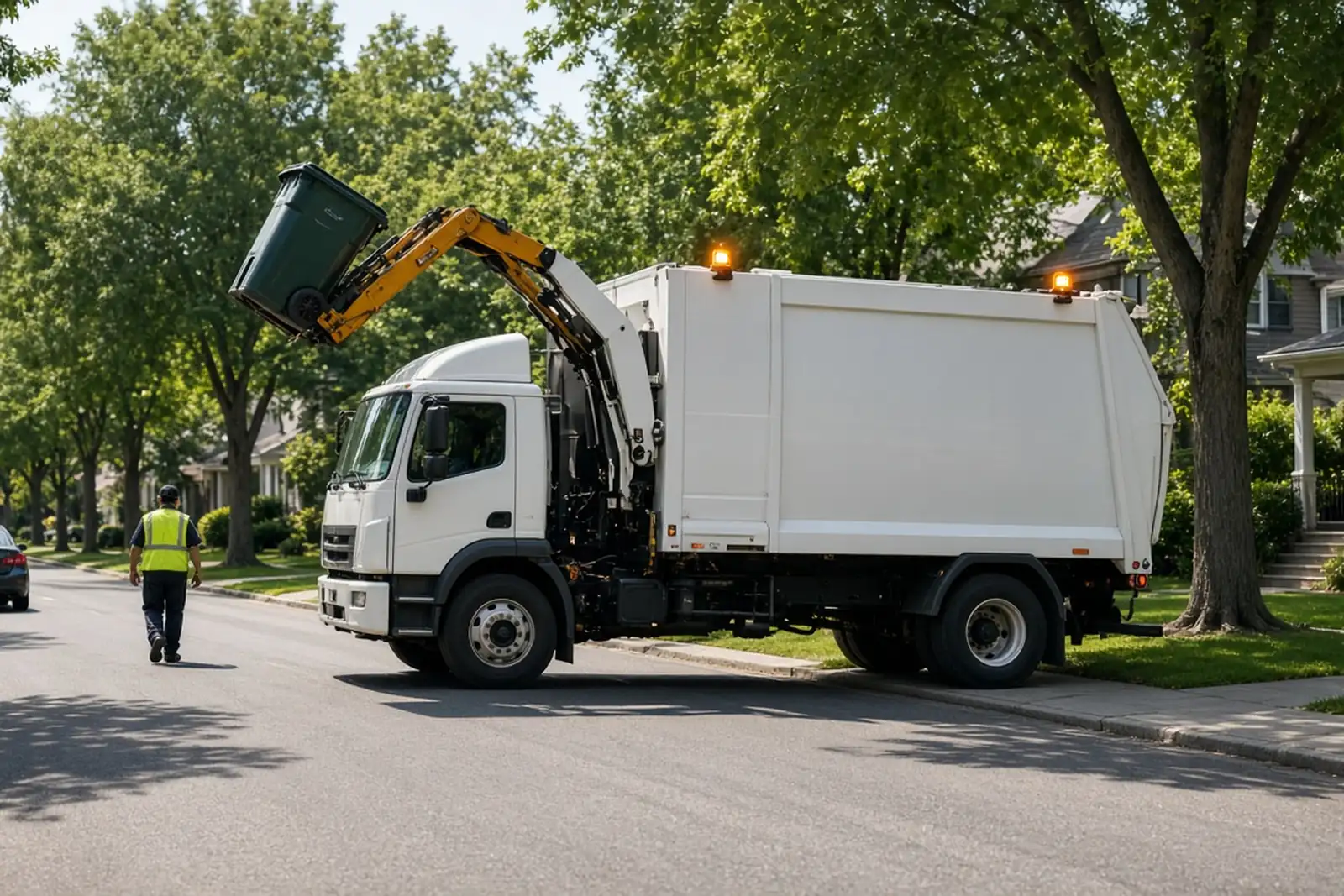
Garbage trucks are some of the heaviest vehicles on neighborhood streets, and they spend the whole day doing the things that cause crashes: stopping every few feet, backing up, swinging wide and pulling away from the curb. A garbage truck accident can crush a car, and for a pedestrian, cyclist or child it's often catastrophic. The claim is also more complicated than an ordinary car crash, because the truck may belong to a private hauler, a city or Louisville Metro, and each one comes with different rules. Forman & Associates helps people hurt by garbage and refuse trucks in Louisville and across Kentucky.
Kentucky law requires loads that can shift or spill to be covered on trips longer than a mile, and no vehicle may be operated so its contents escape (KRS 189.150). For crashes caused by objects in the road, see our road debris accident page.
Garbage trucks work the same streets where people walk to school, ride bikes and walk dogs, often in the early morning. A driver backing up or pulling forward from a stop has to check the area around the truck, and many trucks have cameras, mirrors and backup alarms for exactly that reason. Whether those systems worked, and whether the driver used them, is often the center of the case. See our bicycle and pedestrian collision and child pedestrian accident pages.
Kentucky has a law aimed at protecting collection crews. When a garbage truck is stopped with flashing yellow, red, white or amber lights, drivers approaching and passing it must yield to the truck and its workers by slowing to a safe speed and proceeding with due care (KRS 189.377). That rule matters in two ways:
The first question is who operates the truck. Many Kentucky communities contract with private haulers, while some cities and Louisville Metro run their own trucks.
Our government vehicle accident page explains these rules, and the deadlines that come with them, in detail.
Most full-size garbage trucks are heavy enough that the driver needs a Class B commercial driver's license, which covers single vehicles rated at 26,001 pounds or more (49 CFR 383.91). Drivers who need a CDL are also covered by federal drug and alcohol testing rules, including many drivers who work for local governments (49 CFR 382.103). A missing license, a failed or skipped test, or a history of crashes can show the company shouldn't have had that driver on the route. See our commercial vehicle crash page for other rules that apply to work trucks.
Garbage trucks generate a lot of evidence, but much of it is overwritten or discarded quickly:
We send preservation letters right away. See our list of evidence to preserve after an accident.
Kentucky's no-fault coverage pays first, up to its limits. See how Kentucky PIP works. After that, the claim goes against the hauler's commercial insurance, or against the driver when Metro or another immune government runs the truck. Commercial policies usually carry far higher limits than a personal auto policy, which matters when injuries are serious.
Kentucky car and truck crash claims generally have two years from the crash or the last PIP payment. Claims involving government vehicles can have different, shorter deadlines, and a wrongful death claim has its own timeline. See our statute of limitations guide and, for a fatal crash, our wrongful death lawyer page.
We identify the truck's operator in the first days, send preservation letters for camera, GPS and maintenance records, and canvass the street for home video before it's overwritten. We look at the driver's training, the route schedule and the truck's equipment, not just the moment of impact. We prepare cases for trial from the start. Larry Forman has tried 50+ jury trials and won 95% of them. Learn more about Larry Forman, see our case results (past results don't guarantee a similar outcome), or visit our main truck wreck lawyer page.
Usually the truck driver. A driver backing up has to make sure the way is clear, and garbage trucks often have cameras and alarms for that. The hauling company may also be responsible.
Usually, if the truck belongs to a Kentucky city. Louisville Metro has county-level immunity, so the claim usually goes against the driver, and Metro generally must pay a judgment or settlement for its employee.
A private hauler has no government immunity, even under a city contract. The claim goes against the company and its commercial insurance, like other commercial vehicle crashes.
It requires drivers approaching and passing a stopped garbage truck with flashing lights to slow to a safe speed and proceed with due care. It protects both the truck and its workers.
Most do. A single vehicle rated at 26,001 pounds or more requires a Class B CDL, and CDL drivers are covered by federal drug and alcohol testing rules.
Generally two years for Kentucky crash claims, measured from the crash or the last PIP payment. Claims involving a government-run truck can have different deadlines, so act quickly.
We'll find out who ran the truck and lock down the video before it's gone. Get a free case evaluation or call (502) 931-6788. No fee unless we win.
This page is general information about Kentucky law as of October 2026, not legal advice.