
Flatbed trucks haul the loads that can't go in a box trailer: steel beams, pipe, lumber, machinery, coils and building materials. Nothing but chains, straps and the driver's attention keeps that cargo on the truck. When something goes wrong, a flatbed truck accident can be devastating, because the load itself becomes the danger.
If you were hurt in a crash with a flatbed in Louisville or anywhere in Kentucky, the driver, the trucking company and the company that loaded the truck may all be responsible.
Key takeaways
Cargo on a flatbed must be held against hard braking and swerving forces (49 CFR 393.102), with enough tiedowns for the cargo's weight and length (49 CFR 393.106, 49 CFR 393.110). Specific rules apply to metal coils, lumber, pipe, machinery and other commodities in 49 CFR 393.116 to 393.136. The driver must inspect the cargo and tiedowns within the first 50 miles and then at regular intervals (49 CFR 392.9).
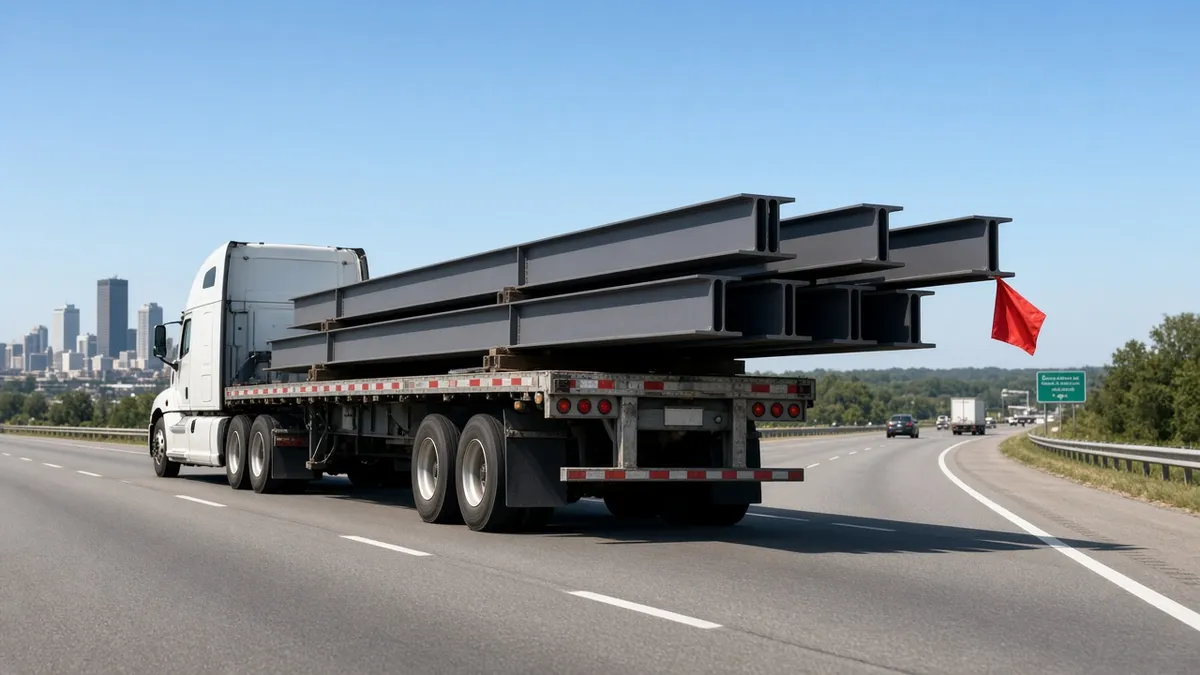
Loads that stick out more than 4 feet past the rear, or more than 4 inches past the sides, must be marked with red or orange fluorescent warning flags (49 CFR 393.87), and projecting loads need lamps at night. A missing flag can be the difference between a driver seeing the load and hitting it.
Photos of the load, straps, chains and debris at the scene; the bill of lading; the driver's logs and inspection reports; black box data; the carrier's maintenance records for its securement gear; and dashcam or TRIMARC footage. A preservation letter should go out quickly.
Most Kentucky truck crash injury claims must be filed within two years of the crash or the last PIP payment, whichever is later (KRS 304.39-230(6)). Claims involving a death or a government vehicle follow different rules. See our Kentucky statute of limitations guide.
Usually the driver and the trucking company, because federal rules make both responsible for securing and checking the load. A shipper or loader can share fault if its crew loaded the truck.
Yes. Under 49 CFR 393.87, loads extending more than 4 feet past the rear or 4 inches past the sides must be marked with red or orange fluorescent warning flags, and lamps are required at night.
Often because of a high, heavy or off-center load combined with speed on a curve or ramp, or cargo that shifts.
Generally two years from the crash or the last PIP payment, whichever is later, under KRS 304.39-230(6).
We'll find out who loaded the truck and what gave way, and preserve the evidence fast. Free case evaluation. Get a free case evaluation or call (502) 931-6788. No fee unless we win.
This page is general information about Kentucky law as of October 2026, not legal advice.