
Reviewed by Larry Forman, Attorney
Speed turns ordinary mistakes into serious crashes. A driver going too fast has less time to react, needs more room to stop and hits harder. If you were hurt in a speeding accident, the other driver's speed is often the most important fact in your case, and it can be proved with evidence that the driver can't argue with. Kentucky law also treats speed as a matter of judgment, not just the number on the sign.
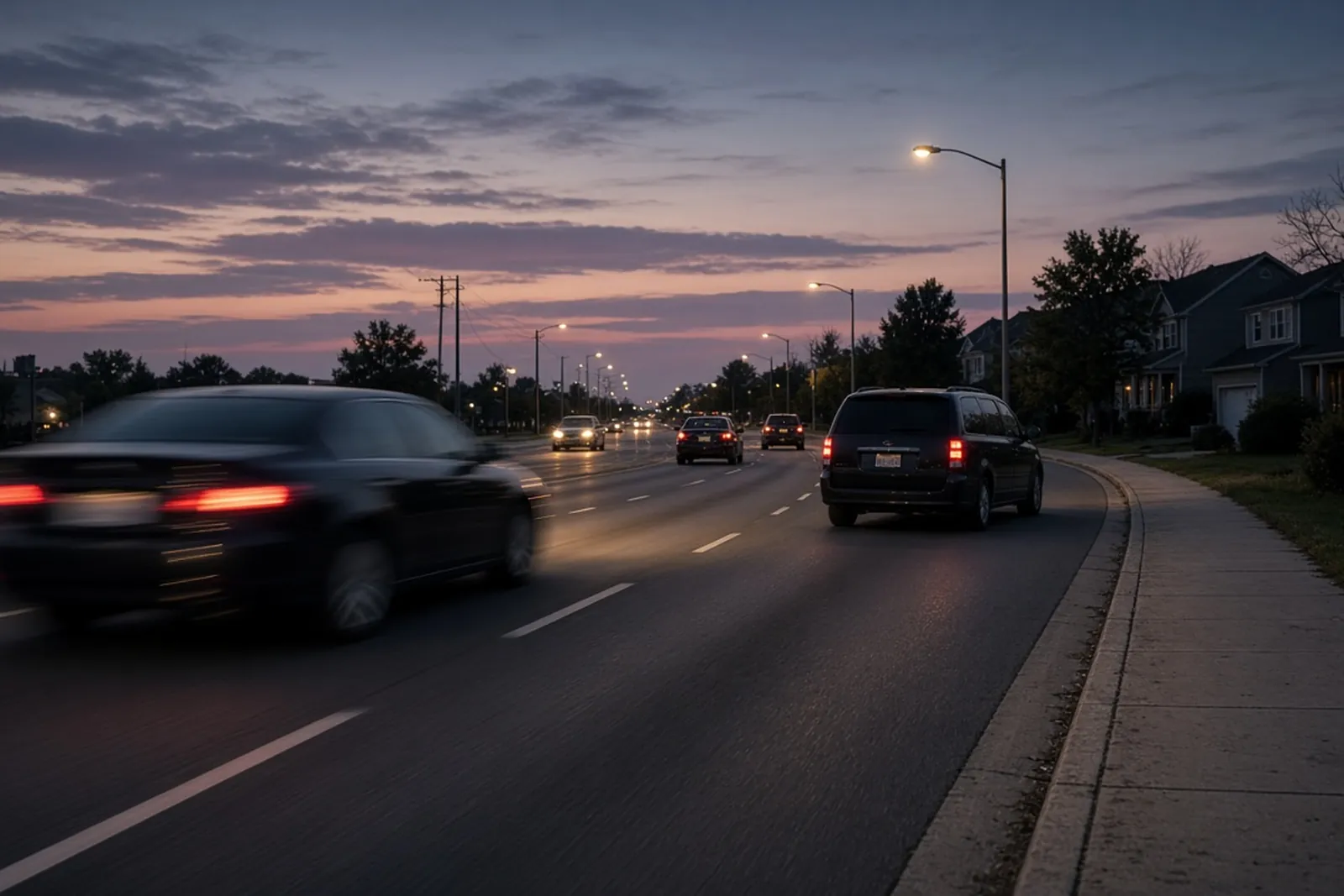
Officers listed "unsafe speed" as a factor in 1,162 Kentucky collisions in 2024, but those crashes made up about 1 in 7 of the state's fatal collisions (98 fatal crashes). "Too fast for conditions" was listed in another 3,487 collisions, 30 of them fatal (KSP, 2024 Kentucky Traffic Collision Facts). These are officer-reported factors, and speed is often missed when no one measures it.
The core rule isn't a number. "An operator of a vehicle upon a highway shall not drive at a greater speed than is reasonable and prudent, having regard for the traffic and for the condition and use of the highway" (KRS 189.390(2)). A driver going the limit in heavy rain, fog or traffic can still be driving too fast.
The default limits on state highways, unless a different limit is posted, are:
Work zones often have lower temporary limits. See work zone accidents. Our Kentucky traffic laws guide covers the other rules of the road.
Many crashes come from speed that's legal on paper but wrong for the conditions:
Drivers almost never admit how fast they were going. The evidence usually shows it:
A defect can also change how the evidence looks, for example when a stuck throttle or brake failure is involved. See defective vehicle claims.
When a driver breaks a traffic law and causes the injury the law was meant to prevent, the violation can be used to prove negligence. Kentucky law says "a person injured by the violation of any statute may recover from the offender such damages as he sustained by reason of the violation" (KRS 446.070).
What if you were speeding too? Kentucky uses pure comparative fault (KRS 411.182). Your damages can be reduced by your share of fault, but you can still recover. See how pure comparative fault works and what to do if you were partly at fault.
Speeding drivers often cause T-bone crashes at intersections. A speeding motorcycle or truck raises its own issues, and so does a police chase.
Kentucky law says "no person shall engage upon any street or highway in motor vehicle racing, drag racing, or any other form of competition involving motor vehicles," except at permitted events (KRS 189.505). Racing, and speeds far above the limit in busy areas, are the kind of conduct that can support punitive damages, which punish rather than just compensate. The standard is high. See our punitive damages guide. When two drivers were racing, we look at whether both can be held responsible, even if only one hit you.
We lock down the vehicle data, video and witnesses in the first days, and we work with reconstruction engineers when the other side disputes the speed. We look at every policy that might pay, and at punitive damages when the driving was extreme. We prepare cases for trial from the start. Larry Forman has tried 50+ jury trials and won 95% of them. Learn more about Larry Forman, see our case results (past results don't guarantee a similar outcome), or return to our car crash lawyer page. If a speeding driver caused a death, see our fatal car accident page.
With the vehicles' event data recorders, reconstruction, video, phone data and witnesses. Physical evidence often shows speed more reliably than anyone's memory.
Yes. Kentucky requires a speed that's "reasonable and prudent" for traffic and road conditions. Driving the limit in heavy rain or traffic can still be negligent.
You can still recover. Kentucky's pure comparative fault rule reduces your damages by your share of fault, but it doesn't bar the claim.
It helps, but it isn't the whole case. A ticket shows what the officer believed. The crash data and other evidence usually matter more, and we gather them either way.
Possibly. Racing and extreme speed in busy areas can meet Kentucky's standard for punitive damages, but the bar is high and depends on the facts.
Generally two years from the crash or the last PIP payment for Kentucky car crash claims. Don't wait, because vehicle data and video can be lost quickly.
Let us prove how fast they were going. Get a free case evaluation or call (502) 931-6788. No fee unless we win.
This page is general information about Kentucky law as of October 2026, not legal advice.