
Reviewed by Larry Forman, Attorney.
Children don’t judge speed and distance the way adults do, and drivers often don’t see them until it’s too late. When a car hits a child walking to school, playing near the street or crossing a parking lot, the injuries can be severe and the insurer may blame the child or the parents. This page explains what Kentucky law expects of drivers around children, how fault works in a child pedestrian accident, and how a child’s claim is handled and protected. Related reading: Child Car Seat Injury in Kentucky: Seat Laws, Defects and Your Child’s Claim.
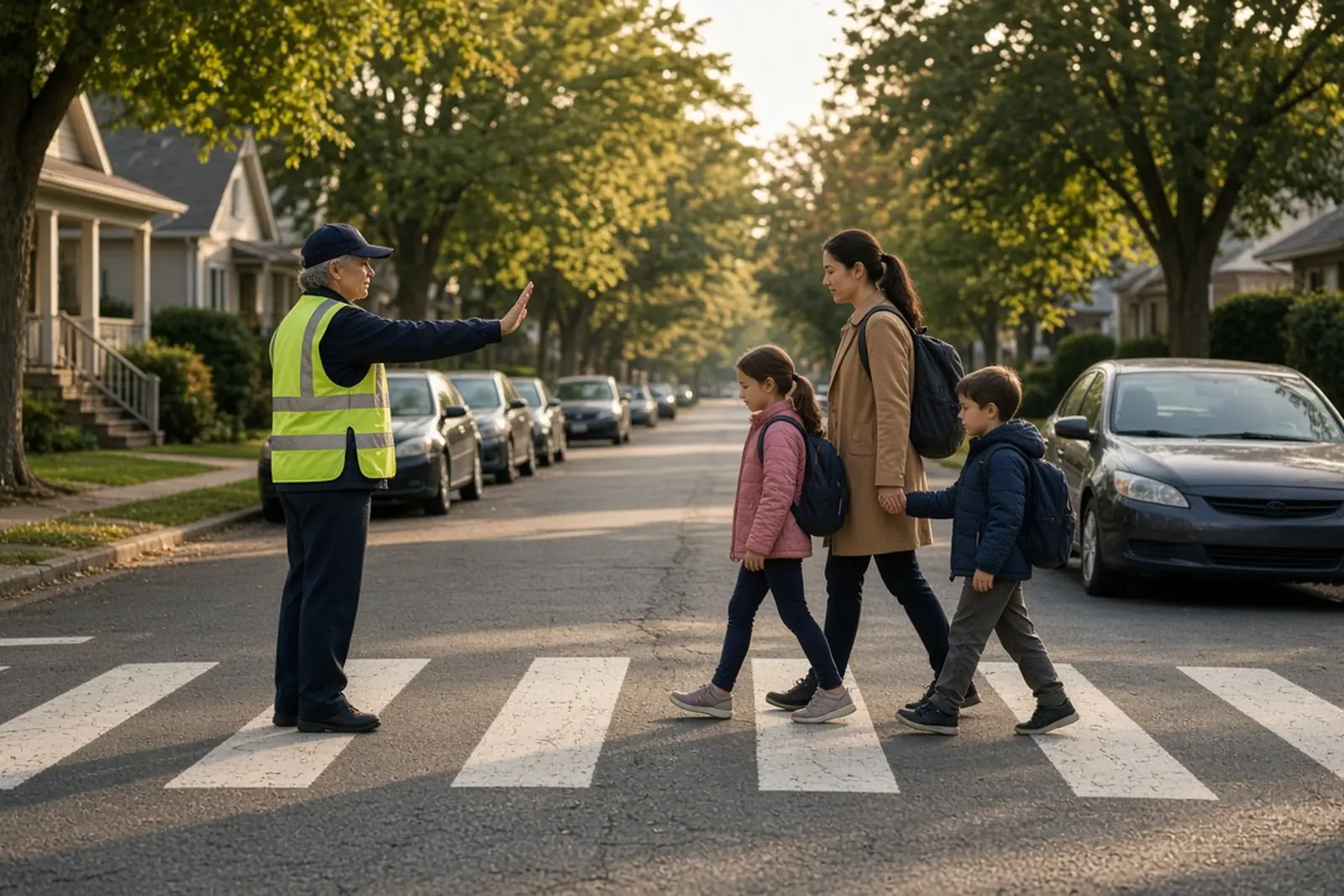
Kentucky’s pedestrian statute puts a specific duty on drivers when children are present. Every driver “shall exercise due care to avoid colliding with any pedestrian and shall give warning by sounding the horn when necessary and shall exercise proper precaution upon observing a child” (KRS 189.570). The same statute requires drivers to:
A driver who sees children near the road and doesn’t slow down, keep a lookout or sound the horn may be negligent. When a driver breaks a safety statute and causes injury, Kentucky law allows the injured person to recover for the harm the violation caused.
Insurers often argue the child “came out of nowhere.” Kentucky’s statute does say a pedestrian shouldn’t suddenly leave a curb into the path of a vehicle so close it’s an immediate hazard. But a child isn’t held to an adult’s standard.
Kentucky courts measure a child’s conduct by what’s expected of an ordinary child “of like age, intelligence, and experience” (Williamson v. Garland, Ky. 1966). Whether a nine-year-old pedestrian met that standard was a question for the jury (Oldham v. Adkisson, Ky. 1969). In practice, the younger the child, the harder it is to argue the child was at fault at all.
Even if some fault is assigned to a child, Kentucky’s pure comparative fault rule reduces the recovery by that share; it doesn’t bar it (KRS 411.182). See how pure comparative fault works.
Insurers also sometimes argue that a parent wasn’t watching closely enough. That argument doesn’t erase the driver’s own duty to take proper precautions when children are around.
Because children are shorter, a car’s bumper and hood often strike them higher on the body than an adult, including the head and chest. Common injuries include:
A child’s injuries can affect growth and development in ways that only show up years later. That’s one reason to be careful about settling early.
An injury to a child usually creates two claims: the child’s claim (pain and suffering, permanent injury, scarring and lost future earning capacity) and the parents’ claim for the medical bills they’re responsible for.
Kentucky has special rules for settling a child’s claim. A parent with custody can settle without a court-appointed guardian or conservator only when the child’s share, after medical bills, liens and fees, is $25,000 or less, and the money must be deposited into a restricted account or used to buy an annuity (KRS 387.278). Larger settlements require a conservator and court oversight. Hospitals and health plans may also claim repayment; see medical liens in a Kentucky settlement.
Deadlines: don’t count on extra time because the injured person is a child. The parents’ claim and motor vehicle claims have their own deadlines, and evidence fades quickly. See our statute of limitations guide.
If the worst happened and a child died, see our wrongful death page.
The weeks after a child pedestrian accident are hard on the whole family. A few steps protect your child’s health and the claim at the same time:
Insurers sometimes push for a quick settlement of a child pedestrian accident before anyone knows how the child will heal. Waiting until the doctors can say what the future looks like usually protects your child.

We investigate sight lines, speed and the driver’s attention, and we gather video, witness statements and medical records. We make sure the settlement protects your child as Kentucky law requires. We prepare every case for trial. Larry Forman has tried 50+ jury trials and won 95% of them. See our case results (past results don’t guarantee a similar outcome) and our main pedestrian accident lawyer page.
Kentucky pauses most injury deadlines while the injured person is a minor. Under KRS 413.170, a child’s own claim can be brought within the same number of years after turning 18 as an adult would have had after the injury.
That does not mean families should wait. Witnesses move, video is erased, and the parents’ own claim, such as for medical bills they paid, may follow a different deadline. Insurance policies and claims against public bodies can also carry notice rules that are not paused.
Early steps that help: get the crash report number, save the clothing and shoes your child wore, take photos of the scene, and keep every pediatric and therapy record.
Possibly. Kentucky requires drivers to take proper precaution when they see a child, and a child’s fault is judged by what’s expected of a child that age. Any fault assigned reduces the recovery but doesn’t bar it.
Usually the PIP coverage on the vehicle that struck your child first, up to $10,000, then the driver’s liability insurance and your own UM/UIM coverage.
Only in limited cases. A custodial parent can settle without a conservator only if the child’s net share is $25,000 or less, and the money must go into a restricted account or annuity.
No. Kentucky measures a child’s conduct against an ordinary child of the same age, intelligence and experience.
The driver may be responsible, and the school or daycare may share responsibility if its procedures failed. Report it to the school in writing and keep a copy.
It depends on the claim. Don’t assume the deadline waits until your child turns 18; talk to a lawyer soon.
Call (502) 931-6788 or request a free case evaluation. No fee unless we win. Our office is at 1139 S. 4th St., Louisville, KY 40203.
This page is general information as of October 2026, not legal advice.