
Reviewed by Larry Forman, Attorney
When a baby doesn’t get enough oxygen and blood flow to the brain around the time of birth, the result can be an HIE birth injury: hypoxic-ischemic encephalopathy. Parents often first hear the term in the NICU, sometimes along with the words “cooling therapy.” This page explains what HIE is, what causes it, why the first hours after birth matter so much, and how a Kentucky family can find out whether the injury was preventable.
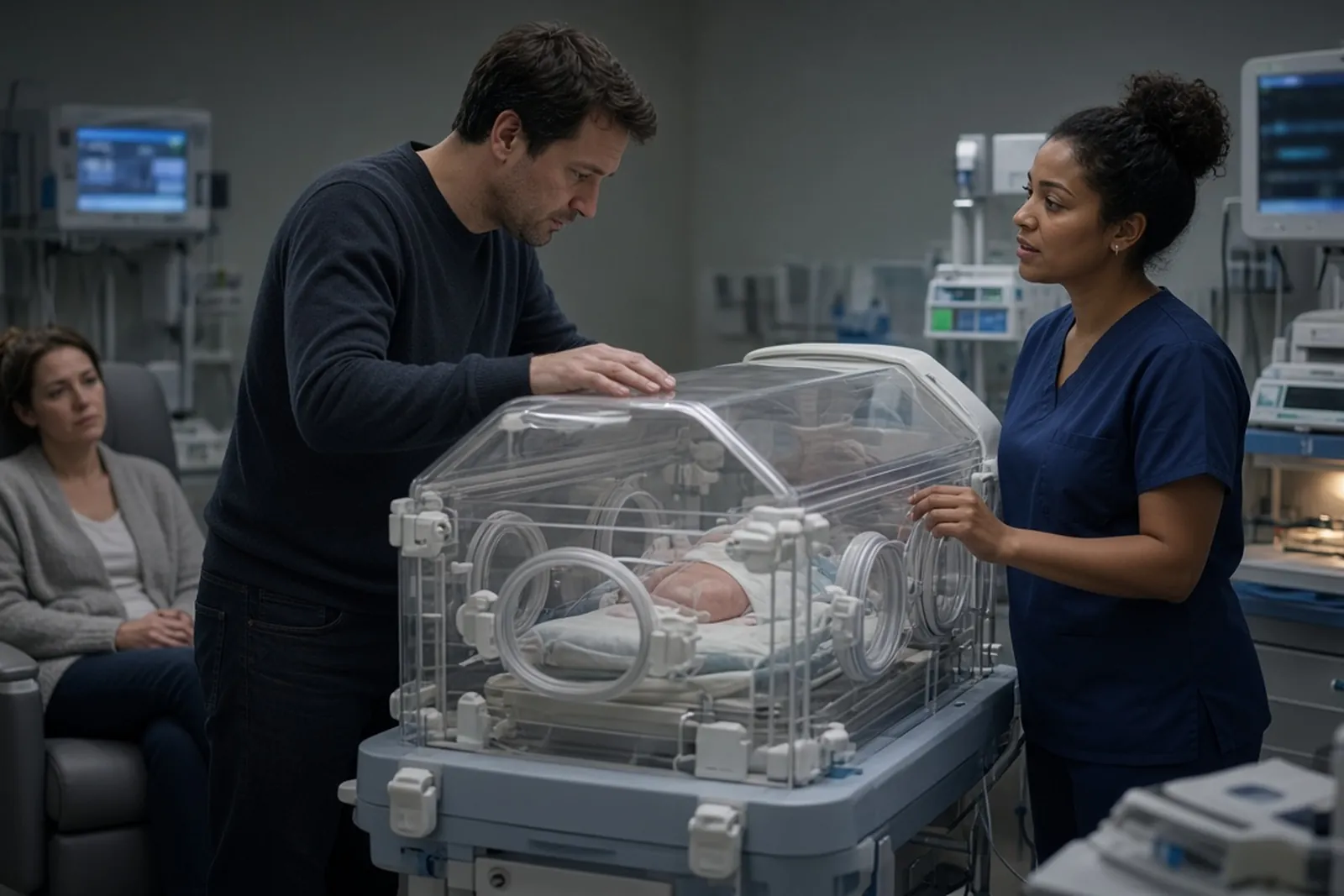
HIE is a brain injury caused by reduced oxygen (hypoxia) and reduced blood flow (ischemia) to a baby’s brain before, during or shortly after delivery. A research review by a National Institutes of Health author estimates that HIE affects about 0.5 to 1 of every 1,000 live births in the United States.
HIE ranges from mild to severe. Doctors grade it with a neurological exam (often a modified Sarnat exam) that looks at the baby’s alertness, muscle tone, reflexes, breathing and seizures. Severe HIE can lead to death or to lifelong disabilities, including cerebral palsy, seizures, intellectual disability, and vision or hearing problems.
The NIH review lists acute events around delivery such as:
Other causes include prolonged or difficult labor, maternal low blood pressure, infection, and problems with the baby’s breathing or circulation right after birth. Some injuries begin before labor and aren’t anyone’s fault. Not every HIE case is malpractice.
A claim may exist when the injury happened, or got worse, because care fell below the accepted standard, for example:
The main treatment for moderate to severe HIE is therapeutic hypothermia: cooling the baby’s body to about 33.5 °C (92.3 °F) for 72 hours, then slowly rewarming. The American Academy of Pediatrics (AAP) says cooling started within 6 hours of birth reduces the risk of death or serious disability in babies born at 36 weeks or later with moderate to severe HIE.
Because the window is short, the AAP says every center or practitioner involved in deliveries should have plans to recognize HIE promptly and either start cooling or transfer the baby to a center that provides it. When a baby who qualified wasn’t identified, cooled or transferred in time, that delay may itself be a breach of the standard of care.
The AAP also notes that cooling a baby doesn’t by itself prove that oxygen deprivation caused the brain injury. The cause has to be established from the whole record.
Ask specifically for the monitoring strips and the cord gas results; they’re sometimes left out of a standard request. See how to request medical records.
HIE claims are medical malpractice claims; see our medical malpractice page for the full rules.
The full extent of an HIE injury may not be clear for months or years. A life care plan projects lifetime needs. Settlement money for a child must be protected under Kentucky law, often through a structured settlement, trust or restricted account (KRS 387.278 covers smaller settlements). Health plans and Medicaid may need repayment; see medical liens in a Kentucky settlement.
We obtain every record from labor through the NICU and have qualified obstetricians, neonatologists and pediatric neurologists review the timeline: when the warning signs appeared, what the team did, and whether cooling was considered in time. If the review doesn’t support a claim, we’ll tell you. We prepare every case for trial. Larry Forman has tried 50+ jury trials and won 95% of them. See our case results (past results don’t guarantee a similar outcome) and our main birth injury lawyer page.
Kentucky gives you a right to your own chart. On your written request, a licensed hospital or health care provider must give you one copy of your medical record free of charge; a second copy can cost up to $1 a page (KRS 422.317). Federal privacy law adds a deadline: a provider generally has 30 days to act on your request, with one 30-day extension if it explains the delay in writing (45 CFR 164.524).
For an HIE claim, ask for more than the visit notes. Request the fetal heart monitor strips, cord blood gas and Apgar results, NICU records including the cooling-therapy timeline, newborn MRI images, EEG reports, and the placenta pathology report. Keep the copies together with a simple log of every appointment, test and missed workday. That record is often what proves how the injury has changed your life.
Hypoxic-ischemic encephalopathy: a brain injury caused by too little oxygen and blood flow to the brain around the time of birth.
No. Some causes begin before labor or can’t be prevented. A claim exists when substandard care caused the injury or made it worse.
Cooling the baby’s body for 72 hours can reduce brain damage. The AAP says it should start within 6 hours of birth for eligible babies.
Not necessarily. The question is also what happened before birth and whether cooling started in time.
Yes. Moderate to severe HIE can lead to cerebral palsy and other lasting disabilities.
Malpractice claims generally have one year from discovery. The child’s own claim usually gets extra time, but the parents’ claims may not, so talk to a lawyer soon.
Call (502) 931-6788 or request a free case evaluation. No fee unless we win. Our office is at 1139 S. 4th St., Louisville, KY 40203. See also our Erb’s palsy page.
This page is general information as of October 2026, not legal or medical advice.