
Resource Center · After a Crash

What to Do After a Car Accident in Louisville: Checklist and Free Glovebox Card

A step-by-step checklist for the scene, the first days and dealing with insurance, plus a free printable card for your wallet and glovebox.

Reviewed by Larry Forman, Attorney

A crash is scary and confusing, even a minor one. What you do in the first minutes, days and weeks can protect your health and your ability to recover the costs. This checklist walks through what to do after a car accident in Louisville or anywhere in Kentucky.

For a closer look at the first day, including what to say and not say to insurers, see our guide to the first 24 hours after a car accident.
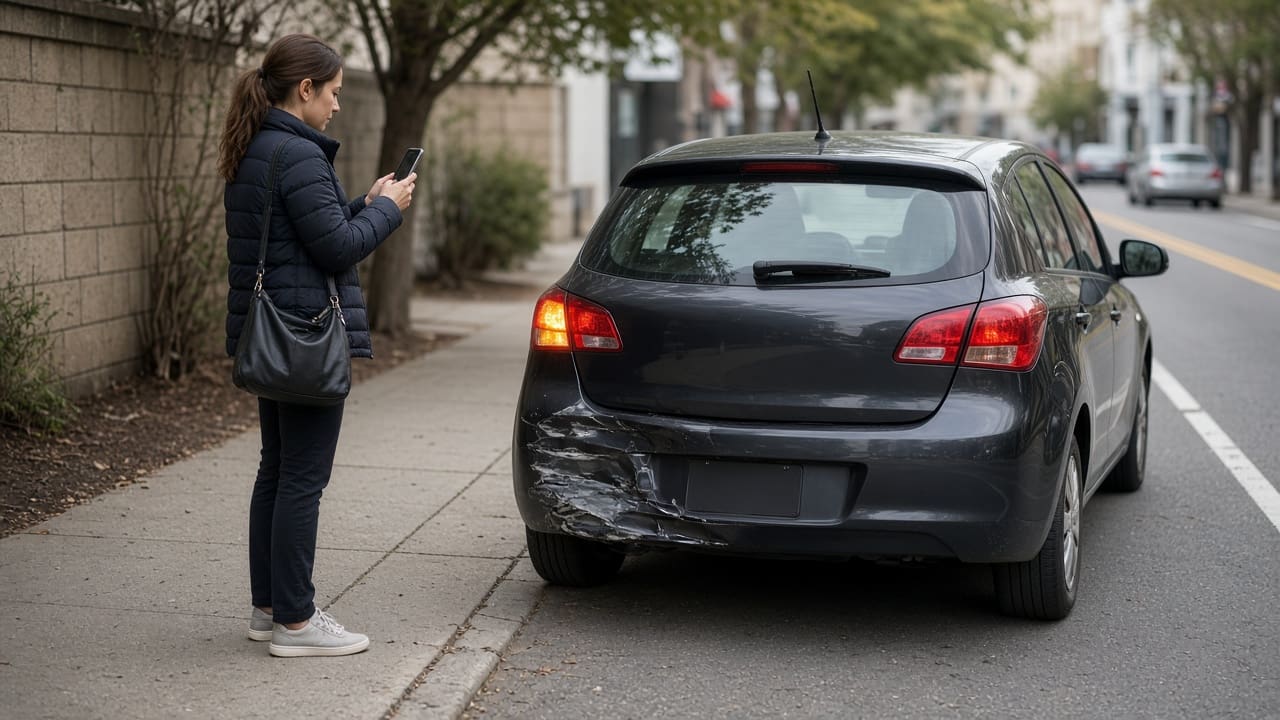
Knowing what to do after a car accident in Louisville, a driver crouched on a city sidewalk photographs a dented rear bumper with a smartphone after a minor rear-end collision.

Free download: car accident checklist and glovebox card

A two-page printable PDF: a wallet card and a glovebox card with the key steps and a place for crash notes, plus a full-page checklist. Print it at actual size, cut it out and keep it in your car.

Download the PDF (free) Read the checklist

At the scene

  1. Check for injuries and call 911 if anyone is hurt. Don’t move someone who may have a neck or back injury unless they’re in danger.
  2. Get safe. Turn on your hazard lights. If no one is hurt and the cars can be driven, move them out of traffic. On an interstate, stay buckled in your car or get well away from traffic.
  3. Call the police. Kentucky law requires drivers to notify police right away when a crash causes injury, death or a vehicle that can’t be driven (KRS 189.635(3)). In Louisville, call 911 for emergencies. For a non-emergency crash, LMPD’s 24-hour line is 502-574-LMPD (5673).
  4. Get the officer’s name, agency and report number. You’ll need the report number to get your crash report and to start insurance claims.
  5. Take photos and video of every vehicle, license plates, damage, the whole scene, skid marks, debris, traffic signals and signs, weather and road conditions, and your injuries.
  6. Exchange information: names, phone numbers, insurance companies, policy numbers and plate numbers. Photograph the other driver’s license and insurance card if they agree.
  7. Find witnesses. Get names and phone numbers. Note nearby businesses or homes that may have cameras.
  8. Stick to the facts. Don’t argue, guess about speed or fault, or apologize. Saying “I’m sorry” can be used against you later.

In the first few days

  1. See a doctor within a day or two, even if you feel fine. Adrenaline can hide pain, and some injuries, like concussions, show up later. A gap in treatment can also hurt an injury claim. Serious injuries belong at a Louisville trauma center.
  2. Tell your own insurer about the crash. Kentucky’s PIP (no-fault) coverage usually pays the first $10,000 of medical bills and lost wages regardless of fault, unless you rejected the no-fault limits. Benefits are overdue if not paid within 30 days of reasonable proof of the loss (KRS 304.39-210). Learn how Kentucky PIP works.
  3. Get your crash report and check it for mistakes. See how to get a Louisville (LMPD) accident report, or our guides for Lexington and Kentucky State Police reports.
  4. Start a file. Keep every medical bill, receipt, pay stub, doctor’s note, repair estimate and letter from an insurer. Write down what happened while it’s fresh.
  5. Ask about video quickly. Business cameras and traffic cameras often record over footage within days or weeks. On Louisville interstates, see TRIMARC camera footage. Also see evidence to preserve after a crash.

Dealing with insurance companies

  • Be careful with the other driver’s insurer. Its adjuster works for its policyholder. You don’t have to give it a recorded statement.
  • Your own insurer is different. Your policy probably requires you to cooperate, but you can still talk with a lawyer first.
  • Don’t sign anything you don’t understand, especially a release or a broad medical authorization.
  • Don’t accept a quick settlement before you know the full extent of your injuries. Once you sign a release, you usually can’t reopen the claim.
  • Stay off social media about the crash and your injuries.
  • Keep a call log: date, time, name and what was said.

Our Kentucky insurance company guides explain how to deal with State Farm, Progressive, GEICO, Kentucky Farm Bureau and Allstate, and our adjuster tactics guide covers what adjusters commonly say.

Special situations

Know your deadline

Kentucky deadlines are short. Most injury claims from a car, truck or motorcycle crash must be filed within two years of the injury or the last PIP payment, whichever is later (KRS 304.39-230(6)). Many other injury claims have only one year, and a claim involving a defective city street requires written notice within 90 days. Talking with an insurer doesn’t stop the clock.

Get an estimate with our Kentucky deadline calculator, and read the full Kentucky statute of limitations guide.

Louisville crash facts

From 2021 through 2025, 604 people were killed and 2,369 seriously injured in crashes in Louisville Metro, according to Louisville Metro Public Works’ Vision Zero data. Two of every three deaths happened between 6 p.m. and 6 a.m. See the full Louisville car accident statistics report.

See all resources →

50+ jury trialsReady to take your case to court
Free consultationTalk with us at no cost
No fee unless we winYou pay nothing up front
We come to youPhone, video or in person

Frequently asked questions about what to do after a car accident in Louisville

What should I do right after a car accident in Louisville?

Check for injuries and call 911 if anyone is hurt, get to safety, call the police, get the report number, take photos, exchange insurance information, and get witness contact information. Then see a doctor within a day or two.

Do I have to call the police after a minor accident in Kentucky?

Kentucky requires drivers to notify police right away if anyone is hurt or a vehicle can’t be driven (KRS 189.635). If no officer investigates and damage is over $500, you must file a civilian report with Kentucky State Police within 10 days.

Who pays my medical bills after a car accident in Kentucky?

Usually your own PIP (no-fault) coverage pays the first $10,000 of medical bills and lost wages, regardless of fault, unless you rejected the no-fault limits. Costs beyond that may be recovered from the at-fault driver’s insurance.

Should I talk to the other driver’s insurance company?

You can report the claim, but you don’t have to give the other driver’s insurer a recorded statement. It’s wise to talk with a lawyer first.

Is the glovebox card really free?

Yes. Download the PDF, print it at actual size and cut out the cards. There’s nothing to sign up for.

Hurt in a Louisville crash?

Talk to us before you talk to the other driver’s insurer. We can explain your options and handle the insurance companies for you.

Have a question about your case? Get a free case evaluation or call 502-931-6788.

This checklist is general information, not legal advice.

Call (502) 931-6788 Request a free consultation

Contact us for Your FREE Case Evaluation