Reviewed by Larry Forman, Attorney.
Crowded aisles, slush tracked in at the door, overloaded shelves and packed parking lots make November and December prime time for falls and other injuries. If a store’s carelessness caused your holiday shopping injury, Kentucky law may hold the business responsible. The same goes for a fall at a holiday party or a fire caused by defective decorations.
A holiday shopping injury may involve a wet entrance, falling merchandise, a crowded parking lot, a holiday host or a defective product. The sections below explain when someone else may be responsible and what evidence to preserve.
Holiday shopping injury from falls in stores: wet entrances, spills and clutter
Customers are “invitees,” the group Kentucky law protects most. A store must use reasonable care to keep the premises reasonably safe, which includes looking for hazards and fixing or warning about them. Common holiday hazards include:
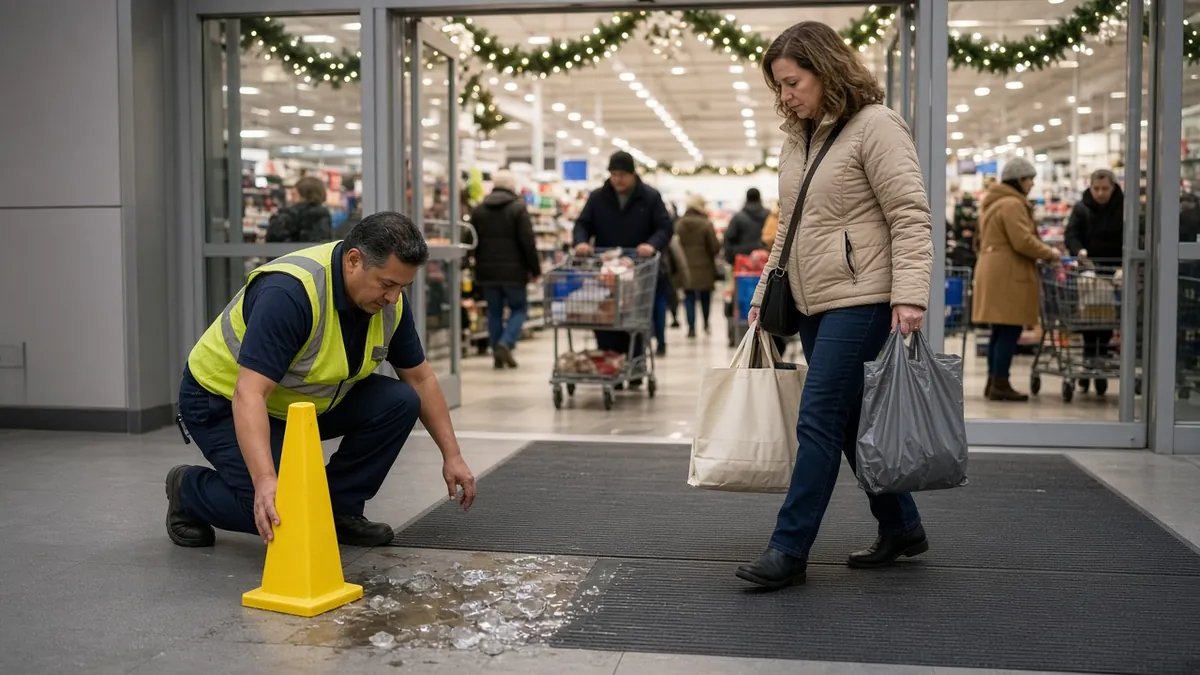
- Melted snow and slush at entrances without mats or warning cones
- Spilled drinks and broken products in aisles
- Boxes, pallets and restocking carts left in walkways during busy hours
- Temporary displays and holiday decorations that block aisles or stick out into them
- Cords from lighted displays crossing walkways
Kentucky shifts the burden to the store in many spill cases. In Lanier v. Wal-Mart Stores (99 S.W.3d 431 (Ky. 2003)), the Kentucky Supreme Court held that once a customer shows a foreign substance on the floor caused the fall, there’s a rebuttable presumption of negligence. The store then has to prove it used reasonable care. You don’t have to prove exactly how long the spill was there.
Store owners often argue the hazard was “open and obvious.” Since 2010, the Kentucky Supreme Court has treated obviousness mainly as part of comparing fault, not as an automatic defense. More: slip and fall injuries and premises liability.
Watch: Mall Swing Launches Shopper Across Walkway. Who’s Liable?
Falling merchandise and crowd surges
Holiday stock gets stacked high. A store can be responsible when:
- Heavy items are stacked unstably or shelved above head height without safe access
- Employees restock overhead while customers are below
- Doorbuster crowds aren’t managed, with no lines, barriers or staff at the doors
Injuries from these events are often serious: broken bones, shoulder and back injuries, and head injuries. After a holiday shopping injury, report the incident to a manager before you leave and ask that video be preserved.
Parking lots: cars, ice and crime
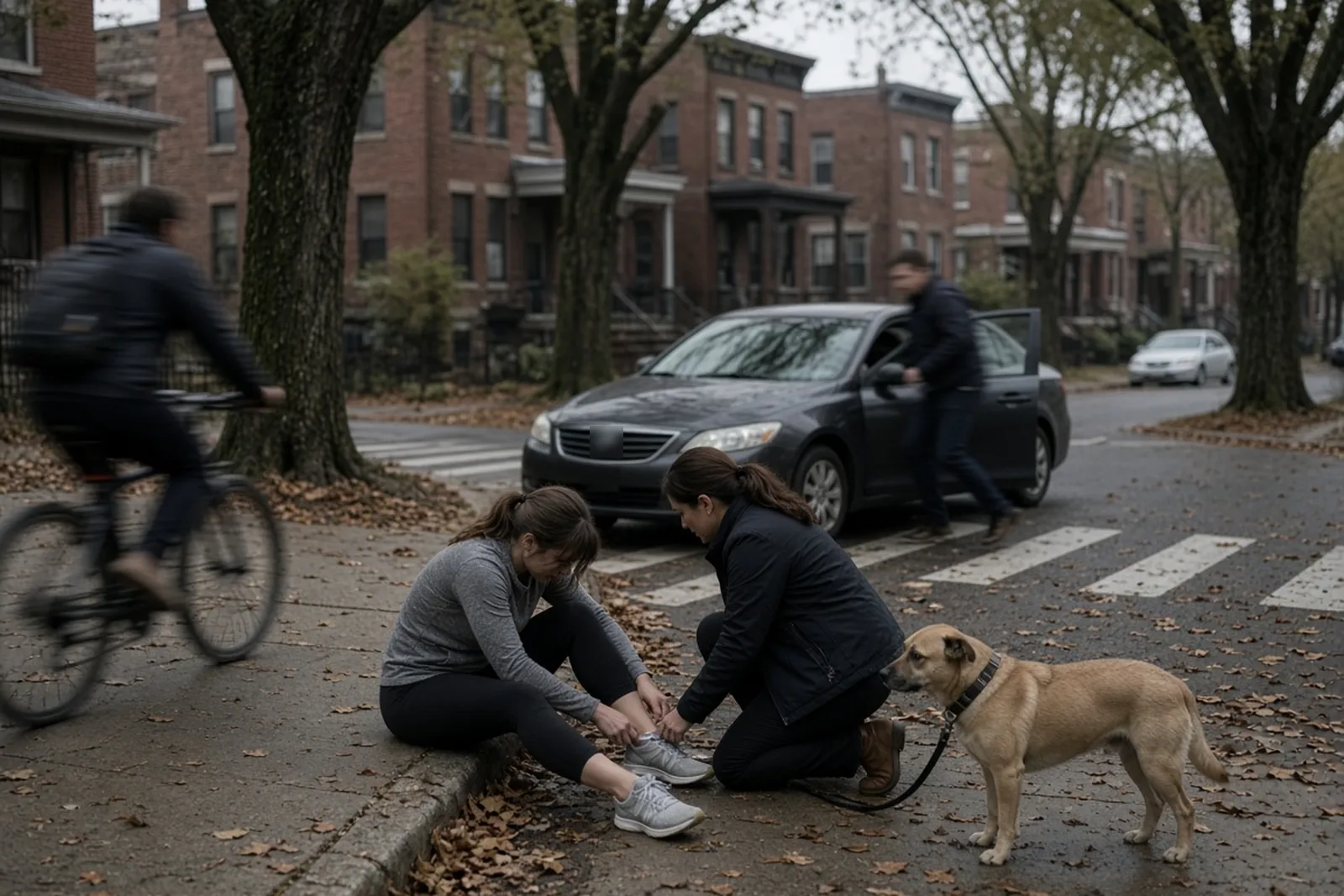
Hit by a car in the lot. If a driver hits you while you’re walking, Kentucky’s no-fault law treats you as a pedestrian, and the insurance on the car that hit you pays PIP benefits first, up to $10,000. See how Kentucky PIP works and our parking lot accident page.
Ice in the lot. Kentucky no longer automatically excuses owners for natural ice and snow. The question is whether they acted reasonably given the weather. See slip and fall injuries.
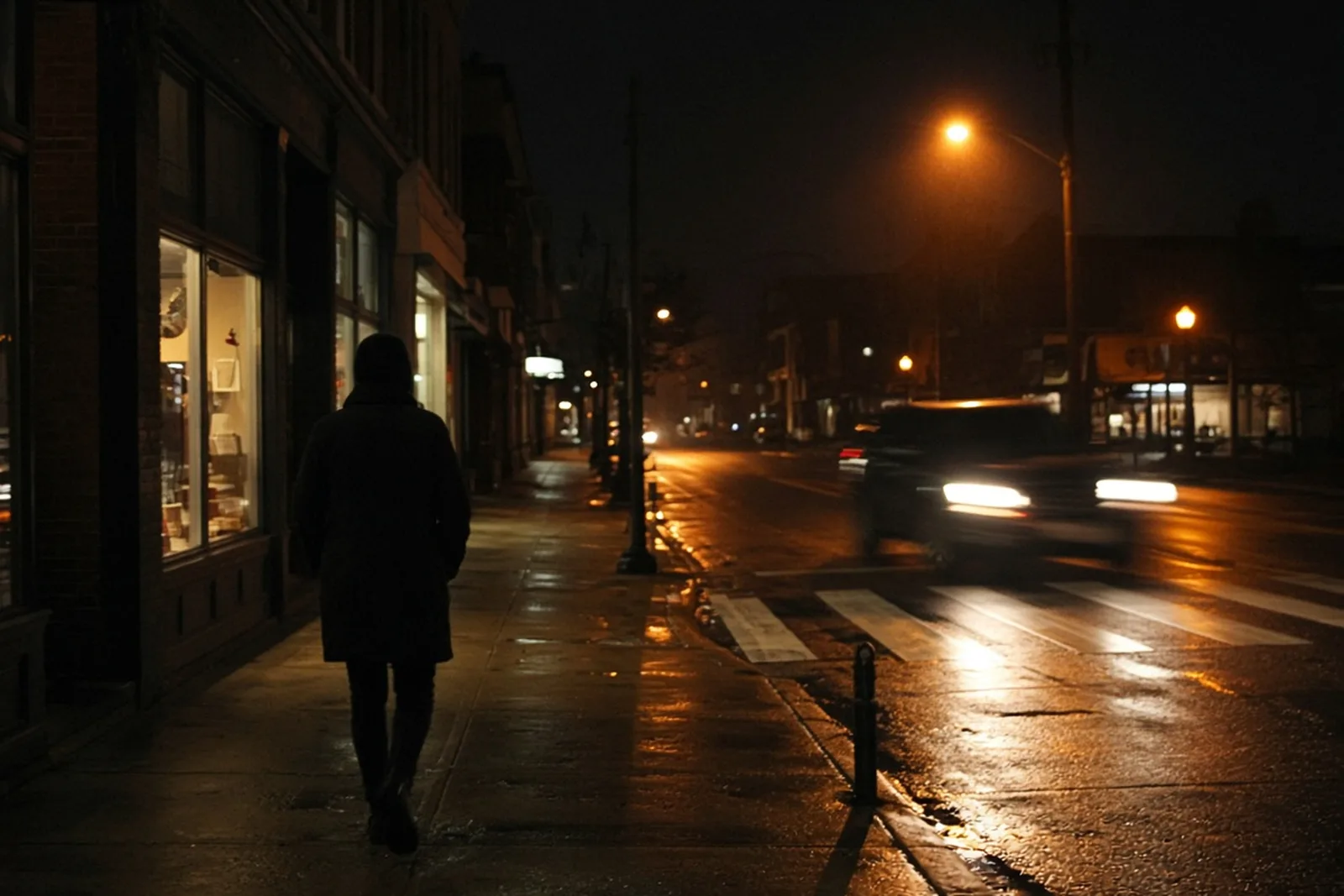
Assaults and robberies. Claims against a business for another person’s crime are harder. In Walmart, Inc. v. Reeves (2023), the Kentucky Supreme Court held that whether a business owed a duty depends on whether the crime was reasonably foreseeable on that property, based on specific facts such as prior incidents there, not general crime in the area. See negligent security.
Hurt at a holiday party or someone’s home
Kentucky generally treats a social guest as a “licensee.” In Perry v. Williamson (824 S.W.2d 869 (Ky. 1992)), the Kentucky Supreme Court explained that a host doesn’t have to inspect for unknown dangers. But a host does have to warn guests about, or fix, a dangerous condition the host knows about and the guest wouldn’t reasonably notice. Examples include a loose stair railing, a rotted deck board or an unlit, icy back step.
These claims are usually paid by the host’s homeowner’s or renter’s insurance, not by the host personally. Many people hesitate to make a claim against a friend or relative. It helps to understand that the claim is really with the insurer.
Defective lights, decorations and gifts
Holiday lights, extension cords, inflatable decorations and heated decorations can overheat, short out or start fires. Under Kentucky’s product liability law (KRS 411.300–411.350), a manufacturer, and in some cases a seller, can be responsible for injuries caused by a defective product or inadequate warnings. Kentucky limits manufacturer liability when someone altered or modified the product in a way that caused the injury (KRS 411.320), so tell your lawyer exactly how it was set up.
Keep the product, the packaging and your receipt, and don’t throw anything away after a fire. See product liability, burn injuries and electrical injuries.
Your own share of fault
Stores and insurers often say you weren’t watching where you were going. Kentucky uses pure comparative fault (KRS 411.182). Your recovery can be reduced by your share of fault, but it isn’t barred.
What to do after a holiday shopping injury
- Report it before you leave. Ask for an incident report and a copy, or at least the manager’s name.
- Photograph everything: the floor, the spill, the shelf, the lighting, your shoes and any warning signs (or the lack of them).
- Get witness names and phone numbers.
- Ask the store, in writing, to keep its video. Store systems record over footage, often within days or weeks.
- Get medical care, and follow up.
- Be careful with insurance adjusters. Don’t give a recorded statement or sign anything before getting advice. See insurance adjuster tactics.
The deadline is short: most Kentucky injury claims, including store, home and product claims, must be filed within one year (KRS 413.140). Crashes involving a car are often two years. See our statute of limitations guide.
How Forman & Associates helps
For a holiday shopping injury, we move quickly to preserve video, incident reports, and maintenance and staffing records before they disappear. We identify everyone responsible: the store, the property owner, a cleaning or snow contractor, a product maker. Then we build the case to be ready for trial. Larry Forman has tried 50+ jury trials and won 95% of them.
Holiday shopping injury FAQ
Can I sue a store if I slipped on melted snow at the entrance?
Possibly. Stores must use reasonable care to keep entrances reasonably safe during bad weather, for example with mats, warning cones and regular mopping. If they didn’t and you were hurt, the store may be liable, with any carelessness on your part compared under pure comparative fault.
Do I have to prove how long a spill was on the floor?
Often not. Under Lanier v. Wal-Mart Stores (2003), once you show a foreign substance caused your fall, the burden shifts to the store to prove it used reasonable care.
I fell at a friend’s holiday party. Will they have to pay out of pocket?
Usually not. These claims are typically handled by the host’s homeowner’s or renter’s insurance. The host generally must have known about a hidden danger, like a loose railing, and failed to fix it or warn you.
How long do I have to file a claim for a store injury in Kentucky?
Generally one year from the injury under KRS 413.140. Claims involving a car may have a two-year deadline. Don’t wait: video and witnesses disappear quickly.
Talk to a Louisville injury lawyer
Hurt while shopping or celebrating? We’ll tell you whether you have a claim. No fee unless we win. Get a free case evaluation or call (502) 931-6788. Our office is at 1139 S. 4th St., Louisville, KY 40203.
This post is general information about Kentucky law as of October 2026, not legal advice.