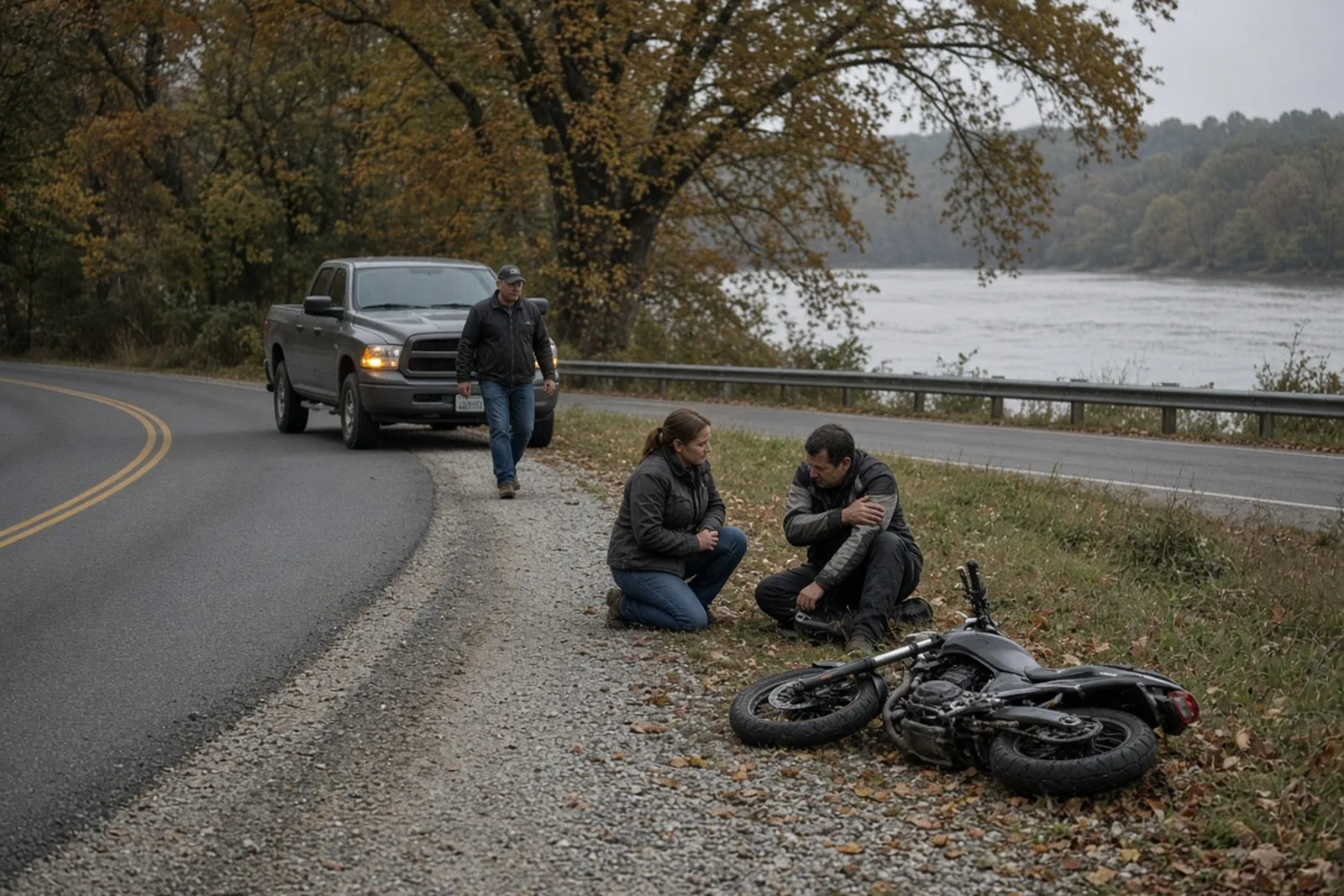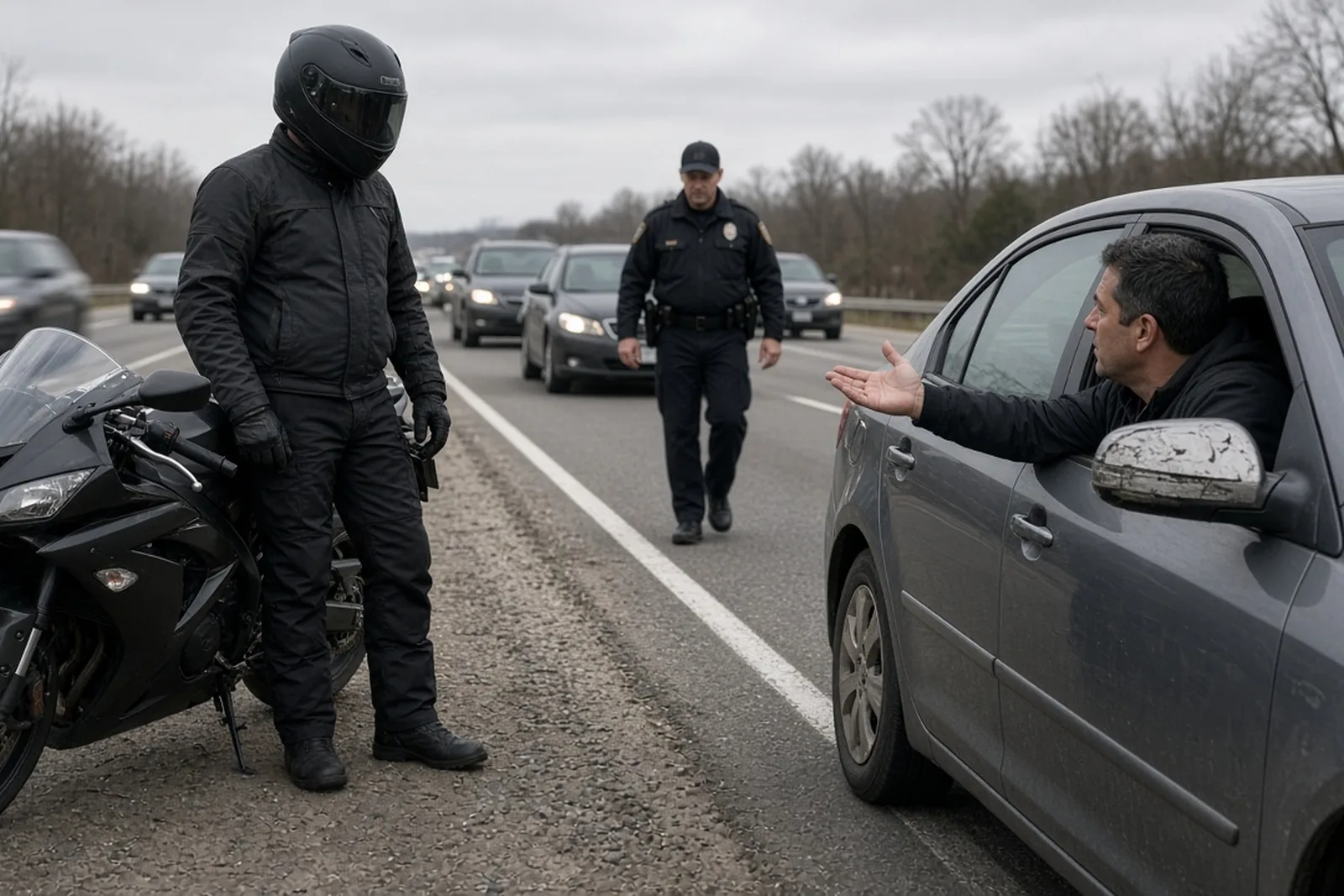
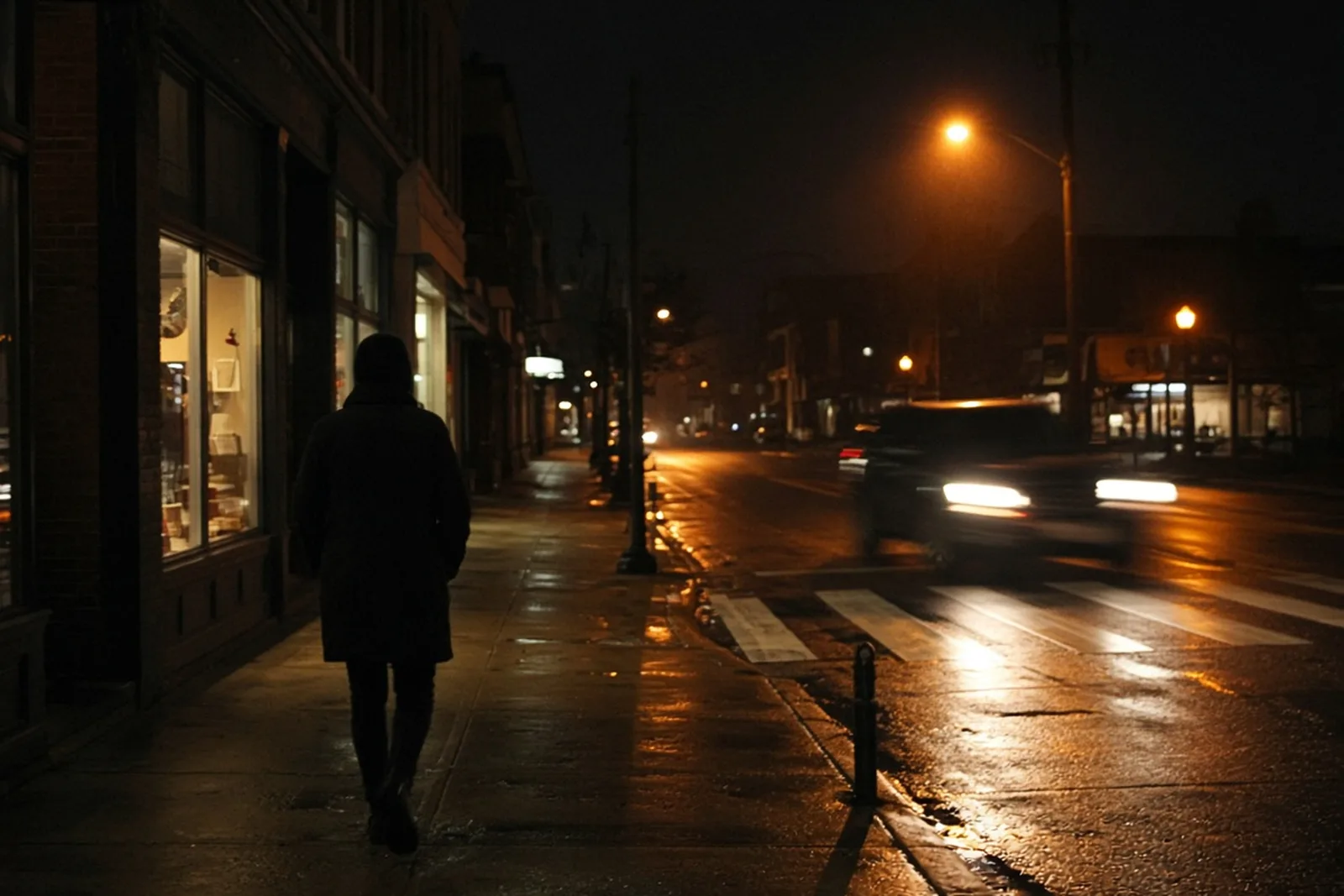
For a pedestrian hit at night in Louisville, the scene can be chaotic and the fault questions are rarely simple. Darkness hides drivers, pedestrians, and the roadway itself. In Louisville, the stakes are high, and proving what happened takes more than a police report.
This guide explains how fault is decided after a pedestrian hit at night. You will learn how streetlights, sight lines, and roadway conditions shape fault, and how the dark clothing argument works in a pedestrian hit at night claim.
We also explain why Kentucky’s pure comparative fault rule under KRS 411.182 matters after a pedestrian hit at night, how crossing location changes the fault math, and why surveillance video often disappears first.
For anyone dealing with a pedestrian hit at night, we cover hit-and-run steps, Kentucky’s $10,000 PIP benefit, the one-year injury deadline under KRS 413.140, and the two-year window from the last PIP payment under KRS 304.39-230.
Reviewed by Larry Forman, Attorney. No fee unless we win. Call (502) 931-6788 for a free case review.
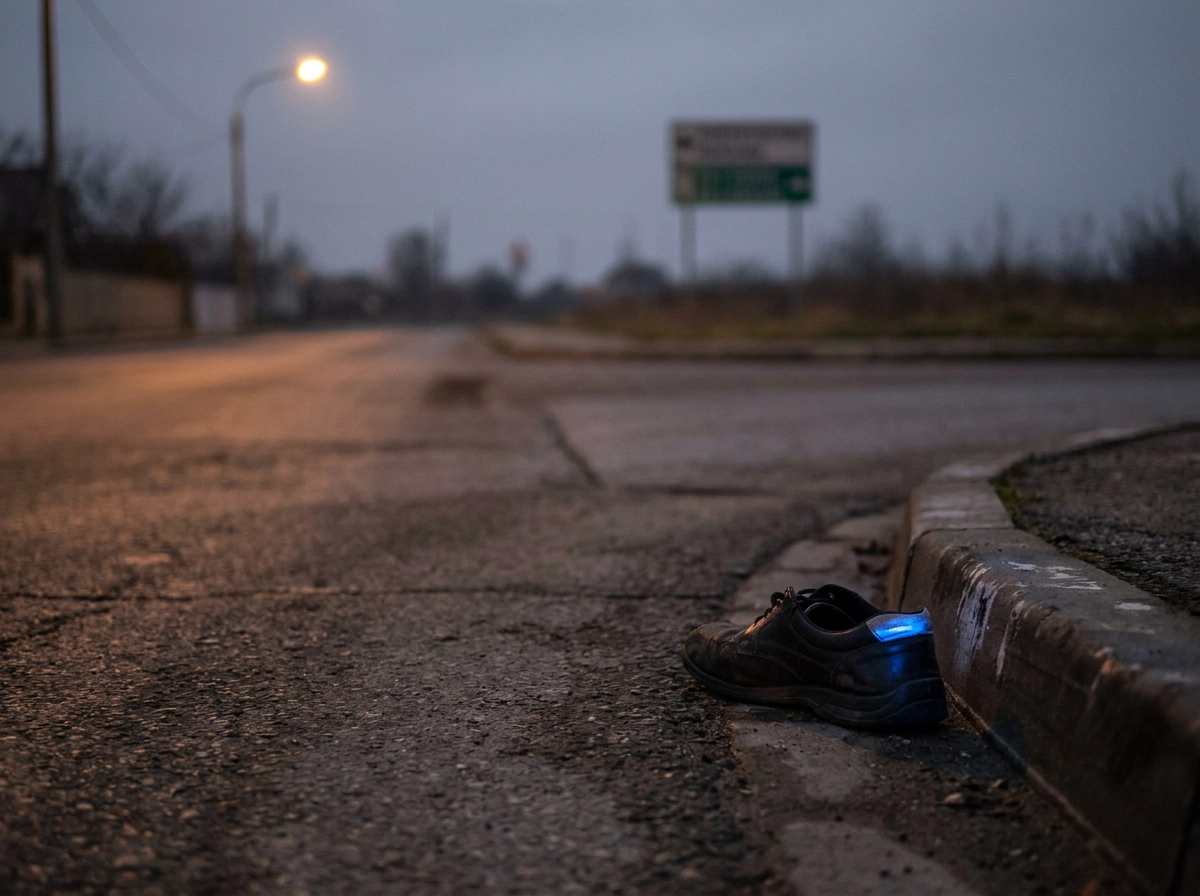
Why Nighttime Pedestrian Crashes in Louisville Are Hard to Prove
Darkness strips out the two things that settle fault fastest: a driver who stops and exchanges information, and a scene bystanders can see clearly enough to describe. What remains is physical evidence, and fault must be rebuilt from lighting, sight lines, clothing, roadway condition, and whatever video happens to exist. After a pedestrian hit at night, that evidence is what a fault argument is built on. A pedestrian hit at night claim also depends on where the crossing was and how well the driver could see.
Nighttime pedestrian crashes often involve poor lighting, people walking along a shoulder, and crossings spaced far apart. That combination shapes how fault is argued, not how often crashes happen. Each pedestrian hit at night is different, so the facts of that crash matter most.
Kentucky’s no-fault system pays first. A pedestrian struck by a vehicle can claim up to $10,000 in personal injury protection benefits from that vehicle’s insurer, regardless of fault. The early weeks are therefore about securing medical care and preserving evidence while the fault fight develops afterward.
That fight starts almost immediately on the other side. Within days, insurers begin building a “the pedestrian should have been seen” narrative, which compresses the evidence timeline in a night case far below what most people expect. Video loops, scene conditions change, and memories fade.
This is why the evidence that controls fault allocation should be identified and documented in the first week, before the opposing side frames the story. In a pedestrian hit at night, the first week often decides what proof survives, and a pedestrian hit at night leaves little time to wait.
Streetlights, Sight Lines and Roadway Conditions as Fault Evidence
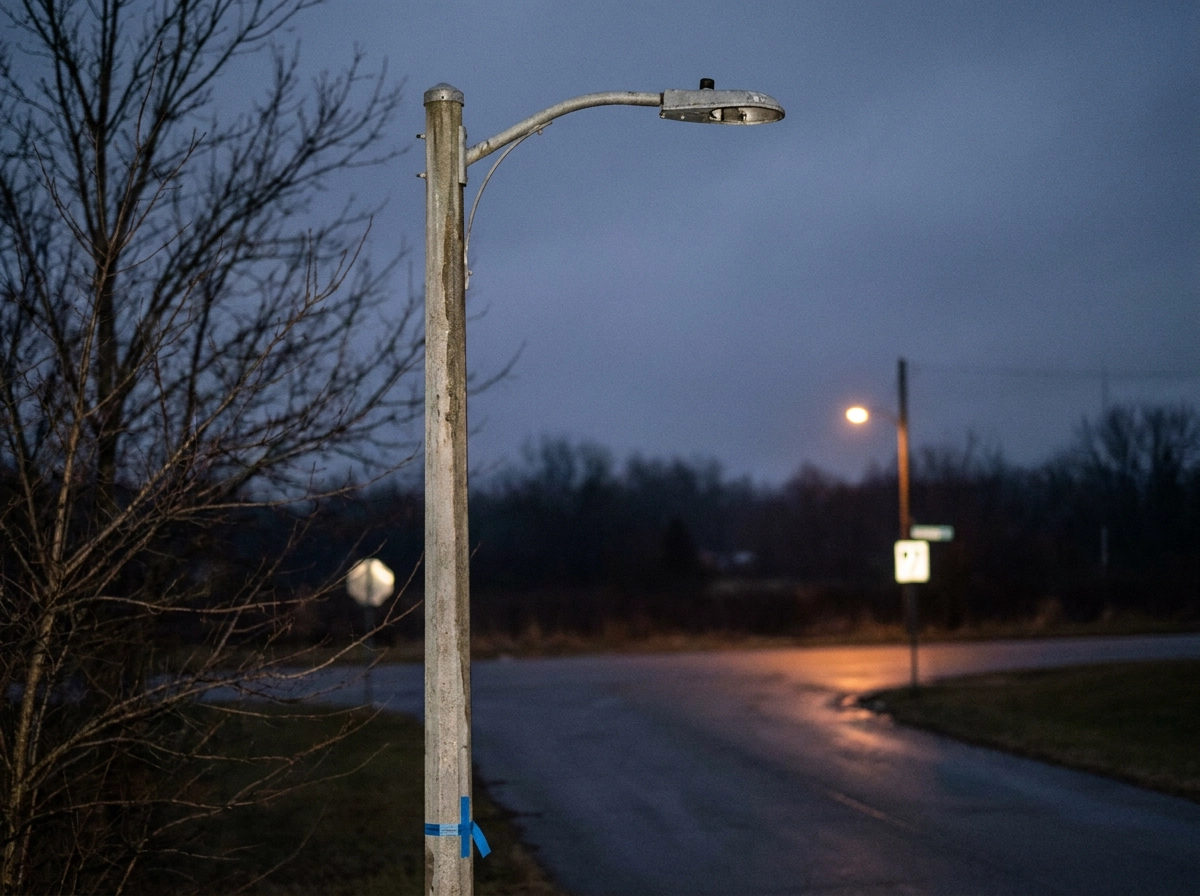
Because fault at night is rebuilt from physical evidence, the scene itself becomes the first witness. A nighttime visibility investigation documents each streetlight’s location and type, light spilling from business lots and driveways, and whether any fixture was dark, damaged, or blocked by tree canopy. Federal safety resources track roadway lighting as a crash countermeasure for precisely that reason (Roadway Lighting Resources).
The roadway details worth photographing and measuring:
- Lane width, shoulder and curb condition
- Parked or stopped vehicles near the impact point
- Signage and pavement markings in place that night
- Construction, closure, or detour routes in effect
Return to the scene at the same hour, from the driver’s approach lane. A photo or video set shot from that exact position shows what a reasonable driver could actually have seen, and it carries more weight than later argument. That is the same evidence to look for after any serious Louisville collision.
Send written requests early for lighting maintenance and incident records, to both the city and the property owner. A work order showing a fixture was out, not merely dim, converts an observation into proof.
A lighting or roadway defect helps only when records and measurements document it. Darkness alone proves nothing about a failed fixture.
With the scene fixed, the next question is what the driver could see and when.
The Dark Clothing Argument and How Pure Comparative Fault Answers It
Streetlights and sight lines establish what a driver could see. Clothing is where the defense goes next. Expect the argument that dark clothing, no reflectors, and a position in the travel lane made the pedestrian impossible to see in time to brake. That is a fault argument, not a claim-ending defense.
Kentucky follows pure comparative fault. Under KRS 411.182, the factfinder assigns each party a percentage of total fault and weighs the nature of the conduct against its causal relation to the harm. A pedestrian’s own negligence reduces recovery by that share instead of barring the claim.
Rebuttal evidence shifts fault toward the driver: what the headlights actually illuminated at that distance, vehicle speed, phone and navigation records, impairment, fatigue, and whether the driver was attending to anything other than the roadway. Those same records answer the insurer’s argument that the driver had no time to react.
A driver still owes ordinary care to a person the driver sees, or should see, in time to avoid a collision. Clothing alone rarely decides a case. Fault can also be allocated across multiple parties under KRS 411.182, which keeps one party’s percentage from absorbing fault that belongs elsewhere.
Crosswalk or Mid-Block: How the Crossing Location Changes the Fault Math
Location changes who yields. It does not change who is owed care.
At a marked crosswalk or signalized intersection, a driver generally must yield to a pedestrian crossing with the signal. Kentucky’s pedestrian right-of-way and driver yielding duties appear in KRS 189.570.
Mid-block crossings flip the default. A pedestrian crossing outside a marked crosswalk, or outside an unmarked crosswalk at an intersection, must yield to vehicles. The same statute preserves a driver’s duty of due care to avoid colliding with a pedestrian, wherever that person crossed. Location therefore sets the starting point for the fault math; it does not settle it.
Mid-block cases turn on specifics: whether the crossing point was marked, signed or lit; what a driver could reasonably expect at that place and hour; and how much time the driver had to see and react.
Where the pedestrian crossed never ends the claim. Under pure comparative fault, a mid-block crossing reduces recovery by the pedestrian’s share of fault rather than barring it.
Pin the exact location: GPS coordinates, photographs from several angles, and city records showing which markings and signs were in place on the date of the crash. What nearby cameras captured is the next piece of the record.
Surveillance Video and the Evidence That Disappears First
Where you crossed shapes the duty analysis. Video often shows what happened next. Within the first days, canvass business security systems, residential doorbell cameras, buses and other transit vehicles, municipal traffic cameras, and gas station or lot systems near the impact point. Transit buses and commercial vehicles may carry onboard recorders that capture the driver’s approach.
Many systems overwrite within days or weeks. Once footage loops, it is unrecoverable. Send written requests immediately, and send preservation notices to the driver, the registered owner, the insurer, and any commercial operator. If footage is deleted after notice, that deletion can be addressed as spoliation of evidence.
When video is missing, accident reconstruction can rebuild the event from headlight and taillight fragments, tire and scuff marks, paint transfer, the pedestrian’s clothing and footwear, and injury patterns in the medical records.
Obtain the crash report, 911 audio, and dispatch records, and ask whether a supplemental report exists. Photograph the scene before rain, repaving, or seasonal changes alter it.
Hit and Run: Steps to Take When the Driver Does Not Stop
If the driver does not stop, your next steps matter as much as any footage.
Report it at once. Call 911 from the scene if you can, then file with Louisville Metro Police and get the incident or report number in writing. A verbal confirmation is not a record. Under KRS 189.580, the driver had a duty to stop, render reasonable assistance, and give registration and contact information. Leaving is a violation, and the report is what documents it.
Get same-night medical care. Adrenaline masks internal and head injuries, and a same-day record ties the injury to the collision. A delay hands the insurer room to argue something else caused it.
Preserve what you remember and what is on the ground. Direction of travel, vehicle type and color, a partial plate, visible damage. Photograph debris, glass, and vehicle fragments before they are swept away.
Check your own coverage. The at-fault driver may never be identified. Put your uninsured motorist coverage on the checklist and confirm the current policy language and Kentucky statutes with counsel. Our guide to what to do right now covers the full reporting sequence.
Canvass fast. Make a public appeal and go business to business while cameras still hold footage and witnesses still remember what they saw.
No fee unless we win. Call (502) 931-6788 for a free case review.
Reviewed by Larry Forman, Attorney.
Kentucky Deadlines and Benefits: PIP, KRS 411.182, KRS 413.140 and KRS 304.39-230
Once the scene is documented and a hit-and-run is reported, the calendar becomes the next adversary. Kentucky provides benefits and sets deadlines that move faster than most people expect.
Under Kentucky’s no-fault system, a pedestrian struck by a vehicle can claim up to $10,000 in personal injury protection (PIP) benefits through that vehicle’s coverage. PIP pays regardless of who caused the crash, so medical bills and lost income can be addressed while fault is still contested. The statute itself uses the term “basic reparation benefits.”
KRS 413.140 sets a general one-year deadline for personal injury actions in Kentucky. Claims that arise from a motor-vehicle crash, including a pedestrian struck by a car, get a longer window under the no-fault law.
For motor-vehicle claims, KRS 304.39-230 allows two years from the injury, the death, or the last PIP payment, whichever is later.
Fault is allocated under KRS 411.182. Pure comparative fault means a percentage assigned to the pedestrian reduces the recovery rather than wiping out the claim.
Calendar each deadline and confirm the dates with an attorney. These deadlines are not flexible. Call (502) 931-6788 for a free case review. No fee unless we win.
What to Do Next to Protect a Nighttime Pedestrian Claim
Those deadlines matter, but they are calendars, not a plan. The evidence in a nighttime crash has the shortest shelf life of anything in the case, so move first on what disappears.
- Canvass video immediately. Ask businesses, homeowners, and transit operators near the impact point to preserve footage in writing. Send preservation notices to the driver, the registered owner, and the insurer as well.
- Shoot the scene at night. Return at the same hour and from the driver’s approach lane, then photograph streetlights, sight lines, pavement markings, and debris before weather or repaving alters the scene.
- Get medical care and keep every record. Same-day treatment ties the collision to the injury and builds the documentation that supports the claim’s value later.
- Do not concede fault. Expect the dark clothing and mid-block arguments. Pure comparative fault under KRS 411.182 reduces your recovery by your assigned percentage; it does not bar the claim.
- Track the deadline. Kentucky’s general injury deadline is one year under KRS 413.140, but a pedestrian hit by a vehicle generally has two years from the injury or the last PIP payment under KRS 304.39-230.
Courtroom leverage changes how insurers value a contested nighttime claim, and Larry Forman has tried 50+ jury trials and won 95% of them. Call (502) 931-6788 for a free case review. No fee unless we win.
Reviewed by Larry Forman, Attorney.
Conclusion: After a Pedestrian Hit at Night
Nighttime pedestrian cases in Louisville are difficult because darkness hides what happened, but fault can still be proven. Streetlights, sight lines, roadway conditions, crossing location, and video evidence all shape the fault math. Kentucky’s pure comparative fault reduces recovery by your percentage; it does not erase your claim. The evidence that wins these cases often disappears first, so preservation and quick action matter.
If you were hit, do not concede fault or wait on the clocks. Track the two-year motor-vehicle deadline under KRS 304.39-230, which runs from the injury or the last PIP payment, get same-day medical care, and preserve video and scene evidence. Then call Larry Forman at (502) 931-6788 for a free case review. He has tried 50+ jury trials and won 95% of them. No fee unless we win. Call today, before the trail goes cold.