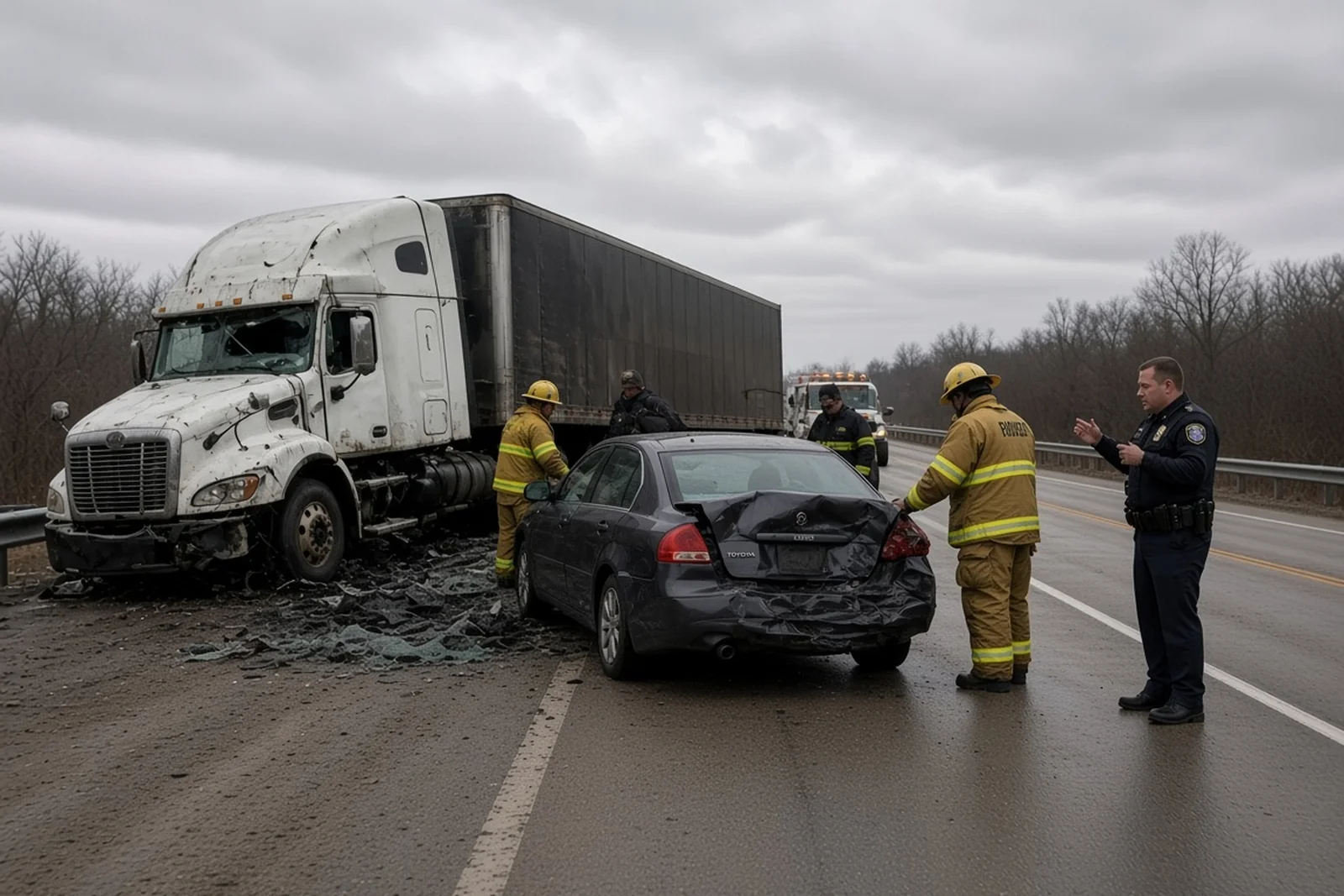
If you are slowing in traffic on I-65, I-64, or I-265, the last thing you expect is to be rear ended by a semi truck. Yet those crashes happen, often because a tractor-trailer needed more stopping distance than the driver allowed, followed too closely, or missed what was happening ahead. This guide explains how a semi truck rear-end crash happens, the injuries it can cause, and who may be liable when the trucking company’s driver or policies are involved.
You will also learn how black box and ELD data can preserve the truck’s own record, why a preservation letter should go out early, and which FMCSA rules set the standard of care. We then break down Kentucky law, including basic PIP benefits, pure comparative fault under KRS 411.182, and the motor-vehicle injury deadline under KRS 304.39-230.
Finally, you will see next steps after a crash. No fee unless we win. Reviewed by Larry Forman, Attorney. Call (502) 931-6788 for a free case review.
What Happens When You Are Rear Ended by a Semi Truck
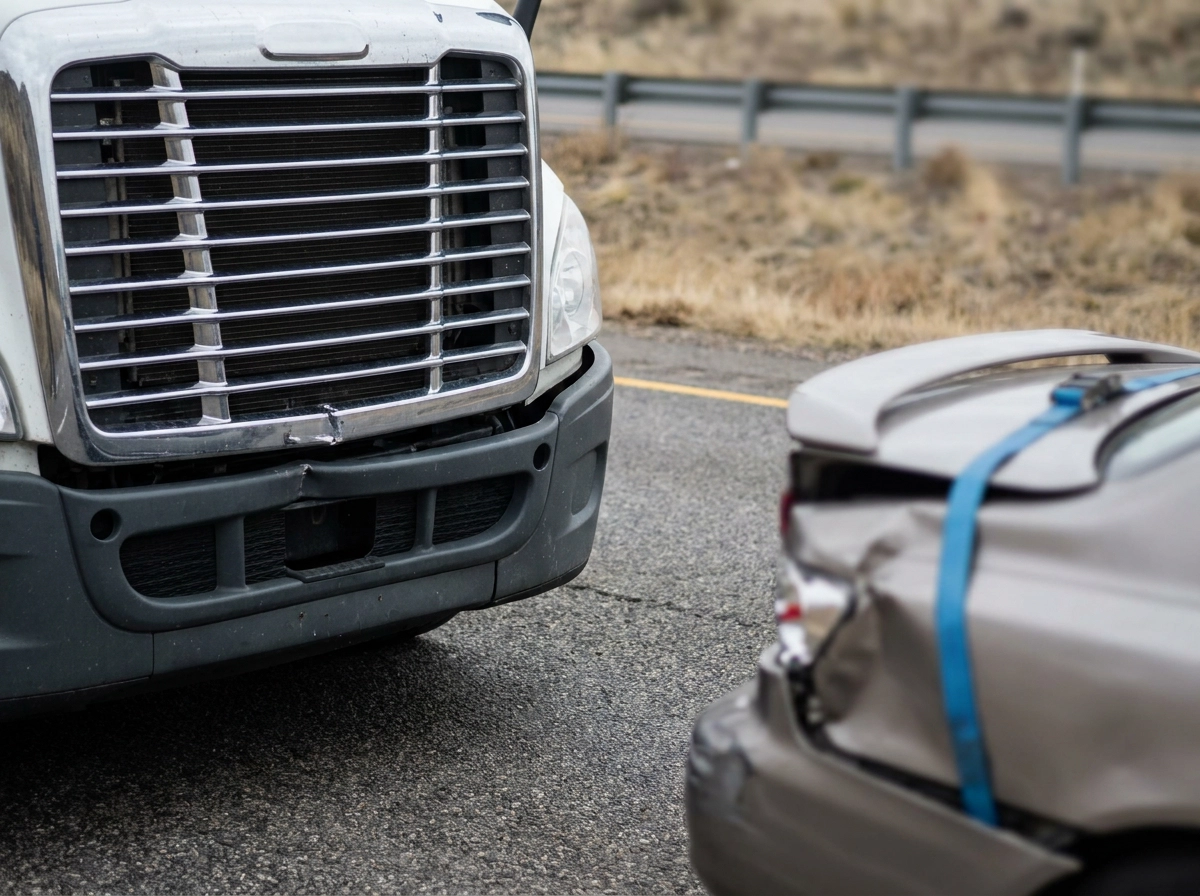
A fully loaded tractor-trailer can weigh many times what a passenger car does, and mass does not brake quickly. A car can shed speed in a much shorter distance. A semi needs far more room, and when traffic slows without warning, a gap that is too short can leave the driver unable to stop in time. Under hard braking the load can shift forward, lengthening the stop.
Kentucky drivers owe every vehicle ahead a reasonable and prudent following distance. A commercial driver pulling a heavy trailer carries a higher practical duty, because stopping distance grows with weight. Following too closely is one of the first things investigators examine, along with speed, distraction, fatigue, and equipment problems.
Distraction layers on top: handheld phone use, dispatch messages routed to a cab tablet or an ELD-linked device, eating behind the wheel, and fatigue from long shifts under a tight delivery schedule. Each pulls a driver’s eyes off traffic ahead for seconds at highway speed.
That is why the evidence sections that follow decide these cases, and why who is at fault in a Kentucky rear-end collision usually turns on data rather than the police report.

The Injuries a Semi Rear-End Crash Causes
When you are rear ended by a semi truck, a loaded tractor-trailer transfers far more force than a car-to-car hit.
Common Injury Patterns
Whiplash and neck strain top the list, along with herniated or bulging discs, thoracic and lumbar injuries, and spinal cord damage from the same violent motion. Fractures occur when your body strikes the interior or the seat belt loads against bone. Traumatic brain injury can follow a head strike or the brain shifting inside the skull. Internal bleeding may leave no outward sign. Crush injuries happen when the truck pushes your car into the vehicle ahead or under the trailer.
Delayed Symptoms
Many disc injuries, concussions, and soft tissue injuries do not hurt the first day, and the carrier’s insurer will use any treatment gap to argue your injury came from something else. Prompt evaluation is both a health decision and an evidence decision.
PIP Pays First
Kentucky’s PIP benefit can cover early medical bills while the liability claim develops, see below for how it works. See Kentucky deadlines and PIP after a Louisville injury for how those benefits fit your claim.
The Emotional Toll
Post-traumatic stress, driving anxiety, sleep disruption, and fear of highway driving are common. Emotional distress tied to a physical injury can be part of the claim.
Protect Your Claim
Do not describe symptoms to the trucking company’s insurer, sign a medical authorization releasing your whole history, or post injury details on social media while the claim is open. Next, the question becomes who pays for all of it.
Who Is Liable When a Semi Truck Rear-Ends You
Treatment records establish the harm; when you are rear ended by a semi truck, liability determines who must answer for it.
Driver Fault Depends on the Evidence
A truck driver who follows too closely, keeps a poor lookout, drives distracted, or drives fatigued may be at fault in a rear-end crash. A collision alone does not prove liability; following distance, braking, speed, and other causes must be investigated.
When the Carrier Is Responsible
An employer answers for an employee’s negligence committed on the job, a principle called respondeat superior. A driver hauling a delivery for a motor carrier is usually acting within the scope of that job, which brings the company into the case. Federal rules and multiple liable parties make these cases why commercial truck wrecks are fundamentally different from car crashes.
Direct Claims Against the Carrier
Some claims do not depend on the driver at all. A carrier can be directly liable for negligent hiring, training, supervision, or entrustment, and for its own choices: schedule pressure that forces speeding, failure to enforce hours-of-service limits, and unrepaired brakes, tires, or lights.
Other Defendants and the Carrier’s Playbook
Depending on the facts, fault may also reach a shipper or loader that improperly secured or overloaded cargo, a maintenance contractor, a tractor or brake manufacturer, or a broker or dispatcher whose routing or pressure contributed. Load shifts matter because a moving load lengthens stopping distance. Large carriers then deploy a crash response team, take statements early, and shift blame onto the driver ahead. The next sections cover the data that shows the truck was already too close, distracted, or fatigued before brake lights came on.
Black Box and ELD Data: The Truck’s Own Record of the Crash
The truck itself keeps a witness. The engine control module (ECM) and event data recorder, often called the black box, log speed, brake application, throttle position, engine RPM, and hard-braking events in the seconds before and during impact. That record can show whether the truck was speeding or whether the driver reacted at all.
Federal rules require most commercial trucks to run electronic logging devices (ELDs) that record hours-of-service information. Those files can show whether the driver was pushing past legal driving limits or had been on duty far longer than the schedule claimed.
Other data worth requesting: GPS and telematics feeds showing speed and route, forward and driver-facing dash cameras, dispatch and text messages, fuel and toll records, trailer weight and cargo records, and the carrier’s maintenance history for the tractor. Because this evidence is technical and contested, these crashes call for an experienced attorney.
Retention is the urgent problem. Carriers control the truck’s computers and often overwrite or rotate out ECM, camera, and telematics data on their own schedules. A delay of even a few weeks can mean the numbers are gone or unreadable.
Tampering is the second risk. Federal regulations prohibit falsifying or tampering with driver logs and duty-status records, making any alteration a distinct evidentiary issue. A documented, written demand for the original data is how you lock it down before it moves. Sending that demand early is the subject of the next section.
The Preservation Letter, and Why It Should Go Out Early
Once the truck’s data is identified as the key evidence, the next step is stopping it from disappearing.
What Spoliation Means
Spoliation, the loss or destruction of evidence a party should have preserved, is a recognized concern in trucking litigation. The letter’s job is to put the carrier and its insurer on notice that the crash evidence must be kept.
What the Letter Should Demand
Be specific in the demand:
- ECM (black box) download
- ELD and hours-of-service files
- Dash camera and cab camera footage
- GPS and telematics data
- Dispatch messages
- Driver cell phone records
- Driver qualification file
- Maintenance and repair records
- Post-crash inspection report
- Drug and alcohol test results
- Cargo and trailer records
Why Timing Matters
Send it as soon as possible, ideally within days of the crash. Retention varies by carrier, and footage and ECM data can be written over quickly as part of normal operations. Preserve Evidence and Keep a Record of Your Reports from day one, because once the data rotates out, no letter brings it back.
The Two Benefits
First, notice can create a duty to preserve that a Kentucky court can later address if records disappear. Second, it makes any later claim of routine deletion far harder for the company to sell to a jury.
Identify the Truck Precisely
Name the USDOT number, vehicle identification number, trailer number, and the investigating agency’s crash report number. A demand that cannot be deflected for lack of specificity is a demand that gets answered. Ask for written confirmation that the data is being held.
FMCSA Rules That Set the Trucking Company’s Standard of Care
Your preservation letter locks down the evidence. The next question is what standard that evidence is measured against.
The FMCSA Sets the Federal Safety Baseline
The Federal Motor Carrier Safety Administration sets safety rules for interstate commercial trucks. A violation can be used to show the driver or carrier fell below the applicable standard of care, one reason matching the specific regulation to the crash facts matters.
Hours of Service and Fatigue
Hours-of-service rules under 49 CFR Part 395 limit driving time and on-duty periods; ELD files can show whether the driver complied. A fatigued driver’s slowed reaction time is a core rear-end liability theory.
Driver Qualification and Licensing
Carriers must verify a commercial driver’s license, medical certification, and a reviewed safety record before hiring, and keep the qualification file current. A gap supports negligent hiring or supervision claims on top of the driver’s own negligence.
Equipment, Inspection, and Maintenance
Federal standards govern inspection, repair, and brakes, and the carrier must keep the tractor and trailer in safe working order. A brake defect is a textbook rear-end causation theory. Confirm current rule text before relying on any specific provision.
Testing and Cargo Securement
Federal regulations under 49 CFR Part 382 address drug and alcohol testing programs for commercial drivers; whether post-crash testing applies depends on the specific facts of the crash. Rules also govern how cargo is tied down and distributed. A shifted load lengthens stopping distance.
Treat these rules as a framework. An attorney matches the specific regulation to your crash facts rather than assuming one applies. That matching is part of what really happens behind the scenes in major accident claims.
Kentucky then adds its own rules, including the motor-vehicle injury deadline.
Kentucky Law: PIP, Comparative Fault, and Your Deadlines
Federal rules set a national safety standard, but Kentucky adds its own layer on top. That layer adds comparative fault and a filing deadline, explained in the subsections below.
Two rules control your fault and deadline analysis, and each gets its own subsection below:
- How comparative fault is measured under KRS 411.182.
- The motor-vehicle injury deadline under KRS 304.39-230(6).
Do not calculate your own deadline from an article. A filing date is a legal conclusion, and it turns on facts only your file contains. Instead, have a Kentucky attorney confirm the controlling filing date in writing, well before the deadline arrives. Our Kentucky law in brief overview explains why the clock is unforgiving.
Your $10,000 PIP Benefit and What It Pays For
Personal injury protection (PIP) is Kentucky’s no-fault benefit. Basic PIP generally pays up to $10,000 per person for medical bills, lost wages, and related expenses after a motor vehicle crash, regardless of who caused it, subject to eligibility, rejection status, and policy terms.
To start a claim, contact the PIP carrier on the vehicle you were in. For most drivers, that means your own auto policy. Understanding who pays at each stage keeps the two claims clearly separated.
PIP is limited to economic losses like medical bills and lost wages; other damages belong to the liability claim. Basic PIP is generally limited to $10,000; any purchased added reparation benefits and policy terms require separate review.
Health-plan and provider repayment claims may affect a recovery. PIP reimbursement follows Kentucky’s separate statutory rules and should not be treated as an automatic lien on the injured person’s settlement. An attorney can review the file and any repayment claims.
Pure Comparative Fault Under KRS 411.182
PIP pays your bills no matter who caused the crash. Fault is a separate question, and in Kentucky it does not work like a light switch.
Comparative fault means the factfinder assigns a percentage of fault to each party rather than declaring one side wholly to blame. Your recovery is then reduced by your own share. Under KRS 411.182, Kentucky applies a pure comparative fault rule: you are not barred from recovering simply because you share some fault. Even a driver found partly responsible can still recover the portion of damages attributable to the truck.
Expect the carrier to test that rule. Its adjusters and defense attorneys will argue you braked abruptly, cut in front of the truck, drove with a broken taillight, or failed to merge safely. Each argument is built to shift a slice of blame onto you and shrink the claim.
Data is what keeps those percentages honest. ECM speed and brake records, dash camera footage, and witness statements are what stop an insurer from assigning you fault the evidence does not support. Without them, the percentage becomes a negotiation the trucking company wins by default.
KRS 411.182 directs the factfinder to consider both the nature of each party’s conduct and the extent of the causal relation between the conduct and the damages claimed. The percentage assigned therefore matters as much as the size of the injury. A 20% fault finding against you cuts your recovery by 20%, and that number is decided on evidence, not on who tells the better story.
Fault sharing, though, is only half the Kentucky picture. The other half is the calendar.
Why Prompt Filing Matters
Kentucky’s general personal injury deadline is one year under KRS 413.140, but for most motor-vehicle injury tort claims KRS 304.39-230(6) controls instead; see the next section. A negligence suit over crash injuries should be filed promptly, and missing the controlling deadline can bar the claim permanently.
Why the Short Clock Matters
The trucking company’s insurer knows your calendar and gains from delay. Settlement talks can consume months without a lawsuit ever being filed, which is how a claim with real liability gets lost while the parties negotiate.
Watch for these traps:
- Injuries that surface weeks or months after the crash.
- Do not assume that ongoing settlement negotiations pause the clock, have a Kentucky attorney confirm whether the deadline is tolled in your specific circumstances.
Other claims run on different clocks. Wrongful death claims follow their own rules, and crashes involving a government vehicle or government contractor can carry separate notice requirements and shorter filing periods.
Treat the crash date as day one. Contact a Kentucky attorney well before any deadline, and have them confirm your deadline in writing rather than assume it. Kentucky’s Motor Vehicle Reparations Act supplies the controlling measure for most motor-vehicle injury claims.
The Motor-Vehicle Injury Deadline Under KRS 304.39-230(6)
For most Kentucky motor-vehicle injury tort claims, KRS 304.39-230(6) provides two years after the injury, death or issuance of the last basic or added reparation payment, whichever occurs later. A replacement payment does not restart that period. Exceptions, including a valid no-fault rejection, can change the analysis. Ask an attorney to confirm the controlling deadline promptly.
The Cost of Guessing
File too late and the claim can be barred outright. File too early, before the truck’s ECM and ELD data are developed, and you may lock in a case without its strongest evidence.
Contact a Kentucky attorney promptly. Provide every PIP payment date and medical bill, and ask the firm to confirm the controlling deadline in writing before either date approaches.
Next Steps After a Kentucky Semi Rear-End Crash
Deadlines confirmed, the work shifts to what you do in the days right after the crash. These steps protect your health and the evidence that proves the truck was at fault. For a fuller checklist, see our guide on what to do after a truck accident.
Put Treatment First. Get evaluated promptly, even if you feel steady, and follow the treatment plan your provider sets. Kentucky’s basic PIP benefit covers medical bills and lost wages regardless of fault, see the PIP section above for details.
Preserve Your Own Evidence Now. Photograph the truck, trailer, plates, and the tractor door where the USDOT number is posted. Collect the driver’s name, license, and insurance information. Get the crash report number, write down witness names and phone numbers, and download any dash camera footage before it loops over.
Refuse the Insurer’s Script. Do not give a recorded statement to the trucking company’s insurer. Do not sign a release. Do not let a friendly adjuster turn a quick payment into a closed file. Direct all carrier contact to your attorney.
Keep the Record Clean. Log symptoms, missed work, and out-of-pocket costs in one place. Keep every medical bill and estimate. Stay off social media posts about the crash, your injuries, or your activities while the claim is open.
Get Counsel Involved Early. The carrier’s crash response team is already working the case, and the truck’s data has a shelf life. Call (502) 931-6788 for a free case review. No fee unless we win.
Conclusion: Three Moves That Protect a Kentucky Semi Rear-End Claim
The pattern holds: a loaded tractor-trailer needs more stopping distance than the car ahead, its own data records what the driver was doing, and Kentucky’s comparative fault rule still lets you recover even if some fault is assigned to you.
If you have been rear ended by a semi truck, three moves protect that position, and all three belong on this week’s calendar.
- Get treated and let your basic PIP benefit pay first. Medical records build the claim, and PIP covers the early bills regardless of fault.
- Send a written preservation demand to the carrier and its insurer for the ECM download, ELD and hours-of-service files, camera footage, and telematics data.
- Have an attorney confirm your filing deadline under KRS 304.39-230 in writing.
Missing the controlling deadline can bar the claim permanently. Contact a Kentucky attorney before it approaches.
Call (502) 931-6788 for a free case review. No fee unless we win.
Reviewed by Larry Forman, Attorney.