Reviewed by Larry Forman, Attorney
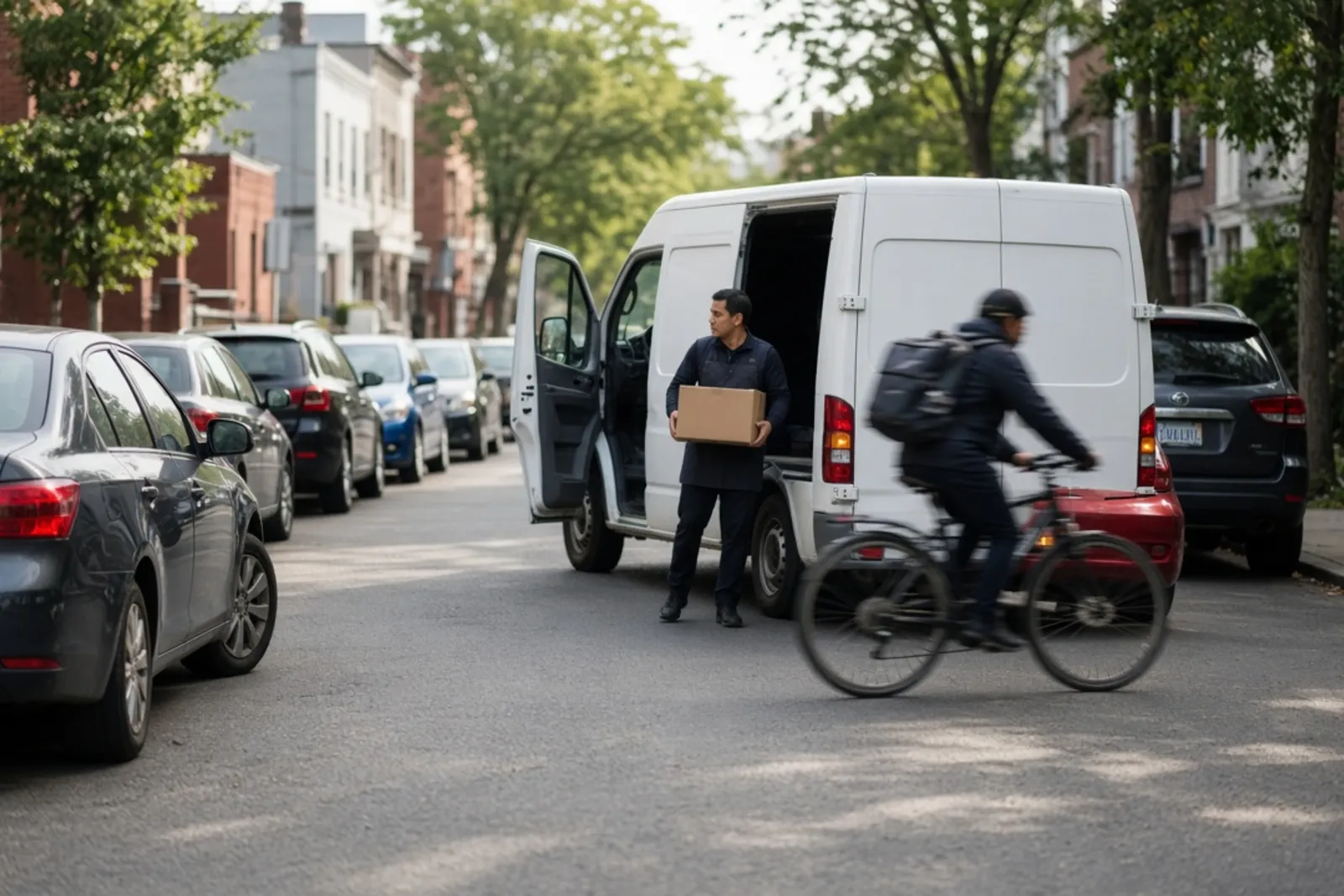
Louisville runs on deliveries. The city is home to UPS Worldport, and every day package vans, box trucks, mail trucks and app-based drivers in personal cars crowd neighborhood streets and commercial corridors. They stop suddenly, double-park, back up, pull out from curbs and race to stay on schedule.
When one of those drivers hits you, the claim is rarely as simple as “the other driver’s insurance pays.” The person behind the wheel might work for the company on the side of the van, for a separate contractor, or for no one at all. Forman & Associates helps people hurt by delivery vehicles across Louisville and Kentucky figure out who’s responsible and which insurance applies.
Why delivery crashes happen
Delivery work creates risks ordinary driving doesn’t:
Time pressure. Tight route windows and stop counts push drivers to hurry.
Constant stops and starts, often with little warning
Double-parking and sudden curb pulls that block lanes and sight lines
The logo on the vehicle doesn’t always tell you who is legally responsible. Common setups include:
Company employees driving company vehicles
Some carriers use their own employees and vehicles. When an employee causes a crash while doing their job, the employer is generally responsible for that negligence. Claims usually go against a large commercial insurance program.
Contracted delivery businesses
Some companies route packages through independent businesses. Amazon, for example, describes its Delivery Service Partners as independent small businesses that hire and employ their own drivers, while operating Amazon-branded vans. In these cases the driver’s direct employer, the contractor, is the first place to look. Whether the larger company is also responsible depends on how much control it exercised over the work, its contracts, and the facts of the crash.
Gig drivers in their own cars
Amazon Flex, DoorDash, Uber Eats, Grubhub and similar platforms generally use independent contractors driving personal vehicles. Insurance becomes a puzzle:
Personal auto policies often exclude or limit coverage for delivery driving.
The platform may provide coverage in certain app periods. According to Amazon Flex’s published FAQ, Amazon provides commercial auto insurance (including liability and uninsured/underinsured motorist coverage) to Flex delivery partners in Kentucky only while they’re actively delivering during a scheduled block. DoorDash’s help center says that in Kentucky it provides third-party auto liability coverage while a Dasher is available for orders, with a higher limit once a delivery is accepted.
Which period applied at the moment of the crash can decide which policy pays. App data becomes key evidence.
Platform terms change, so we always confirm the coverage that applied on the date of your crash.
Mail trucks: claims against the United States
If a U.S. Postal Service employee caused the crash on the job, the claim generally goes through the Federal Tort Claims Act, and the rules are very different:
A written administrative claim must be presented to the agency, usually on Standard Form 95, within two years (28 U.S.C. § 2401(b)), and before any lawsuit (28 U.S.C. § 2675(a)).
The United States is substituted as the defendant in place of the employee (28 U.S.C. § 2679).
Punitive damages aren’t available against the United States (28 U.S.C. § 2674), and FTCA cases are decided by a judge, not a jury (28 U.S.C. § 2402).
Missing the administrative-claim step can sink an otherwise valid case.
Theories of liability in delivery cases
Depending on the facts, responsibility can rest on:
The driver’s own negligence: speeding, distraction, unsafe backing, failing to yield
Employer liability for an employee driving within the scope of the job
Negligent hiring, retention or supervision, such as putting a driver with a poor record behind the wheel or ignoring complaints
Negligent entrustment of a vehicle to someone unfit to drive it
Unsafe policies, like schedules or quotas that make safe driving unrealistic
Kentucky uses pure comparative fault, so every responsible party pays its share (KRS 411.182).
Federal safety rules: sometimes
Federal Motor Carrier Safety Regulations apply to “commercial motor vehicles.” That generally means vehicles with a gross vehicle weight rating of 10,001 pounds or more used in interstate commerce (49 C.F.R. § 390.5). Larger box trucks and step vans may qualify. Many cargo vans may fall below the line. When the federal rules apply, they bring driver qualification files, hours-of-service limits, inspection records and phone restrictions, all of which become evidence. See our truck wreck page and our guide to black box and ELD evidence.
Evidence in delivery vehicle cases
Delivery companies generate a lot of data, and much of it isn’t kept forever:
Telematics and GPS: speed, hard braking, location and route history
Scanner and app data: what the driver was doing, and when
In-cab or outward-facing cameras on some fleets
Route manifests and stop counts showing the pressure the driver was under
Driver files: hiring, training, prior incidents and discipline
Vehicle maintenance records
Contracts between the platform or shipper and the delivery business
We send preservation letters immediately. At the scene, if you can, photograph the vehicle from all sides, including any company markings, vehicle or van numbers, USDOT numbers and the plate. Note the time and the direction the vehicle was heading. Our checklist of evidence to preserve after an accident has more. For how these investigations unfold, see what happens behind the scenes in major accident claims.
Your own coverage still matters
Kentucky’s no-fault system applies to delivery crashes too. PIP usually pays first, up to $10,000 per person for medical bills and lost wages, regardless of fault. See how Kentucky PIP works. If a gig driver’s coverage is disputed or too small, your own underinsured motorist coverage may help. If the driver left the scene, see hit-and-run accidents.
Deadlines
Most Kentucky crash lawsuits must be filed within two years of the crash or the last PIP payment, whichever is later. Claims against the federal government require the administrative claim described above. Other claims can be shorter. See the Kentucky statute of limitations guide.
Are you a delivery driver who was hurt?
If you were injured on the job by another driver or a third party, you may have a claim against that party in addition to any workplace benefits. See our third-party workplace injury page.
How Forman & Associates handles delivery vehicle cases
Identify the driver’s real employer, the contractor and the platform
Lock down telematics, app data and video before it’s gone
Determine which insurance applied at the moment of the crash
Handle FTCA claims when a federal vehicle is involved
Build the medical case and deal with every insurer
File suit when companies won’t be fair. Larry Forman has tried 50+ jury trials and won 95% of them.
It depends on who employed the driver. Amazon says its Delivery Service Partners are independent businesses that hire their own drivers, so that business is usually a primary target. Whether others share responsibility depends on the facts and the contracts.
What if a DoorDash or other food-delivery driver hit me?
The driver’s personal insurance, the platform’s coverage, or both may apply, depending on what the driver was doing in the app at the time. App records help show which period applied.
Can I sue the Postal Service after a mail truck crash?
Claims involving USPS employees generally go through the Federal Tort Claims Act. You must file a written administrative claim with the agency within two years before you can sue.
Do federal trucking rules apply to delivery vans?
Sometimes. They generally apply to vehicles rated at 10,001 pounds or more used in interstate commerce. Larger delivery trucks may qualify, and many smaller vans may not.
Will my own insurance help after a delivery vehicle crash?
Yes. Your PIP usually pays first for medical bills and lost wages, and your UM or UIM coverage may apply if the at-fault coverage is missing or too small.
What should I photograph after a delivery vehicle crash?
The whole vehicle, any company markings, vehicle or van numbers, USDOT numbers, the plate, the scene and your injuries. Note the time and the direction of travel.
Hit by a delivery driver? Let’s find out who’s responsible
Big delivery operations have insurers and legal teams working on their side from day one. We’ll work just as fast on yours. No fee unless we win. Get a free case evaluation or call (502) 931-6788. Our office is at 1139 S. 4th St., Louisville, KY 40203.
This page is general information about Kentucky and federal law, not legal advice. Insurance programs described are based on the companies’ published information as of October 2026 and can change.