The moment a serious accident happens, two very different clocks start ticking. One is yours. The other belongs to insurance companies, corporate legal teams, and investigators who already know exactly what to do next. If you have been involved in a commercial truck wreck, an Amazon delivery collision, an Uber or Lyft accident, a motorcycle crash, or a pedestrian accident, the process working against you begins faster than most people realize.
Most people assume a major accident claim works like a standard fender bender. File a report, talk to an adjuster, wait for a check. The reality is far more complex, and far more consequential. These cases involve federal regulations, multiple layers of insurance coverage, corporate liability shields, and evidence that disappears within days if no one moves to preserve it.
This guide breaks down exactly what happens behind the scenes in each of these claim types, what the other side is doing while you are recovering, and what steps you can take right now to protect yourself. Understanding this process is not optional. It is the difference between a fair outcome and leaving significant compensation on the table.
Why Major Accident Claims Are Not Like Normal Car Wrecks
A standard two-car fender-bender is straightforward: one insurer, one adjuster, one liability question. Major accident claims operate in an entirely different world.
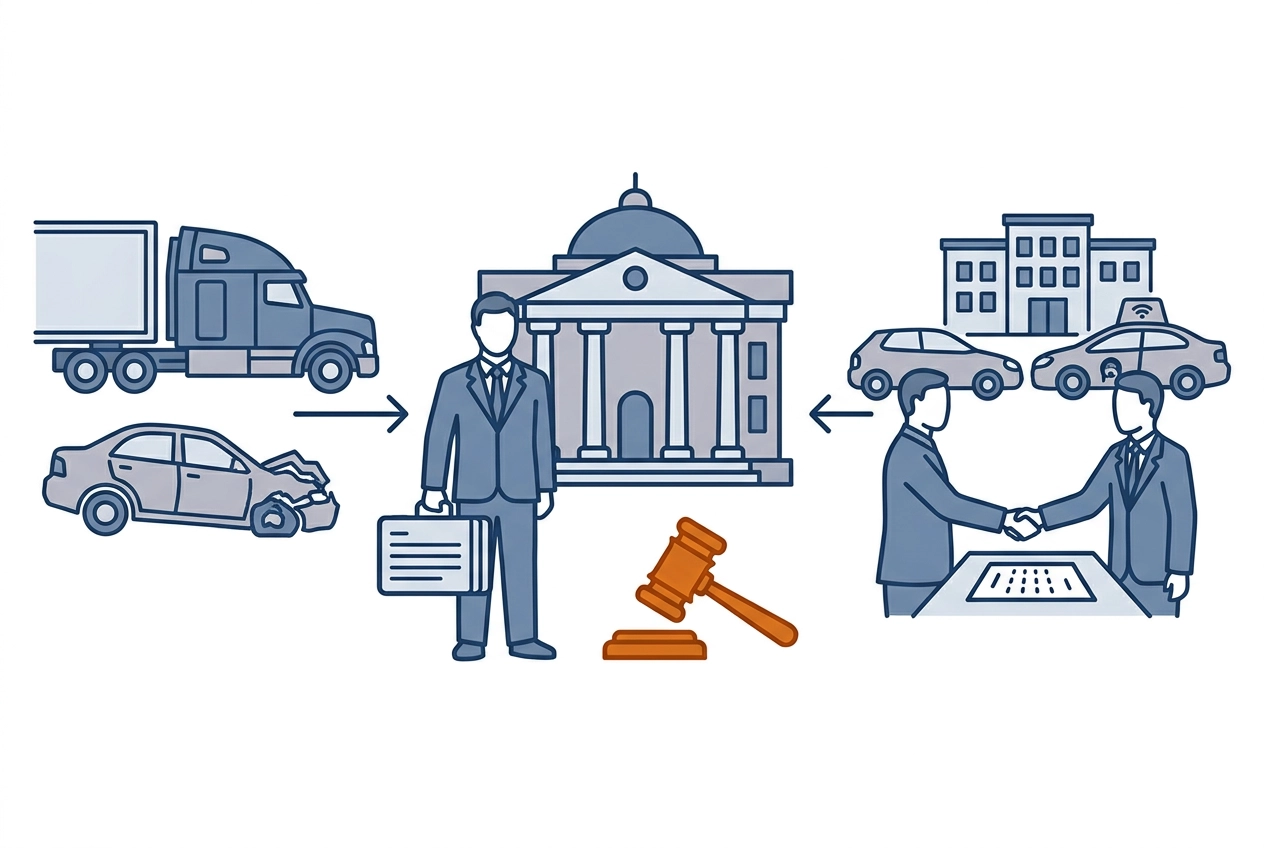
When a commercial truck, rideshare vehicle, delivery van, or motorcycle is involved, the claim can immediately draw in multiple insurance carriers, federal regulators, corporate legal teams, and independent investigators, all working at the same time, all before you have left the emergency room.

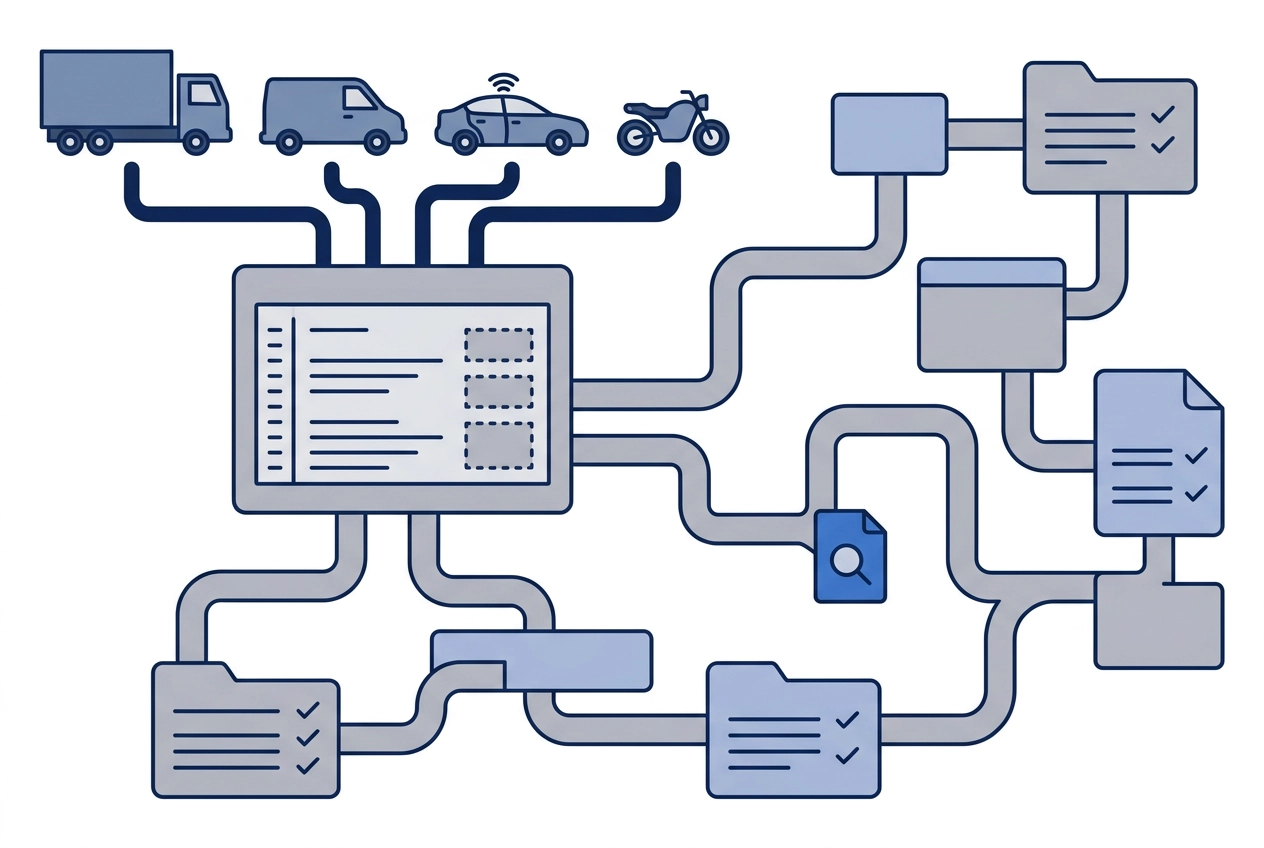
The legal framework changes depending on the vehicle. Commercial trucks are governed by Federal Motor Carrier Safety Administration regulations that do not apply to ordinary cars. Rideshare vehicles operate under phase-based insurance structures that shift coverage depending on what the driver was doing at the moment of impact. Delivery vans may fall under contractor liability arrangements that obscure who is actually responsible. Motorcycles and pedestrians face a separate set of evidentiary challenges entirely. The vehicle type determines which evidence matters, which regulations apply, and which parties can be held liable. That is not a minor distinction; it changes the entire shape of a claim.
The insurer’s investigation begins immediately. Insurance companies assign experienced adjusters the moment a claim is filed. In serious commercial truck and delivery claims, carriers often dispatch independent accident reconstruction firms to the scene within hours. By the time an unrepresented injured person is ready to talk, the other side has already started building a defense file. That is not a scare tactic; it is standard industry practice, and it creates a real, measurable disadvantage for anyone navigating the process alone.
What happens on the other side of your claim is not background noise. It directly controls how much leverage you have and how much money you ultimately recover. Knowing the process is not just informative; it is protective.
This guide breaks down the behind-the-scenes process for four specific claim types, including why motorcycle wreck claims in Kentucky are different and harder than most people expect, and gives you concrete steps to protect your position from the first day forward.
Commercial Truck Wrecks: The Investigation Machine Starts Immediately
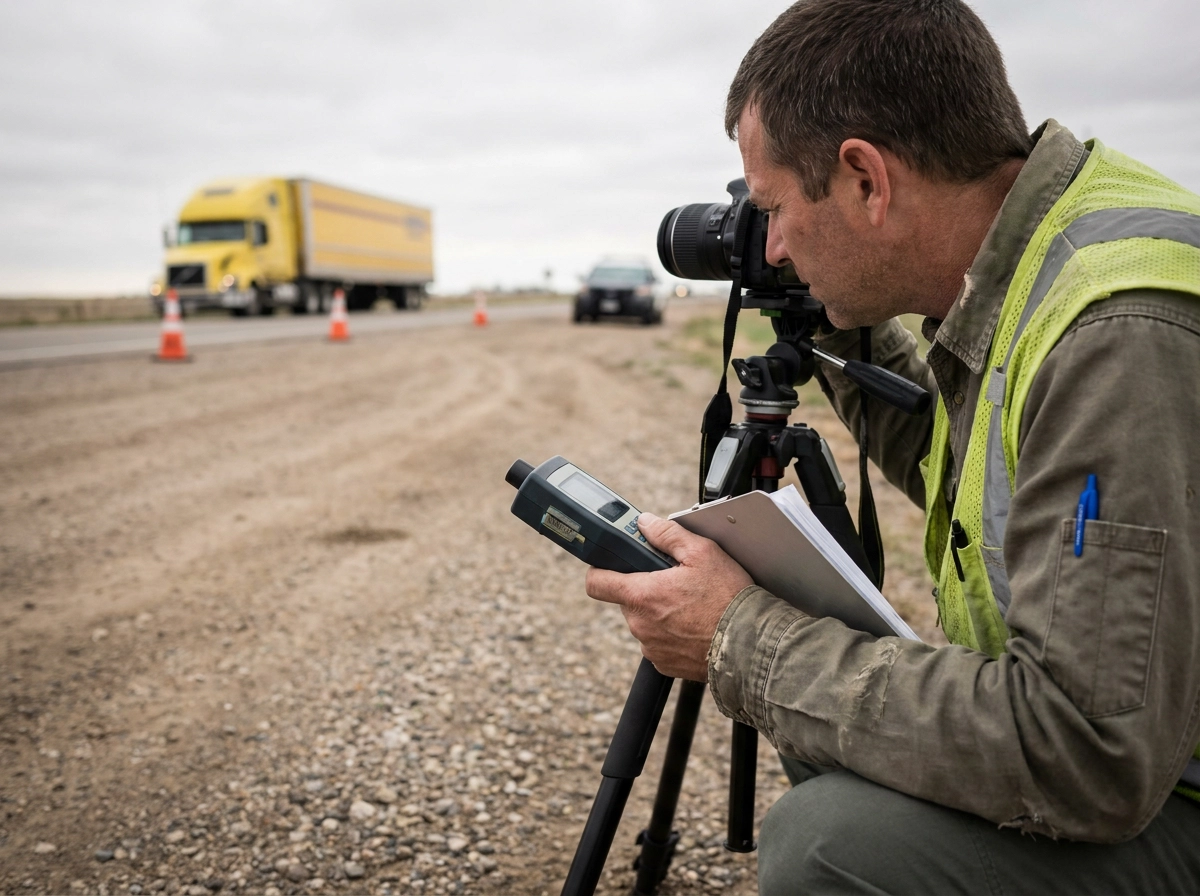
Commercial truck accidents are where the gap between the injured party and the other side becomes most visible, and most dangerous.
The carrier’s insurer moves first. Within hours of a serious trucking crash, specialized claims adjusters and independent accident reconstruction firms are typically dispatched, often arriving at the scene before the injured person has left the emergency room. That investigation is not neutral. It is built to protect the carrier.
What federal regulations require carriers to keep:
Under FMCSA Hours of Service rules and related federal standards, commercial carriers are required to maintain:
- Driver logs and hours-of-service records under 49 CFR Part 395
- Pre-trip and post-trip vehicle inspection reports
- Maintenance and repair logs
- Drug and alcohol testing results
- Driver qualification files, including CDL records and prior violation history
Every one of those documents is potential evidence in your claim.
The black box problem. Modern commercial trucks carry federally mandated electronic logging devices (ELDs) that record hours driven, and many also carry event data recorders that capture speed and operational data in the period before a crash. This data is not stored indefinitely and may not be preserved without a formal legal hold. An attorney who acts quickly can send a spoliation letter, a formal legal notice that puts the carrier on record as required to preserve that data. Without it, the most objective evidence of what happened can vanish permanently.
Liability rarely stops at the driver. A thorough investigation in a commercial truck wreck frequently identifies multiple responsible parties:
- The trucking company, if it pressured drivers to exceed hours-of-service limits or ignored safety violations
- The cargo loader, if improper loading caused instability or a shift in freight
- The maintenance contractor, if deferred repairs contributed to a mechanical failure
- The truck manufacturer, if a defective component played a role
See our Commercial Vehicle Crash FAQs for a breakdown of how these liability layers work in practice.
Act immediately. Investigators also look at whether the driver held a valid CDL, had exceeded legal driving limits, or had prior violations the carrier chose to overlook. That evidence exists right now. It may not exist next week. The days immediately after a commercial truck crash are the most consequential window in the entire claim, before evidence is lost or altered, and the other side already knows it.
Amazon and Delivery Vehicle Claims: Why Liability Is More Complicated Than It Looks
Delivery vehicle claims look simpler than commercial trucking cases on the surface. They are not.
The contractor structure is the first problem. Amazon does not directly employ most of its delivery drivers. It contracts with Delivery Service Partners (DSPs), independently owned businesses that hire drivers, operate the vans, and run routes under Amazon branding. The driver wears an Amazon uniform and drives an Amazon-branded van, but their actual employer is a small company you have likely never heard of. That separation is not accidental, and it is the first thing that obscures who is actually responsible when a crash happens.
Three separate insurance layers may apply to a single crash:
- The individual driver’s coverage
- The DSP contractor’s commercial auto policy (Amazon requires a minimum $1 million combined single limit)
- Amazon Logistics’ own commercial policy, on which Amazon is typically listed as an additional insured
Which policy responds depends entirely on what the driver was doing at the exact moment of impact, whether completing a delivery, driving back to a facility, or on a personal break. That single factual question can shift hundreds of thousands of dollars in coverage.
Courts have not let Amazon hide behind the contractor label. In significant litigation, courts have found Amazon vicariously liable for DSP driver negligence, particularly when Amazon’s own routing algorithms, delivery quotas, or vehicle specifications contributed to the crash. The argument that the driver was “just a contractor” loses force when Amazon controlled the route, the timing, and the equipment.
Document everything at the scene:
- All Amazon branding on the vehicle
- The van number, often printed on the rear doors
- The license plate and any visible USDOT number
- Delivery handheld devices or route screens visible through the window
These details let an attorney trace the specific DSP and insurance chain quickly.
The regulatory framework is also different. Unlike commercial semi-trucks, last-mile delivery vans under certain weight thresholds are not always subject to full FMCSA oversight. That changes which records are legally available, what driver qualification standards apply, and what arguments the defense can make. An attorney who assumes the same evidentiary rules apply as in a trucking case will miss critical leverage.
Uber and Lyft Accidents: Understanding the Three-Phase Insurance Problem
Rideshare claims introduce a coverage structure that works nothing like a standard car accident, and most injured people do not discover this until they are already deep in the claims process.
The Three Phases That Determine Everything
Uber and Lyft do not maintain a single, always-active insurance policy. Coverage shifts based on exactly what the driver was doing at the moment of the crash:
- Phase 1 – App off: The driver’s personal auto insurance applies. Most personal policies explicitly exclude commercial rideshare activity, which can leave significant coverage gaps.
- Phase 2 – App on, no ride accepted: Uber and Lyft provide contingent liability coverage, typically $50,000 per person and $100,000 per incident.
- Phase 3 – Ride accepted or passenger aboard: The full $1 million third-party liability policy is active.
Why This Creates Disputes Standard Claims Don’t Have
When a crash happens in Phase 2, the driver’s personal insurer argues the driver was working commercially. The platform argues coverage should be minimal. Both point at each other. The injured party waits, unpaid, while medical bills grow. This finger-pointing has no equivalent in a standard two-car collision.
Passengers vs. Third Parties: Your Position Matters
If you were a passenger when the crash occurred, you are in the strongest possible position. Phase 3 is clearly triggered, and the $1 million policy applies without dispute. If you were a third party hit by a rideshare vehicle, your recovery depends entirely on which phase the driver was in at impact. That single fact can mean the difference between $50,000 and $1 million in available coverage.
Document the App Status Immediately
Screenshot your ride receipt, the trip status screen, and any in-app messages between rider and driver before you close the app. These records are admissible evidence that establish which coverage tier applies. Once the app session ends or time passes, that data may no longer be accessible to you directly.
Rideshare companies also maintain internal records including GPS route data, driver acceptance logs, and safety history. An attorney can subpoena these, but preservation requests must be sent quickly before routine data deletion removes them permanently.
Kentucky’s Local Rules Add Another Layer
Kentucky’s no-fault insurance laws, including how PIP benefits interact with third-party rideshare claims, create additional complexity that generic national guidance does not address. Kentucky’s specific rideshare regulations and how state courts have applied them to coverage disputes matter. An attorney who knows Kentucky’s framework, not just the national policy structure, is a genuine strategic asset here.
Motorcycle and Pedestrian Accidents: Fighting the Bias and Preserving the Right Evidence
Rideshare claims turn on insurance phases. Motorcycle and pedestrian claims turn on something harder to fix: bias, and evidence that vanishes before anyone thinks to preserve it.
Motorcyclists and pedestrians face a compounding disadvantage after a crash. Per mile traveled, motorcyclists die at nearly 27 times the rate of car occupants, yet they are also among the most likely to have fault incorrectly assigned to them in the immediate aftermath. Insurance adjusters and some law enforcement officers carry unconscious assumptions about rider behavior, and those assumptions can shape early police reports and initial fault determinations in ways that are genuinely damaging to a legitimate claim.
1. Sight line evidence can shift liability entirely. When a driver says they “just didn’t see” the motorcyclist or pedestrian, that is not an automatic defense; it is an admission that deserves investigation. An obstructed view from a parked delivery vehicle, sun glare at a specific time of day, or a road design that eliminated sightlines is a documentable, provable fact. Photographs taken at the scene, at the same time of day, from the driver’s seat position, can convert a vague excuse into evidence of negligence.
2. Physical evidence disappears within days. Skid marks fade, debris is cleared by road crews, and vehicles get repaired or totaled before anyone documents the damage patterns that would show point of impact and direction of force. Photographing everything from multiple angles immediately after the crash is not optional preparation; it is essential evidence collection.
3. Never discard a helmet or any protective gear. Even gear that looks undamaged can carry critical evidence. Damage patterns on a helmet can corroborate exactly how and where the impact occurred, directly contradicting a driver’s version of events. Gear condition also functions as medical evidence, linking specific injuries to the mechanism of impact. Store everything exactly as it was at the crash. Do not clean it.
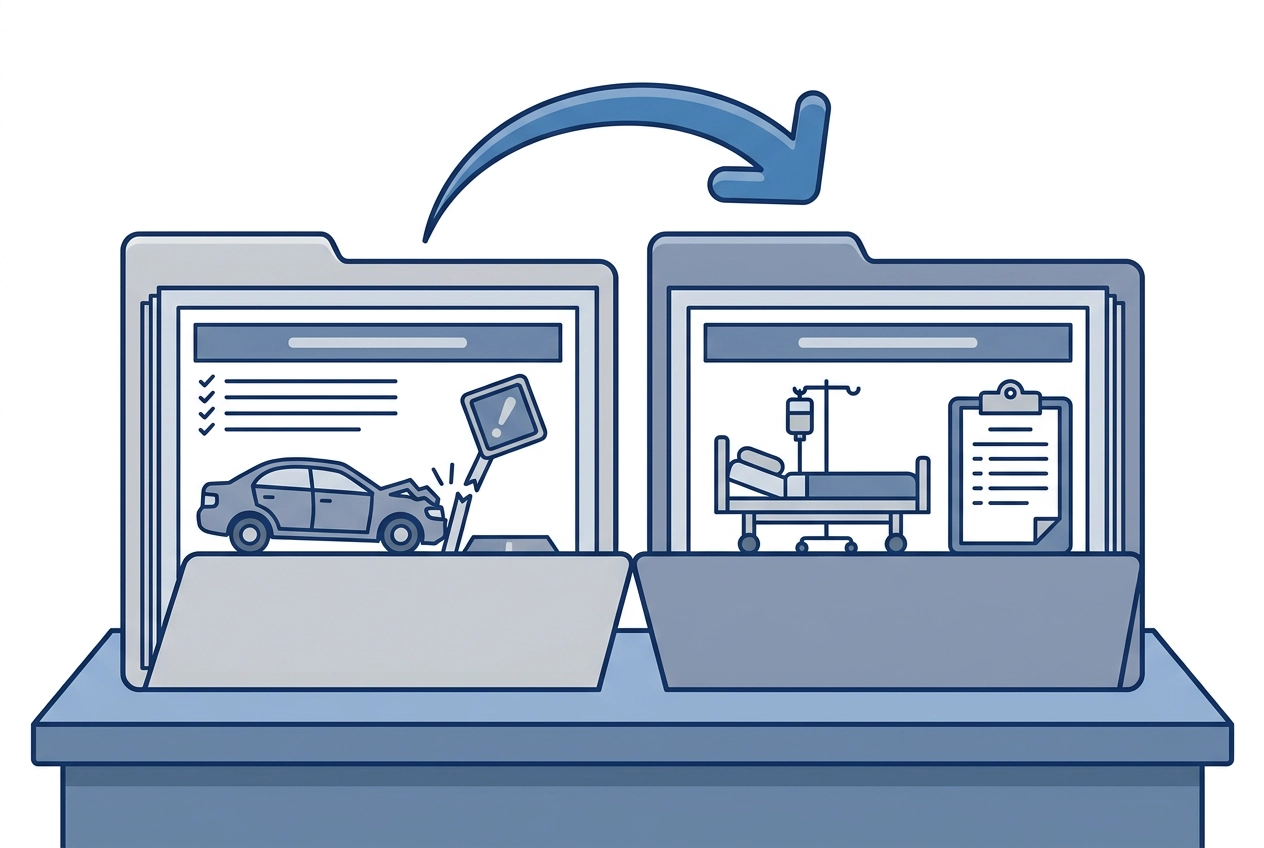
4. Pedestrian claims can involve a government defendant. Broken crosswalk signals, missing signage, inadequate lighting, and poor road design can make a municipality partially liable. Notice deadlines against government entities are significantly shorter than standard personal injury deadlines, consult an attorney immediately if a road or signal defect may have contributed. Missing that window can eliminate the claim entirely.
5. Eyewitness contact information is irreplaceable. Physical evidence in motorcycle and pedestrian cases is limited by nature. Eyewitness accounts carry outsized weight precisely because of that limitation. In the first minutes after a crash, getting the name and phone number of every bystander present is one of the highest-value actions anyone at the scene can take.
What You Can Do Right Now: A Preparation Checklist by Claim Type
Knowing what bias and evidence degradation look like in motorcycle and pedestrian claims is one thing. Knowing exactly what to do in the first minutes after any serious crash is another. Here is your field guide, organized by claim type.
Universal First Steps (Every Crash)
Before anything else, regardless of what vehicle is involved:
- Call 911 immediately
- Do not move injured parties unless they face an immediate physical threat
- Get the responding officer’s badge number and report number before leaving the scene
- Do not give a recorded statement to any insurance company until you have spoken with an attorney
Commercial Truck Crash
- Photograph the USDOT number, carrier name, and license plate from multiple angles
- Document visible damage to both the cab and trailer
- Note the truck’s position and photograph any skid marks or cargo spill
- Ask the officer specifically whether a commercial vehicle report will be filed
- Contact an attorney the same day; a spoliation letter must go out immediately to preserve black box data before it is overwritten
Amazon and Delivery Vehicle Crash
- Photograph all branding and the van number, typically printed on the rear doors
- Record the exact time of the crash; DSP shift logs are timestamp-dependent
- Note the direction the van was traveling and the delivery address it appeared to be approaching, since this helps attorneys trace the specific DSP contractor and employment records quickly
Rideshare Crash
- If you were a passenger, screenshot your ride receipt and any in-app notifications before closing the app
- If you were a third party, note whether the vehicle displayed a rideshare placard or had a phone mount visible on the dashboard
- Ask witnesses whether they saw a phone mounted in the car
- Preserve your own phone’s location data from the time of the crash
Motorcycle and Pedestrian Crash
Follow the full gear-preservation and eyewitness protocol detailed in the Motorcycle and Pedestrian section above, and act immediately on any government-entity notice deadline.
For a deeper breakdown of what to preserve and why, see what evidence you should collect and protect after a Kentucky car accident.
One Rule That Applies to Every Claim Type
Do not post anything about the crash, your injuries, or your recovery on social media. Insurance defense investigators routinely monitor claimants’ accounts, and a single post can be used to minimize or deny a valid claim entirely.
What the Insurance Adjuster Is Actually Doing While You Wait
While you are following the checklists in the previous section, the insurer on the other side is not waiting.
1. Adjusters are assigned immediately, and their job is not to help you. Insurance companies deploy experienced claims adjusters to significant accident claims within hours of a report, sometimes before you have left the emergency room. These are trained professionals whose sole purpose is to evaluate evidence, identify weaknesses in your claim, and resolve the matter for the least money possible. They work for the insurer, not for you.
2. In commercial truck and delivery vehicle claims, the insurer typically assembles a full defense file — reconstruction experts, biomechanical analysts, medical reviewers — well before an unrepresented claimant is organized enough to negotiate. Closing that gap after the fact is difficult; preventing it requires representation from the start.
3. Recorded statements are evidence, not conversations. Adjusters typically contact claimants early, often while injuries are still acute and adrenaline is still affecting recall, to take recorded statements. Any inconsistency between what you say in that call and what appears in your later medical records or testimony can be used to challenge the credibility of your entire claim.
4. Two separate adjuster teams may be examining the same evidence at once. In disputed-fault cases, both your own insurer (first-party claim) and the at-fault party’s insurer (third-party claim) often conduct parallel investigations from opposing angles. You may have two adversarial reviews underway without realizing it.
5. Pre-existing conditions are a specific target. Adjusters pull prior medical history looking for conditions the insurer can argue pre-existed the crash. An attorney who understands aggravation doctrine, the legal principle that a defendant is responsible for worsening a prior condition, can reframe this narrative and significantly affect how much of your treatment the insurer agrees to cover.
Why the Attorney You Choose Changes the Outcome, Not Just the Experience
Knowing what the adjuster is doing is only half the equation. The other half is who is standing across the table from them on your behalf.
Insurance companies track which attorneys actually go to trial. High-volume firms that settle cases quickly, without meaningful litigation preparation, are visible to defense adjusters. When an adjuster sees that kind of firm on a claim, the opening offer reflects it. Documented cases show initial offers as low as $5,000 on serious injury claims that ultimately produced jury verdicts exceeding $500,000. The gap is not accidental; it is priced in from the start.
Leverage in a major accident claim comes from a credible trial threat, not from negotiating skill alone. An attorney with a substantial jury trial record and a license to practice before the United States Supreme Court signals something specific to opposing insurers: this case will go the distance if a fair number is not on the table. That signal changes the math the insurer uses when deciding what to offer.
Fee structure determines your net recovery, not just gross settlement size. Most injured people focus on the settlement number without running the arithmetic on what they actually take home. A firm charging 40 to 45% versus one charging 30% creates a real dollar gap on any significant settlement. For example, on a $200,000 recovery, a 10-percentage-point difference in contingency fee equals $20,000 more in your pocket. Understanding what a 30% contingency fee actually means for your car accident settlement shows the math in plain terms, because most injury victims never see it before they sign.
As detailed above, spoliation letters, record requests, and expert retention must happen within the first days — an attorney experienced with these specific claim types knows exactly which steps cannot wait.
Claim type expertise matters from the first phone call, not just at trial.
What to Do Next If You Have Been Seriously Injured
Knowing what the right attorney looks like is only useful if you act on it quickly. Here is exactly what to do now.
- Contact a personal injury trial attorney before you give any recorded statement. This is the single most impactful move you can make. Insurance adjusters are trained to take early statements that can be used against you later. Once those words are on record, you cannot take them back.
- Use the checklists earlier in this guide today — evidence windows close fast and cannot be reopened once they pass.
- Before signing, confirm the attorney has tried cases to verdict, charges no more than 30%, and has handled your specific claim type.
- Talk to Forman & Associates at no cost. The firm charges only 30% pre-suit on car accident settlements. For practical guidance on protecting your position from the first hours after a crash, review what to do after a car crash before your consultation. The conversation is free. The difference in your net recovery can be significant.
- Do not wait. The insurer on the other side filed its claim and assigned an adjuster before you left the scene. Every day you delay is a day their file gets stronger and your evidence window gets narrower.
Conclusion
Major accident claims involving commercial trucks, rideshare platforms, delivery vehicles, and vulnerable road users operate on a completely different level than standard fender-benders. The opposing insurer is organized, aggressive, and already working against your interests. Evidence disappears fast, early statements can permanently damage your case, and the attorney you choose determines far more than your experience. It determines your outcome.
You now understand what is happening behind the scenes. The next step is acting on it. Preserve your evidence today. Ask hard questions before you sign anything. And choose representation with the trial experience and the fee structure that actually work in your favor.
If you have been seriously injured, the window to protect your claim is open right now. Do not wait for it to close before you decide to act.