Reviewed by Larry Forman, Attorney.
After a wreck on I-64, I-65, I-71 or the Watterson, many people think: there’s a traffic camera right there, so the crash must be on video. It’s a reasonable guess, but usually it’s wrong.
Short answer: TRIMARC says it doesn’t record its camera feeds, so act fast on other video sources. Here’s what to request and from whom.
This guide explains what TRIMARC is, what its cameras do and don’t capture, whether any TRIMARC camera footage or other records may exist, and what to do in the first days after a Louisville interstate crash so the evidence you need doesn’t disappear.
What is TRIMARC?
TRIMARC (Traffic Response and Incident Management Assisting the River Cities) is a Kentucky Transportation Cabinet (KYTC) project. It runs a traffic operations center in Louisville that is staffed 24 hours a day, every day of the year. Operators watch interstate traffic in the Louisville area and Northern Kentucky. They post warnings on the overhead message signs, share incident alerts, and help send responders.
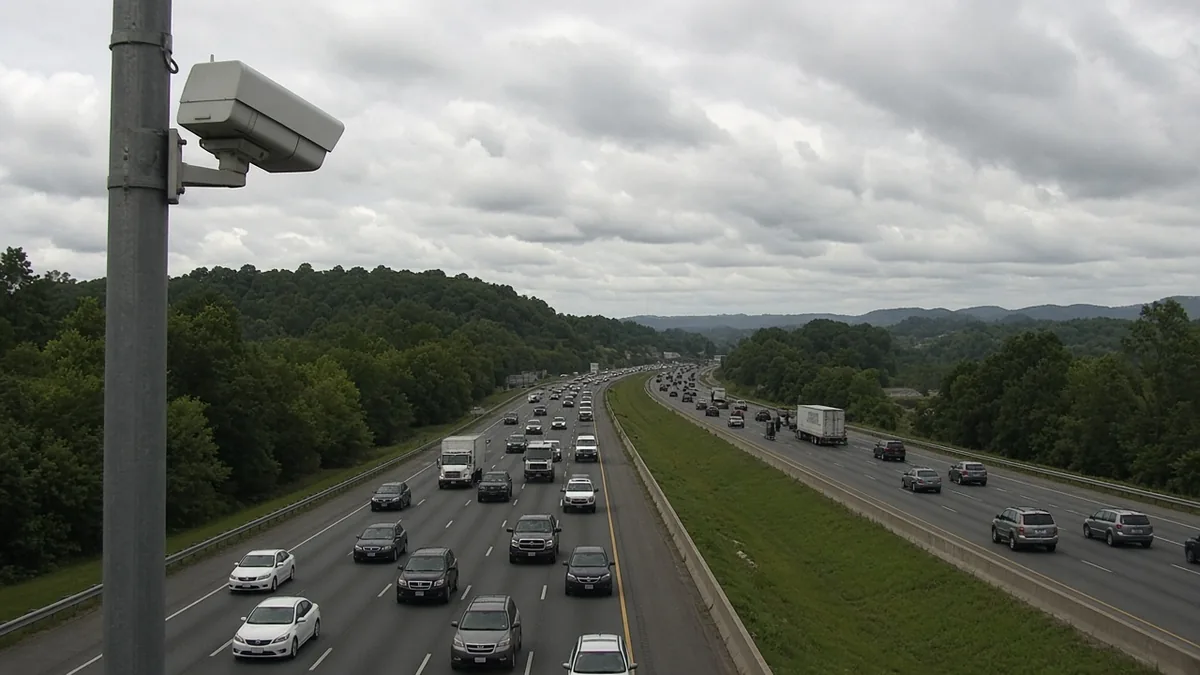
TRIMARC began in the late 1990s on 11 miles of I-65 in Louisville. Today its public camera map includes Louisville-area views on I-64, I-65, I-71, I-264 (Watterson Expressway), I-265 and KY 841 (Gene Snyder Freeway), plus the downtown bridges. You can view current camera snapshots on TRIMARC’s public map at trimarc.org. Indiana and Ohio views come from those states’ transportation departments.
Do TRIMARC cameras record crashes?
According to TRIMARC itself, no. TRIMARC’s FAQ answers the question “Can you send me a recording from camera x?” this way: “No. We do not record video from traffic camera feeds because its is not within the scope of the project.”
The website cameras show snapshots that refresh a few times a minute. Operators use them to spot and confirm incidents, not to build a video archive. So plan on there being no “TRIMARC footage.” That doesn’t mean there’s no evidence. It means you have to look for it elsewhere, and fast.
Hurt in a crash on I-64, I-65 or I-71? TRIMARC usually doesn’t save video, so other evidence matters. Talk to a Louisville car accident lawyer or, if a semi was involved, a Louisville truck accident lawyer before that evidence is gone. Free review, 24/7.
What TRIMARC may still have: incident records
Even without video, TRIMARC keeps track of what happens on the interstates. A 2018 Kentucky Transportation Center research report, done with KYTC, describes TRIMARC incident records that include:
- Incident type, roadway and direction, and mile point
- When the incident began and ended, and how long it lasted
- The number of vehicles involved and the number of lanes blocked
The report says TRIMARC operators often confirm incidents through the camera feeds. A record like this can help pin down timing and location, especially in a chain-reaction or secondary crash.
How to request TRIMARC records
TRIMARC records belong to KYTC, so requests go through the Kentucky Open Records Act:
- Send a written, signed request to KYTC’s Office of Legal Services. KYTC’s Open Records page lists the email address (KYTC.OpenRecords@ky.gov), the mailing address (200 Mero Street, Frankfort, KY 40622) and the Attorney General’s standard request form.
- Be specific. Include the date, a time window, the interstate, the direction, the nearest mile marker or exit, and what you’re asking for. For example: “incident records and any operator logs for a crash on I-65 South near mile marker 133 on [date] between 4:30 and 5:30 p.m.”
- Expect a written answer within five business days. That’s the deadline under KRS 61.880. If any record is withheld, the agency has to cite the exemption it’s relying on.
- State that you’re a Kentucky resident. Include a short statement that you’re a Kentucky resident (or acting for one). The agency can deny a request without it.
Kentucky’s Open Records Act is for Kentucky residents, and that includes someone authorized to act for a resident, such as your lawyer.
Where crash video actually comes from
Since TRIMARC doesn’t keep video, these are the sources worth chasing right away:
- Commercial trucks. Many trucking companies use dash cameras and electronic data recorders. If a tractor-trailer was involved, see why Louisville truck wreck cases need a fast preservation letter. Trucking companies often have forward-facing cameras and telematics, and our truck accident lawyers in Louisville send preservation letters right away.
- Other drivers’ dashcams, and the data stored in the vehicles themselves.
- Police video. Officers’ body or in-car cameras may have recorded the scene after the crash.
- Businesses near ramps and surface streets. Private systems often record over themselves quickly.
- City cameras off the interstate. LMPD’s Metro Watch cameras cover some public areas. LMPD policy says those recordings are deleted after 30 days, so request them before day 30 (LMPD SOP 4.25).
Our full checklist of evidence to preserve after an accident covers the rest.
Spaghetti Junction, work zones and other interstate hazards
The Kennedy Interchange (“Spaghetti Junction”). This is where I-64, I-65 and I-71 meet downtown. A 2008 KYTC engineering study described it as carrying more than 300,000 vehicles a day. KYTC rebuilt it between 2013 and 2016 as part of the Ohio River Bridges Downtown Crossing, untangling weaves and lengthening merges. Even so, it’s still a place of fast lane changes, bridge approaches and heavy traffic, and crashes there often come down to who merged or changed lanes improperly.
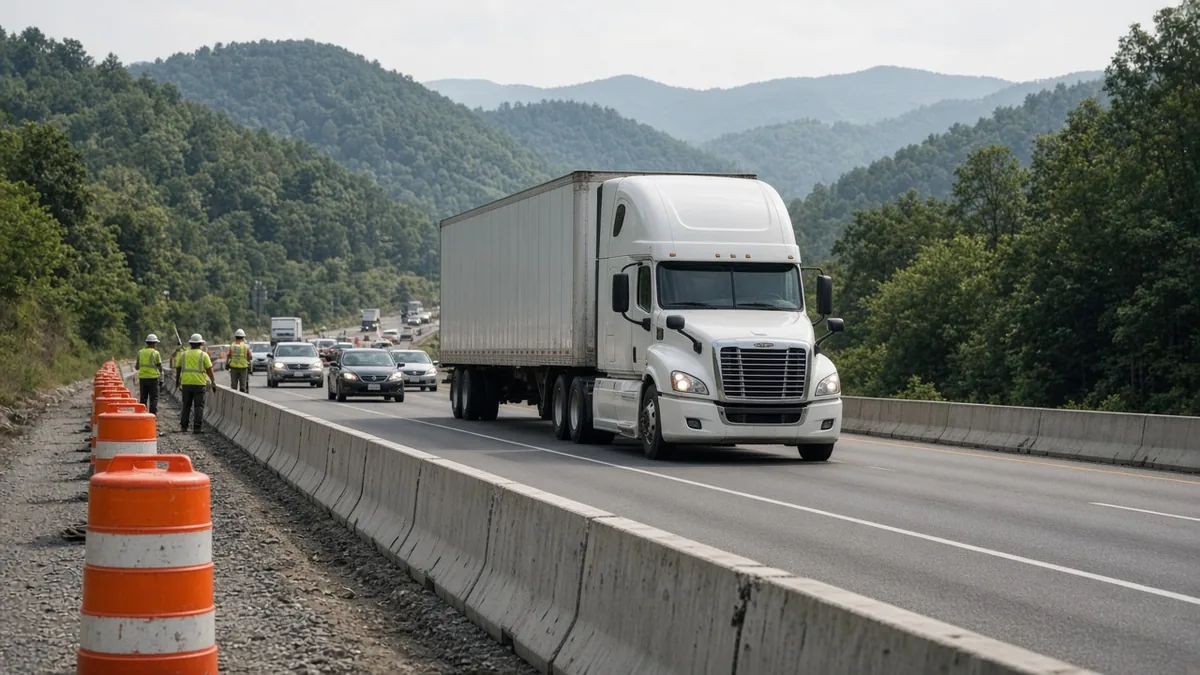
Work zones. Lane shifts, narrow lanes, missing shoulders and sudden slowdowns are common in interstate construction. TRIMARC’s map lists active construction. When a work zone helped cause a crash, a contractor or a public agency may share responsibility, and claims against state agencies follow special rules and shorter deadlines.
Secondary crashes. TRIMARC describes these as crashes that happen in the backup behind an earlier crash or incident. They’re a big reason to get out of travel lanes when it’s safe to do so.
TRIMARC Freeway Service Patrol. TRIMARC’s free Freeway Service Patrol (sometimes called a safety service patrol) helps stranded drivers and provides traffic control at incident scenes. It doesn’t tow. In Louisville it runs Monday through Friday, 6:30 a.m. to 6:30 p.m. If a patrol truck came to your crash, note it, since its activity may show up in TRIMARC’s records.
What to do after a Louisville interstate crash
- Get safe. If no one is hurt and your car can move, get to the shoulder or off the interstate. If someone is hurt or the car can’t move, stay buckled with your hazards on and call 911.
- Write down your exact location: the interstate, direction, nearest mile marker or exit, and the lane you were in.
- Get medical care the same day if you have any pain. Neck, back and head injuries are common in high-speed crashes.
- Photograph the vehicles, debris, lane markings, construction signs and your injuries, but only when it’s safe.
- Collect names and numbers of the other drivers, witnesses and the responding officers. Interstate crashes may be handled by Kentucky State Police or LMPD. Here’s how to get your Kentucky accident report.
- Act on video within days, not weeks. Use our first 24 hours checklist before you talk to any insurance adjuster.
Kentucky law in brief
- PIP pays first. Unless you rejected it, Kentucky no-fault coverage pays up to $10,000 per person for medical bills, lost wages and similar losses, regardless of fault. See how Kentucky PIP insurance works.
- The threshold. To claim pain and suffering from the at-fault driver, you generally need more than $1,000 in medical expenses or a qualifying injury such as a fracture or permanent injury (KRS 304.39-060).
- Shared fault. Kentucky’s pure comparative fault rule (KRS 411.182) reduces your recovery by your share of fault but doesn’t bar it.
- Deadlines. Most motor vehicle injury lawsuits must be filed within two years of the injury or the last PIP payment, whichever is later, under KRS 304.39-230. Claims against state agencies generally must be filed with the Board of Claims within one year (KRS 49.120).
How Forman & Associates helps after an interstate crash
Forman & Associates Accident Injury Lawyers represents injured people from our office at 1139 S. 4th St. in Louisville. Larry Forman has tried 50+ jury trials and won 95% of them, and we prepare interstate cases for trial from day one. That means we:
- Send preservation letters to trucking companies, businesses and other drivers
- Submit open records requests to KYTC and police agencies
- Get the crash report and vehicle data
- Handle PIP and every insurance policy involved
We handle every kind of crash on every Louisville interstate, whether it was a car accident in Louisville or a truck wreck on a Louisville interstate. That includes motorcycle wrecks and commercial truck wrecks, which work differently from car cases. If you were hurt in a bicycle or pedestrian crash off the interstate, we handle those too.
TRIMARC camera footage FAQ
Can I get TRIMARC camera footage of my accident?
Usually not. TRIMARC says it does not record video from its traffic camera feeds. Its public website shows still snapshots that refresh 3 to 4 times a minute. TRIMARC may still have incident records showing the time, location, lanes blocked and vehicles involved, and you can request those from the Kentucky Transportation Cabinet under the Kentucky Open Records Act.
How long does TRIMARC keep camera footage, and how fast do I need to act?
TRIMARC says it does not record its camera feeds, so there is usually no TRIMARC video to save. The video that does exist is often erased fast. Louisville Metro Watch camera recordings are deleted after 30 days under LMPD policy, and businesses and dashcams often record over files within days. Ask for TRIMARC incident records and send preservation requests for other video in the first few days after the crash, not weeks later.
How do I request TRIMARC records?
Send a written, signed open records request to the Kentucky Transportation Cabinet’s Office of Legal Services, for example by email at KYTC.OpenRecords@ky.gov or by mail to 200 Mero Street, Frankfort, KY 40622. Include the date, a time window, the interstate, the direction and the nearest mile marker or exit, and state that you are a Kentucky resident. The agency must respond in writing within five business days.
Can a lawyer subpoena TRIMARC or traffic camera video?
Once a lawsuit is filed, a lawyer can use a subpoena under Kentucky Civil Rule 45 to ask people and businesses outside the case for documents and recordings. A subpoena can’t produce video that was never recorded, though, and it often comes too late for footage that is erased within days. That’s why preservation letters and open records requests should go out first.
Who runs TRIMARC?
TRIMARC (Traffic Response and Incident Management Assisting the River Cities) is a Kentucky Transportation Cabinet project. KYTC provides its funding and oversight. Its Traffic Operations Center in Louisville is open 24/7/365 and monitors interstate traffic in the Louisville and Northern Kentucky areas. TRIMARC is not a law enforcement agency, and its cameras are not used to catch speeders.
Where can I see TRIMARC traffic cameras?
TRIMARC’s public map at trimarc.org shows camera snapshots, message signs, incidents and construction on Louisville-area interstates. It also shows Indiana and Ohio camera feeds from those states’ transportation departments. The images are current views only, not a saved recording of past crashes.
Crashed on a surface road instead? Our Dixie Highway accident guide covers one of Louisville’s most dangerous corridors.
Call Forman & Associates
If you were hurt in a crash on a Louisville interstate, call Forman & Associates Accident Injury Lawyers at (502) 931-6788 for a free consultation. Our office is at 1139 S. 4th St., Louisville, KY 40203. No fee unless we win.