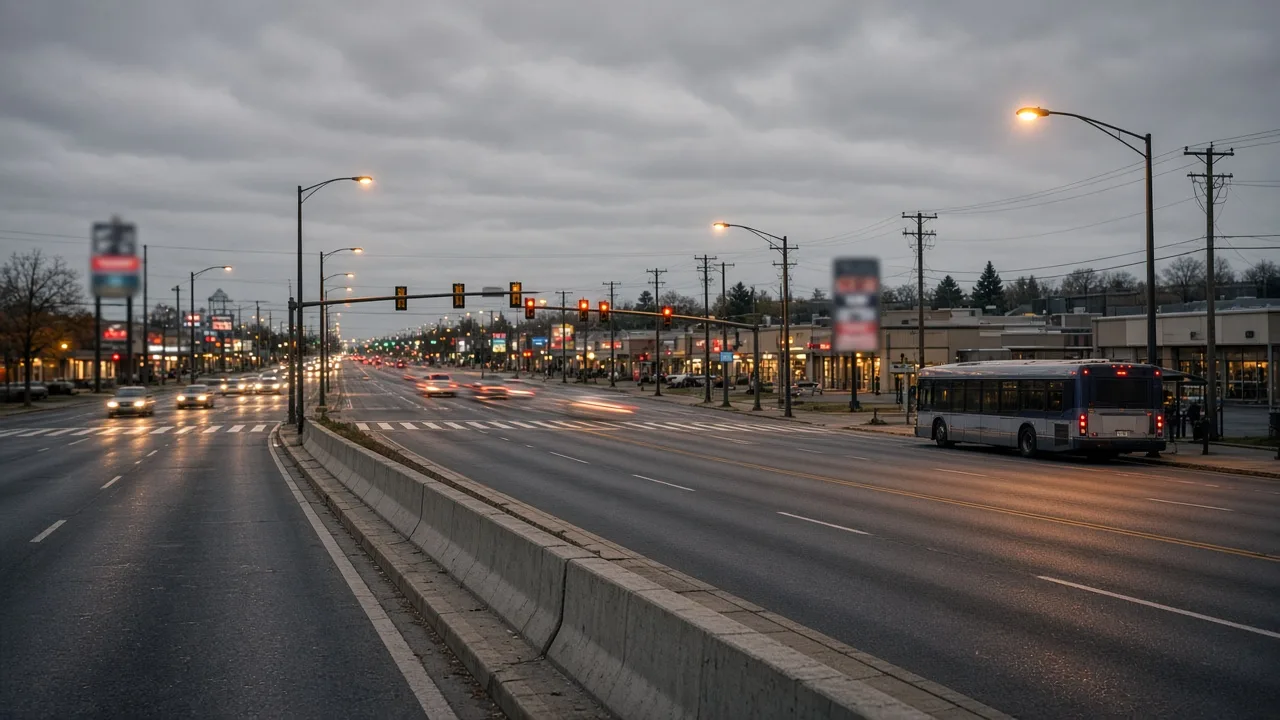
If you were hurt in a crash on Dixie Highway, you’re not alone, and it probably wasn’t just bad luck. Dixie Highway (US 31W) is one of Louisville’s busiest roads, and city and state officials have spent years studying why so many serious crashes happen there.
This guide explains what the public safety data says about the corridor, the kinds of crashes we see there, what to do in the days after a wreck, and the Kentucky laws that will shape your claim.
Why Dixie Highway is one of Louisville’s most dangerous roads
It is on Louisville’s High Injury Network. Vision Zero Louisville, the city’s traffic safety program run with the Kentucky Transportation Cabinet (KYTC), keeps a High Injury Network: the non-interstate roads where a large share of deaths and serious injuries happen. The city says this network covers about 5% of Louisville’s non-interstate miles but accounts for 55% of the fatal and suspected serious injury crashes on those roads.
Dixie Highway shows up on that list more than once:
- US 31W (Dixie Highway) from Depot Lane to Bernheim Lane: about 14.5 miles, owned by KYTC, ranked No. 10 citywide.
- Dixie Highway from West Broadway to Bernheim Lane: about 2 miles, owned by Louisville Metro, ranked No. 29.
- Side roads that feed into Dixie also make the list, including Crums Lane (No. 12) and Rockford Lane (No. 14).
Its fatality rate has been far above similar roads. Before the corridor was rebuilt, Louisville Metro reported 34 traffic deaths in the New Dixie Highway project area from 2010 to 2014. The city said that fatal-crash rate was more than three times the rate of similar roads in Kentucky. The city also reported more than 60,000 drivers and more than 4,000 transit riders on the corridor each day.
It is especially dangerous for people on foot. A Vision Zero Louisville study of pedestrian crashes from 2011 to 2020 named Dixie Highway as one of the corridors “plagued by pedestrian crashes.” Several of the intersections it flagged for pedestrian safety are on Dixie, including Dixie at Garrs Lane, San Jose Avenue, Ponder Lane and Stallings Avenue. The same report found that across Jefferson County, pedestrian crashes were only 2% of crashes on surface streets from 2013 to 2017 but 26% of fatal crashes. It also found that crashes in the dark make up a much larger share of the deadliest pedestrian crashes.
What the “New Dixie Highway” project changed, and what it didn’t
The $35 million New Dixie Highway Project broke ground in December 2017 and was largely finished by early 2020. According to KYTC’s announcement, it added:
- Raised medians and left-turn lanes on the most congested and dangerous section, from Crums Lane to Greenwood Road, to limit dangerous mid-block left turns
- Better sidewalks and crosswalks
- New signal technology to coordinate traffic lights along the corridor
- TARC’s Rapid bus line, Louisville’s first bus rapid transit service, with 37 stations and stops
Those were real improvements, but they weren’t spread evenly. The city’s High Injury Network page still lists safety work as “to be determined” on some stretches, such as Dixie between the Snyder Freeway and Greenwood Road and between Crums Lane and Bernheim Lane. South of the Snyder, KYTC has a separate access management and safety project.
Common types of crashes on Dixie Highway
Every crash is different, but these are the situations we hear about most often on a wide, busy commercial road like Dixie:
- Left-turn and driveway crashes. Dixie is lined with businesses, parking lots and side streets. Drivers turning across several lanes of traffic, or pulling out of a lot, can misjudge a gap.
- Pedestrians struck while crossing. Long crossing distances, bus stops and poor lighting at night put people on foot at serious risk.
- Intersection crashes. Red-light running and side-impact (T-bone) collisions at signals. Our guide to intersection crashes in Kentucky covers how fault gets sorted out.
- Rear-end crashes in stop-and-go traffic.
- Crashes involving buses and transit riders, including people getting on or off near a stop.
- Distracted, speeding or impaired drivers. If someone who was drinking or high hit you, that driver’s conduct can matter a great deal to your injury claim.
What to do after a Dixie Highway crash
- Call 911 and get checked out. Some injuries, including brain and spine injuries, don’t show up right away. A prompt medical record also protects your claim.
- Note exactly where you were. Dixie runs through more than one police jurisdiction, so write down the nearest cross street or address number. That helps you get the right Kentucky accident report.
- Take photos if you can do it safely. Get the vehicles, lane markings, traffic signals, crosswalks, medians, bus stops, skid marks and your injuries.
- Get witness names and phone numbers. That includes bus riders and people at nearby businesses.
- Look for cameras. Business camera footage along Dixie can be recorded over quickly. See our list of evidence to preserve after an accident.
- Report the claim to your own insurer so your PIP benefits can start. Be careful about giving a recorded statement to the other driver’s insurance company before you get advice.
Kentucky laws that matter after a Dixie Highway crash
PIP (no-fault) benefits come first. Kentucky is a no-fault state. Unless you rejected it, personal injury protection (PIP) pays up to $10,000 per person for economic losses like medical bills and lost wages, no matter who caused the crash. Here’s how Kentucky PIP insurance works.
There is a threshold for suing over pain and suffering. Under KRS 304.39-060, you can claim pain, suffering and similar damages from the at-fault driver if your medical expenses are more than $1,000, or if your injuries include a broken bone, permanent injury, permanent disfigurement, loss of a body part, permanent loss of bodily function, or death. In some situations, such as certain pedestrian cases, this limit may not apply at all.
Being partly at fault doesn’t end your claim. Kentucky uses pure comparative fault under KRS 411.182. If you are found partly responsible, your recovery is reduced by your share, but it isn’t wiped out. Insurers often try to push more blame onto pedestrians and turning drivers on roads like Dixie. Learn more about Kentucky’s comparative fault rule.
Deadlines are short. For most motor vehicle injury claims, KRS 304.39-230 gives you two years from the date of injury or from the last PIP payment, whichever is later. If a road defect or a state agency’s mistake played a role, different rules can apply. Claims against state agencies go to Kentucky’s Board of Claims, and KRS 49.120 generally requires filing within one year. Don’t wait to find out which deadline applies to you.
How Forman & Associates helps
Forman & Associates Accident Injury Lawyers has represented injured people in Louisville since 2013, from our office at 1139 S. 4th St. Larry Forman is a trial lawyer with 50+ jury trials, and we prepare every case as if it may go in front of a jury. That’s often what it takes to get an insurance company to take a claim seriously.
After a Dixie Highway crash, we can:
- Get the crash report and find witnesses
- Send preservation requests for video before it’s erased
- Handle PIP so your bills keep getting paid
- Find every policy that may apply, including underinsured motorist coverage
- Push back when the insurer blames you
We handle Louisville car accident cases, pedestrian and bicycle collisions, and bus wrecks along Dixie and across Louisville.
Dixie Highway accident FAQ
Is Dixie Highway really one of the most dangerous roads in Louisville?
Yes. Vision Zero Louisville includes Dixie Highway (US 31W) on its High Injury Network, the short list of roads where a large share of Louisville’s deaths and serious injuries happen. Louisville Metro has also reported that the corridor’s fatal-crash rate was more than three times that of similar Kentucky roads before the New Dixie Highway Project.
Who pays my medical bills after a Dixie Highway car accident?
In most cases your own PIP coverage pays first, up to $10,000 per person, no matter who was at fault. If your losses go beyond PIP and you meet Kentucky’s threshold, you may be able to bring a claim against the at-fault driver’s liability insurance and, if needed, your own underinsured motorist coverage.
I was hit while walking across Dixie Highway. Do I still have a case?
Possibly, even if you weren’t in a crosswalk. Under Kentucky’s pure comparative fault rule, a pedestrian who shares some blame can still recover, reduced by their share of fault. Lighting, signal timing and video matter a lot in these cases, so talk to a lawyer quickly.
How long do I have to file a claim after a crash on Dixie Highway?
For most Kentucky motor vehicle injury claims, you have two years from the injury or from the last PIP payment, whichever is later (KRS 304.39-230). Claims involving a government agency can have much shorter deadlines, so get advice early.
Do I need a Dixie Highway car accident lawyer for a minor crash?
Not always. If you were seriously hurt, missed work, or the insurer is blaming you, it’s worth having a lawyer review your case. The consultation is free, and there’s no fee unless we win.
Hurt on I-64, I-65, I-71 or the Watterson instead? See our guide to TRIMARC camera footage after a Louisville interstate crash.
Talk to a Louisville injury lawyer today
If you or someone you love was hurt in a Dixie Highway crash, call Forman & Associates Accident Injury Lawyers at (502) 931-6788 for a free consultation. You can also visit us at 1139 S. 4th St., Louisville, KY 40203. No fee unless we win.