Reviewed by Larry Forman, Attorney.
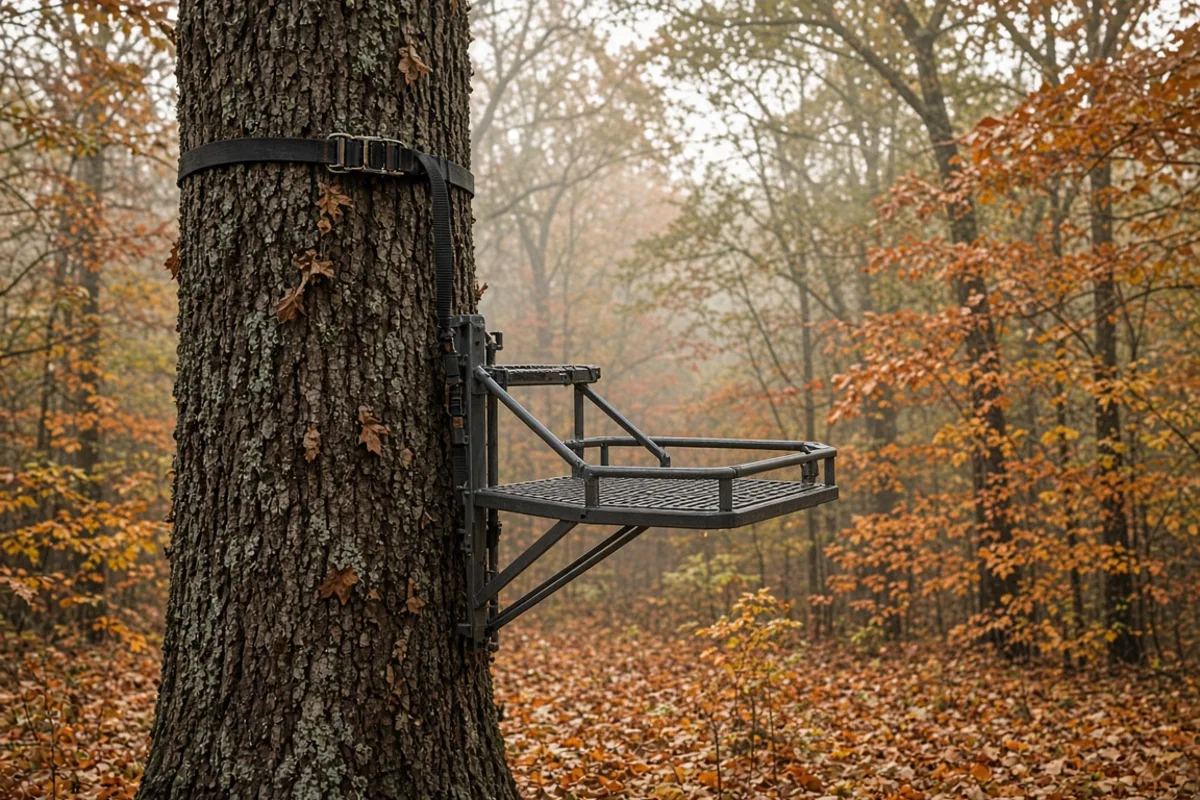
Key takeaways: A tree stand injury can lead to a claim against a manufacturer, a seller or a landowner, depending on what failed. If you had a tree stand injury in Kentucky, keep the stand, the straps and the harness, and photograph the scene. A tree stand injury claim often turns on that evidence.
Kentucky’s modern gun deer season runs November 14–29, 2026, according to the Kentucky Department of Fish and Wildlife Resources. Every season, Kentucky hunters are hurt in falls from elevated stands and in firearm accidents. If you suffered a tree stand injury or were shot by another hunter, here is who may be legally responsible.
Tree stand injury claims: defective stands and harnesses
Many tree stand falls involve equipment failure: a broken strap or cable, a weld that cracks, a ladder section that slips, or a harness or lifeline that does not hold. Manufacturers and sellers can be liable for defective products under Kentucky’s product liability act, KRS 411.300 and following. Under KRS 411.310, a product is presumed not defective if the injury happened more than five years after it was sold or more than eight years after it was made, so the stand’s age matters. See our product liability lawyer page.
Keep the stand, straps, and harness. Don’t throw them away or send them back to the maker. The equipment is often the most important evidence.
Landowner liability on hunting land
Kentucky’s recreational use statute, KRS 411.190, generally protects landowners who let people hunt for free. The protection does not apply when the landowner charges for access (such as a paid lease or a hunting outfitter) or willfully or maliciously fails to guard or warn against a dangerous condition. Learn more on our premises liability page and in our post on Kentucky liability waivers.
Hunting shootings and firearm injuries
Under 301 KAR 2:172, anyone hunting any species in daylight during modern gun deer, muzzleloader, or youth gun seasons (except waterfowl and dove hunters) must wear solid hunter orange on the head, back, and chest. A hunter who shoots without identifying the target, or ignores safety rules, may be liable for negligence. Homeowner’s insurance sometimes covers these claims. See our firearm injury lawyer page. ATV crashes while hunting are covered on our ATV injury page.
Deadlines and fault
Most Kentucky injury claims, including product and hunting injury claims, must be filed within one year (KRS 413.140(1)(a)). Kentucky uses pure comparative fault (KRS 411.182), so your own mistake reduces your recovery but does not bar it.
How Forman & Associates helps
We preserve the equipment, work with engineers to find the defect, and identify every insurance policy that may apply. Larry Forman has 13 years of experience representing injured Kentuckians, and you pay no fee unless we win.
Hunting injury FAQ
Can I sue a tree stand manufacturer after a fall?
Possibly, if a defect in the stand, strap, or harness caused the fall. Keep the equipment and contact a lawyer quickly, because the deadline is generally one year.
Is a landowner liable if I get hurt hunting on their land?
If you hunted for free, KRS 411.190 usually protects the landowner unless there was a willful or malicious failure to warn or guard. If you paid for access, that protection generally does not apply.
What if I was partly at fault, like not wearing a harness?
Kentucky’s comparative fault rule reduces your damages by your share of fault, but you can still recover.
How long do I have to file a hunting injury claim in Kentucky?
Generally one year from the injury under KRS 413.140(1)(a).
Talk to a Louisville injury lawyer
Hurt in the woods this season? Let us look at what happened. Get a free case evaluation or call (502) 931-6788. Our office is at 1139 S. 4th St., Louisville.
This post is general information about Kentucky law, not legal advice. Every case is different.