
Reviewed by Larry Forman, Attorney.
Stairs cause some of the most serious falls we see. A fall down even a few steps can break a hip or wrist, injure the back or cause a head injury, especially for older adults. Many stair falls happen because of something the owner should have fixed: a loose handrail, a broken or uneven step, a worn tread or a burned-out light.
Key takeaways
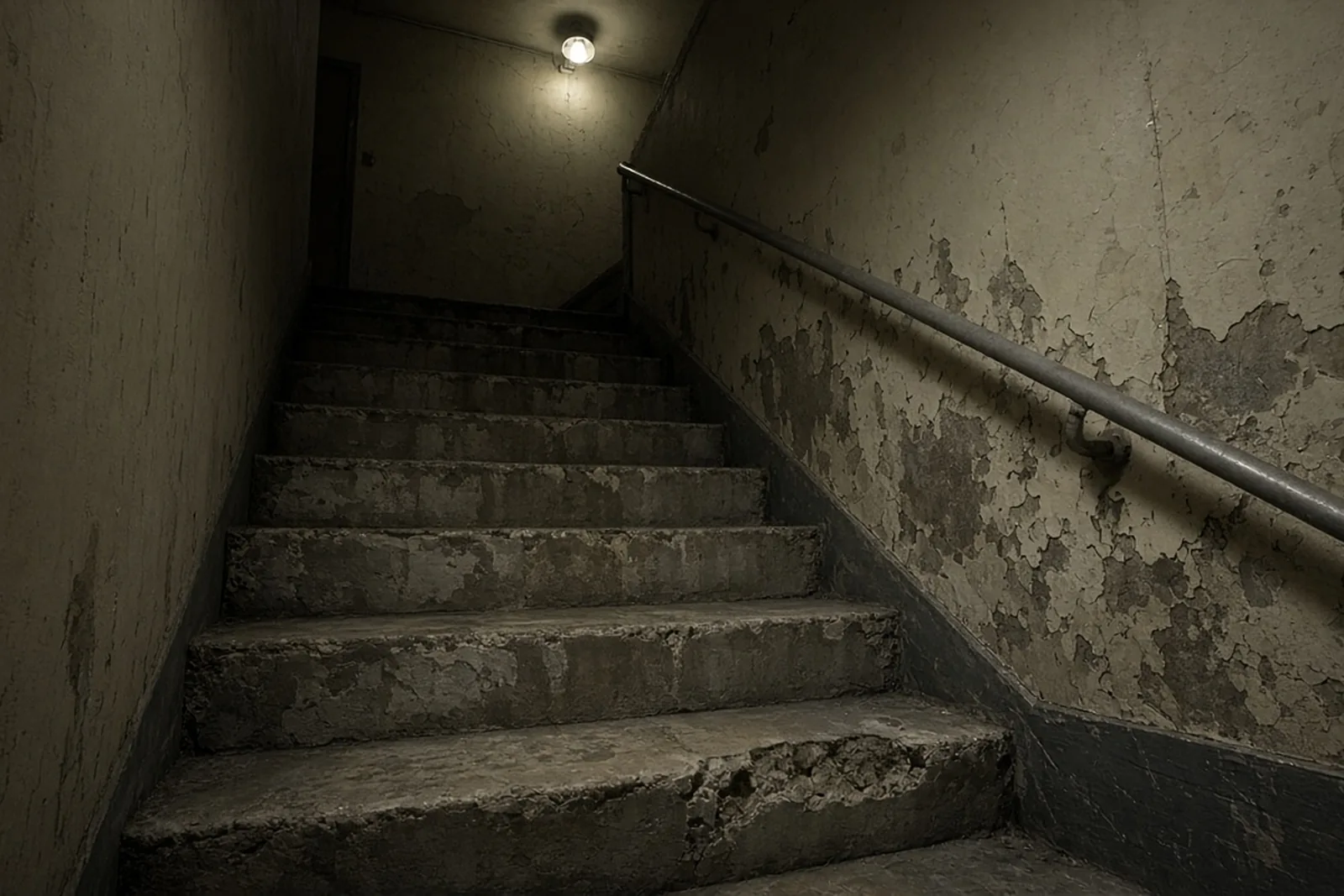
Building codes, including the Kentucky Building Code and Kentucky Residential Code, set requirements for handrails, guards, riser height, tread depth and lighting. A code violation isn’t automatically the whole case, but it is strong evidence that the stairs weren’t reasonably safe.
Kentucky property owners owe customers and other invited guests a duty to keep the premises reasonably safe and to fix or warn about hazards they know about or should find with reasonable care. Since Kentucky River Medical Center v. McIntosh (2010) and Shelton v. Kentucky Easter Seals Society (2013), an “open and obvious” hazard usually doesn’t end a case on its own; it is weighed when fault is compared. Kentucky uses pure comparative fault: your share of fault reduces your recovery but doesn’t bar it (KRS 411.182).
In a business fall, Kentucky’s Supreme Court held in Lanier v. Wal-Mart Stores, Inc., 99 S.W.3d 431 (Ky. 2003), that once a customer proves a foreign substance or dangerous condition on the floor caused the fall, the burden shifts to the business to show it used reasonable care. Our article on proving property owner negligence explains more.
Ask us to send a preservation letter for surveillance video and repair records. Businesses often record over video quickly.
See our guide to common slip and fall injuries, plus hip injuries, wrist injuries, back injuries and brain injuries.
Most other Kentucky personal injury claims, including falls on someone’s property, must be filed within one year (KRS 413.140). Falls on city sidewalks and steps have extra notice rules; see sidewalk trip and falls. Use our statute of limitations calculator.
You may have a claim if a hazard the owner knew about or should have found caused your fall, such as a broken handrail, uneven step or poor lighting.
In Kentucky, an obvious hazard doesn’t automatically defeat your claim. It is usually weighed when fault is compared.
Often the claim is paid by the homeowner’s insurance, not your friend personally. The same safety rules apply.
Most other Kentucky personal injury claims, including falls on someone’s property, must be filed within one year (KRS 413.140).
Tell us what happened. We’ll look at the stairs, the records and your options. The consultation is free.
Get a free case evaluation or call 502-931-6788.
This page is general information about Kentucky law as of October 2026, not legal advice. Every case is different.