
Car Crash Cases

Louisville Bridge Accident Lawyer: Crashes on the Ohio River Bridges

Hurt in a crash on the Kennedy, Lincoln, Sherman Minton, Clark Memorial or Lewis and Clark bridge? Which state’s rules apply, who investigates and how to protect your claim. Related reading: Teen Driver Accidents in Kentucky: Permit Rules, Parent Liability and Your Rights.

Reviewed by Larry Forman, Attorney.

Five bridges carry traffic between Louisville and Southern Indiana: the Abraham Lincoln and John F. Kennedy bridges (I-65), the Sherman Minton Bridge (I-64), the George Rogers Clark Memorial Bridge (Second Street, US 31) and the Lewis and Clark Bridge (I-265) in the East End. They are narrow, busy and full of commuters, tourists and tractor-trailers. When a wreck happens on one of them, there is often a real question about which state’s rules apply and who has the evidence.

Forman & Associates helps people hurt in bridge crashes on both sides of the river. Here is what makes these cases different.

Key takeaways
  • Kentucky’s border runs to the Indiana side of the Ohio River, so many bridge crashes happen in Kentucky.
  • Indiana and Kentucky handle fault, insurance and deadlines differently.
  • RiverLink toll records and traffic cameras can show where and when a vehicle crossed.
  • Your own PIP coverage usually still pays first.
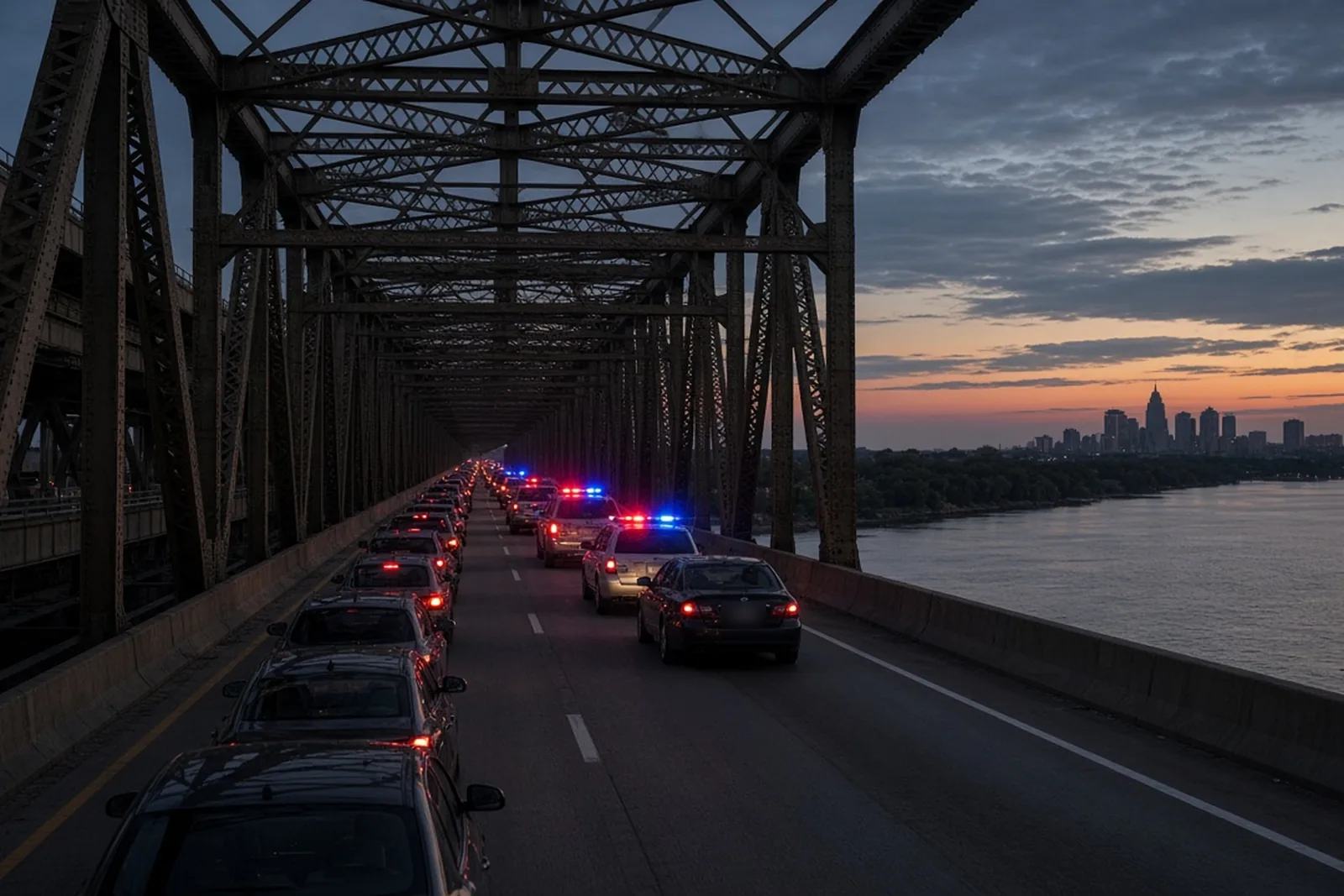
Bridge accident: traffic backed up on a steel truss bridge over the Ohio River at dusk with emergency lights near a crash

Why bridge crashes are different

  • Little room to escape. Narrow lanes, no shoulder or a very small one, and concrete barriers leave nowhere to go when traffic stops suddenly.
  • Sudden backups. Rush hour, lane closures and earlier crashes cause chain-reaction rear-end wrecks. See multi-vehicle pileups.
  • Merging at both ends. The approaches feed into Spaghetti Junction downtown and busy interchanges in Indiana. See lane change and merging crashes.
  • Heavy trucks. I-65 and I-64 carry a large share of freight between the Midwest and the South. See our truck wreck lawyer page.
  • Work zones. Bridge maintenance closes lanes and shifts traffic. See work zone accidents.

Is a bridge crash in Kentucky or Indiana?

Kentucky’s northern boundary is generally the low-water mark on the Indiana side of the Ohio River, as it was when Kentucky became a state. In practice, that means much of the river crossing on each bridge is in Kentucky. Crashes near the Indiana end, on the approaches or on the Indiana side of the riverbank may be in Indiana.

The exact location matters. It can decide which police agency writes the report, which state’s traffic laws apply, which court hears the case and which fault rules a jury uses. We pin down the location with the crash report, photos, toll records and camera footage before anything else.

How the two states’ rules differ

  • Fault: Kentucky uses pure comparative fault: your share of fault reduces your recovery but doesn’t bar it (KRS 411.182). Indiana uses modified comparative fault: you recover nothing if your fault is greater than everyone else’s combined (Ind. Code 34-51-2-6).
  • Insurance: Kentucky is a choice no-fault state with PIP. Indiana is an at-fault state, so the at-fault driver’s liability insurance pays.
  • Deadlines: Most Kentucky motor vehicle injury claims must be filed within two years of the crash or the last PIP payment, whichever is later (KRS 304.39-230). Indiana generally allows two years for injury claims (Ind. Code 34-11-2-4).
  • Pain and suffering threshold: To recover pain and suffering from an at-fault driver, Kentucky’s no-fault law generally requires more than $1,000 in medical expenses, or an injury such as a fracture, permanent injury, permanent disfigurement or permanent loss of bodily function (KRS 304.39-060).

Which state’s law a court applies depends on the facts, including where the crash happened and where the people involved live. Our out-of-state driver guide and Jeffersonville injury page explain more.

Who pays after a bridge crash

  • Unless you rejected it in writing, your own PIP (personal injury protection) coverage pays up to $10,000 of medical bills and lost wages regardless of fault. See how Kentucky PIP works. Kentucky PIP on your own policy generally applies even if the crash happened on the Indiana side; check your declarations page.
  • The at-fault driver’s liability insurance pays for losses beyond PIP.
  • Your uninsured and underinsured motorist coverage can help if the other driver had little or no insurance or fled. See uninsured motorist claims and hit-and-run accidents.
  • A trucking company or employer may be responsible if a commercial vehicle caused the crash. See company vehicle accidents.

Evidence that matters on the bridges

  • The crash report. Depending on the location, it may come from LMPD, Kentucky State Police or an Indiana agency. See how to get a Louisville accident report.
  • RiverLink toll records. The Lincoln, Kennedy and Lewis and Clark bridges are tolled electronically, and toll data can show when a vehicle crossed (RiverLink).
  • Traffic cameras. TRIMARC and Indiana traffic cameras watch the approaches. TRIMARC says it doesn't record its camera feeds, but it may have incident records. See TRIMARC camera footage.
  • Dashcams and truck data. Commercial trucks often have cameras and engine data. See truck black box evidence.
  • Witnesses. Other drivers stuck in the backup often saw what happened.

What to do after a crash on a Louisville bridge

  1. If you can, turn on your hazard lights and stay buckled in your car. Walking on a bridge deck with no shoulder is dangerous.
  2. Call 911 and tell the dispatcher which bridge, which direction and which end you’re closest to.
  3. Get medical care the same day, even if you feel okay.
  4. Photograph the vehicles, the lane and any signs or mile markers if you can do so safely.
  5. Write down the agency that responded and the report number.
  6. Talk with a lawyer before giving a recorded statement to the other driver’s insurer. See recorded statements.

How Forman & Associates helps

We figure out where the crash happened and which rules apply, request the report and camera footage quickly, send preservation letters for toll and truck data, and handle the insurers on both sides of the river. Larry Forman has tried 50+ jury trials and won 95% of them, and we prepare every case as if it may go to trial.

50+ jury trialsReady to take your case to court
Free consultationTalk with us at no cost
Louisville basedServing injured people across Kentucky
We come to youPhone, video or in person

Frequently asked questions about a Louisville bridge accident

Which police department handles a crash on a Louisville bridge?

It depends on where the crash happened and who responded. LMPD, Kentucky State Police and Indiana agencies all work crashes on or near the bridges. The report will name the agency.

Does Kentucky PIP cover a crash on the Indiana side of a bridge?

Kentucky PIP on your own policy generally applies to crashes in other states, too. Your policy wording controls, so check your declarations page or ask us to review it.

What if I live in Indiana and crashed on a Louisville bridge?

You may still have a claim under Kentucky law if the crash happened in Kentucky. Indiana drivers usually don’t carry Kentucky PIP, so insurance works differently. We can sort out which coverage applies.

How long do I have to file a claim after a bridge crash?

Most Kentucky motor vehicle injury claims must be filed within two years of the crash or the last PIP payment, whichever is later (KRS 304.39-230). Indiana generally allows two years. Use our statute of limitations calculator and talk with a lawyer early.

Hurt in a crash on a Louisville bridge?

Tell us what happened. We’ll figure out which rules apply and what to do next. The consultation is free.

Get a free case evaluation or call 502-931-6788.

This page is general information about Kentucky law as of October 2026, not legal advice. Every case is different.

Call (502) 931-6788 Request a free consultation

Contact us for Your FREE Case Evaluation