
Reviewed by Larry Forman, Attorney
A head-on collision is the crash every driver fears most, and for good reason. When two vehicles meet front to front, their speeds combine, and the people inside absorb forces few other crashes produce. Head-on crashes are rare compared with other collisions, but they cause a far larger share of deaths and life-changing injuries.
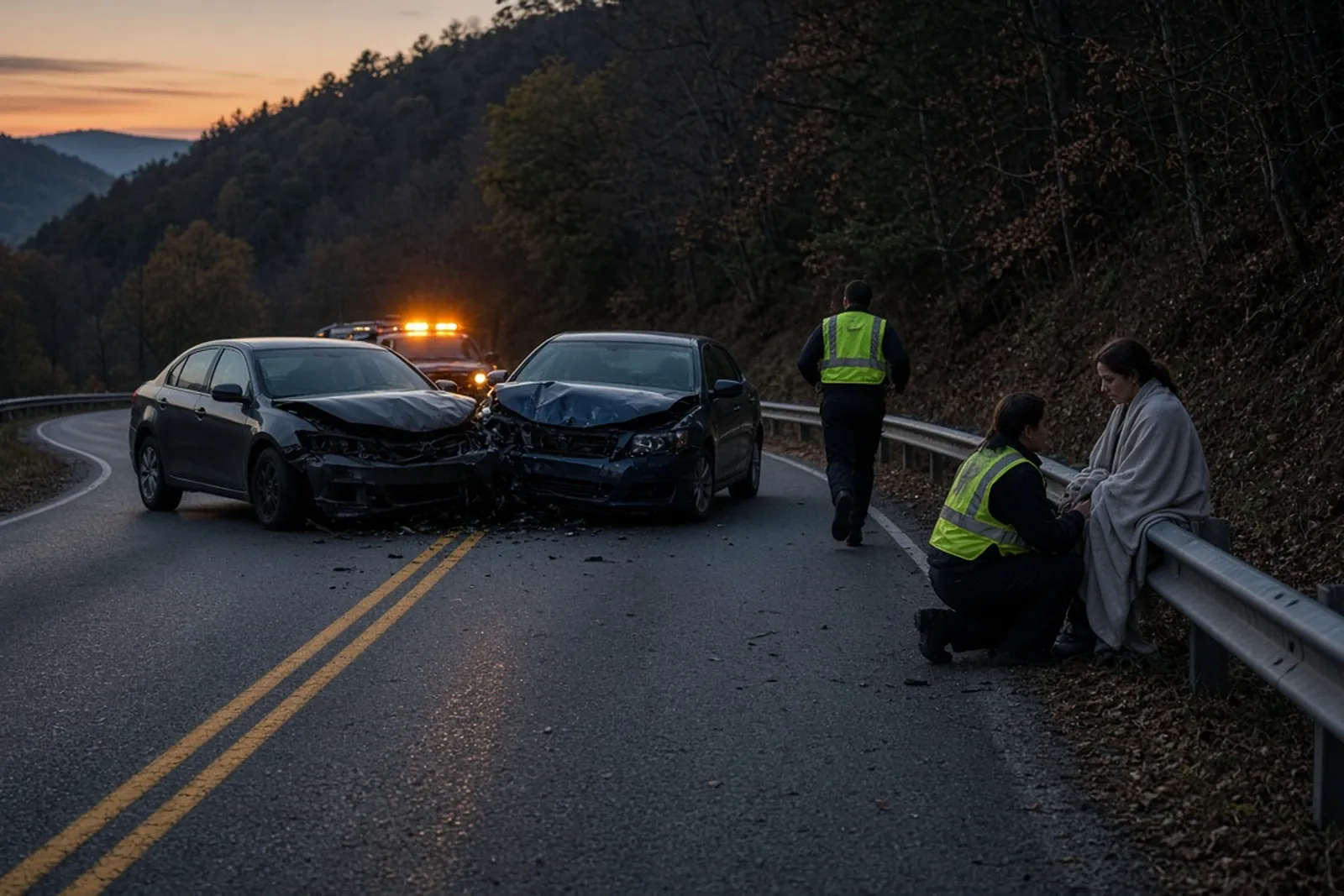
Forman & Associates represents people hurt in head-on crashes across Louisville and Kentucky, and families who have lost someone. This page explains how Kentucky law decides fault, the evidence that proves whose lane the crash happened in, and how the bills get paid.
Kentucky State Police data shows the gap clearly. In KSP's 2024 Kentucky Traffic Collision Facts, head-on crashes were about 3% of all two-vehicle collisions but about 35% of fatal two-vehicle collisions. No other crash type had such a gap between how often it happens and how often it kills. See our Kentucky car crash statistics for more.
They happen most often:
Most head-on crashes come down to one question: whose lane did the crash happen in? Kentucky's rules of the road are clear about staying in your own:
A driver who violates a safety statute and injures someone can be held liable for the resulting damages (KRS 446.070). The driver in the wrong lane is usually at fault. But not always, and not always alone:
Kentucky's pure comparative fault rule (KRS 411.182) lets a jury divide fault among everyone responsible. Your recovery is reduced only by any share assigned to you.
The drivers' accounts often conflict, and the most seriously injured person may not remember the crash at all. The physical evidence usually decides it:
The vehicles themselves are critical. They're often towed, sold for salvage and crushed within weeks. We send preservation letters right away and get our accident reconstructionist to the vehicles and the scene while the marks are still there. See evidence to preserve after a crash.
Because the impact is frontal and violent, head-on crashes cause severe injuries even with seatbelts and airbags:
Many of these injuries mean surgery, long rehabilitation, and work restrictions or permanent disability. The claim has to account for future care and lost earning capacity, not just the bills to date.
When a head-on crash takes a life, the family's claim is brought by the estate's personal representative. See our wrongful death page.
Wrong-way crashes on interstates and divided highways are a particularly deadly kind of head-on collision, because both vehicles are often at highway speed. The legal questions for the victim are the same: proving the crash, identifying every policy, and building the damages case. When the wrong-way driver has little or no insurance, your own UM or UIM coverage often becomes the main source of recovery. See our wrong-way driver accident page.
Most Kentucky car crash claims must be filed within two years of the injury or the last PIP payment, whichever is later. Wrongful death and claims against government bodies have different rules. See our statute of limitations guide. Don't wait. The physical evidence in a head-on case disappears much sooner than the legal deadline.
Learn more about Larry Forman, see our case results (past results don't guarantee a similar outcome), or visit our main car crash page. Related crash types: rear-end collisions and T-bone accidents.
Usually the driver who crossed into the other lane, because Kentucky law requires drivers to keep right and give oncoming traffic half the road. But a third party who forced a swerve, a vehicle defect or a dangerous road can share or shift the fault.
With physical evidence: pavement gouges, the debris field, tire marks, crush patterns and vehicle data, usually analyzed by an accident reconstructionist. Witnesses, video and phone records help too.
You may not be at fault, or you may share fault, depending on what caused the swerve and whether your reaction was reasonable. If another driver created the hazard, that driver may be responsible.
Your own underinsured motorist coverage may pay the difference, and other parties may also be responsible. We check every possible policy.
Yes. Kentucky law says not wearing a seat belt isn't negligence per se (KRS 189.125(5)), but the defense may argue that a belt would have reduced some of your injuries and ask the jury to assign you a share of fault for that (Wemyss v. Coleman, Ky. 1987). It's a fact-specific fight that turns on medical and engineering evidence.
Generally two years from the injury or the last PIP payment. Wrongful death and government claims have different deadlines.
The sooner we can secure the vehicles and the scene, the stronger your case. Get a free case evaluation or call (502) 931-6788. No fee unless we win. Our office is at 1139 S. 4th St., Louisville, KY 40203.
This page is general information about Kentucky law as of October 2026, not legal advice.