Many Kentucky slip and fall claims turn on a single defense: the hazard was open and obvious. That defense remains a potent tool for a landowner, but it is no longer the automatic dismissal it once was.
Since Kentucky River Medical Center v. McIntosh, the state’s highest court has treated open and obvious hazards as a question of comparative fault for the jury rather than an absolute bar, applying the same fault apportionment that governs a Kentucky car accident claim. Later decisions have narrowed the defense further, and the results now turn on the specific facts of the fall.
This post explains how the open and obvious defense operates in slip and fall law, how Kentucky moved from a bar to a jury question, and the three counter-moves a trial lawyer actually pleads: a condition that was effectively unavoidable, a hazard created by the owner’s own employees, and an independent duty to inspect, warn, or maintain. We then show how to read the facts at intake, including fixed versus transient conditions and who created the hazard, to determine which exception fits and whether the claim is worth filing.
How the Open and Obvious Defense Works in Premises Liability Law
Under Kentucky premises liability law, a landowner traditionally owed no duty to warn a visitor about a danger the visitor already knew about or that was obvious to a reasonable person. Because duty is the threshold element of a negligence claim, that single rule ended many slip and fall cases before a jury ever saw the facts. Defense-side commentators describe open and obvious as their leading early-disposition tool, historically resolved on summary judgment rather than at trial.
The rule traces to Restatement (Second) of Torts Section 343, which in broad terms ties a possessor’s liability to harm the owner should have anticipated even when the danger was known or obvious. That last clause builds foreseeable inattention into the standard.
The premise has a limit. Kentucky began moving away from the automatic no-duty bar in Kentucky River Medical Center v. McIntosh (2010), and the state Supreme Court completed the shift in Shelton v. Kentucky Easter Seals Society (2013), a shift this post walks through below. That is why the three counter-moves below exist, and why the answer to “is my slip and fall case dead” is usually no. A Louisville slip and fall lawyer still has to prove which exception fits.
How Kentucky Slip and Fall Law Moved From a Bar to a Jury Question
Kentucky did not always treat that rule as a fact question. Before 2010, the general consensus was that a landowner had no duty to warn of an open and obvious risk, so the owner could not be liable in negligence.
McIntosh: From No Duty to a Jury Question
In Kentucky River Medical Center v. McIntosh (2010), the Kentucky Supreme Court rejected the no-duty rule, adopted Restatement (Second) of Torts § 343, and handed open and obviousness to the jury as comparative fault. The court also recognized that distraction can make a visitor’s failure to notice a hazard foreseeable.
The facts did real work. The plaintiff was rushing a critically ill patient into an emergency room. That is why what the visitor was doing at the moment of the fall belongs inside the doctrine, not in a footnote.
Shelton: Foreseeability Moves to Breach
Shelton v. Kentucky Easter Seals Society (2013) placed reasonable foreseeability in the hands of the jury and converted the no-duty inquiry into a no-breach inquiry. A landowner can no longer end a premises case at summary judgment merely by showing the hazard was open and obvious.
Reeves and Culp: A Scope Limit
In 2023, the Kentucky Supreme Court’s decision in Walmart, Inc. v. Reeves, followed by the Court of Appeals in Culp, confined that foreseeability-as-breach shift to open and obvious hazard cases rather than every negligence action, such as claims over a third party’s criminal act. That boundary matters when the hazard is seasonal rather than structural, as with wet leaves at an entrance.
What follows from this arc is practical: the defense survives, but it now allocates fault instead of ending claims, which is exactly what the three counter-moves are built to exploit.
Counter-Move One: The Condition Was Effectively Unavoidable
The first counter-move reframes the fall as a question of layout rather than of inattention. Under the Restatement framework McIntosh adopted, a possessor is not liable for known or obvious dangers unless it should anticipate the harm despite them. That exception presumes the visitor had a choice and simply failed to exercise it. Remove the choice, and the presumption collapses.
What the Exception Requires
Facts showing there was no safe alternative route or means of completing the visit. The standard is demanding: the record has to show there was genuinely no alternative, not merely that the safe route was inconvenient.
Why It Defeats the Defense
Open and obviousness speaks to whether a visitor should have protected themselves. Where the errand or the layout left no alternative, the visible character of the hazard does not relieve the owner of its obligation to keep the premises safe.
Facts a Plaintiff Must Be Able to Allege
- A layout with only one usable route into or out of the space
- Merchandise, equipment, or fixtures forcing passage through the hazard
- A spill or defect spanning the full width of the only available aisle
- A work or treatment area the invitee was required to enter
Comparative Fault, Not Immunity
When the jury decides fault, unavoidability is an argument for assigning the owner most or all of it. It is not a way to restore the pre-2010 no-duty bar. The practical question becomes which set of facts the record will actually prove, and that inquiry starts with a different exception altogether.
Counter-Move Two: The Owner’s Own Employees Created the Hazard

Unavoidability targets the visitor’s options. This counter-move targets the owner’s conduct.
The exception requires evidence tying the condition to the owner’s own mode of operation: how the floor was mopped, how a spill was left, or how a display was stocked. Defense-side commentary reads McIntosh as likely confined to fixed conditions created by or known to the landowner. Employee-created hazards sit at the center of that surviving territory, even as later authority such as Carter v. Bullitt Host, LLC pushes all open-and-obvious hazard cases toward comparative fault.
The strategic payoff is notice. An employee-created hazard ties the owner’s knowledge to its own employee’s act rather than to how long a stranger’s spill sat on the floor, which weakens the notice fight the defense depends on.
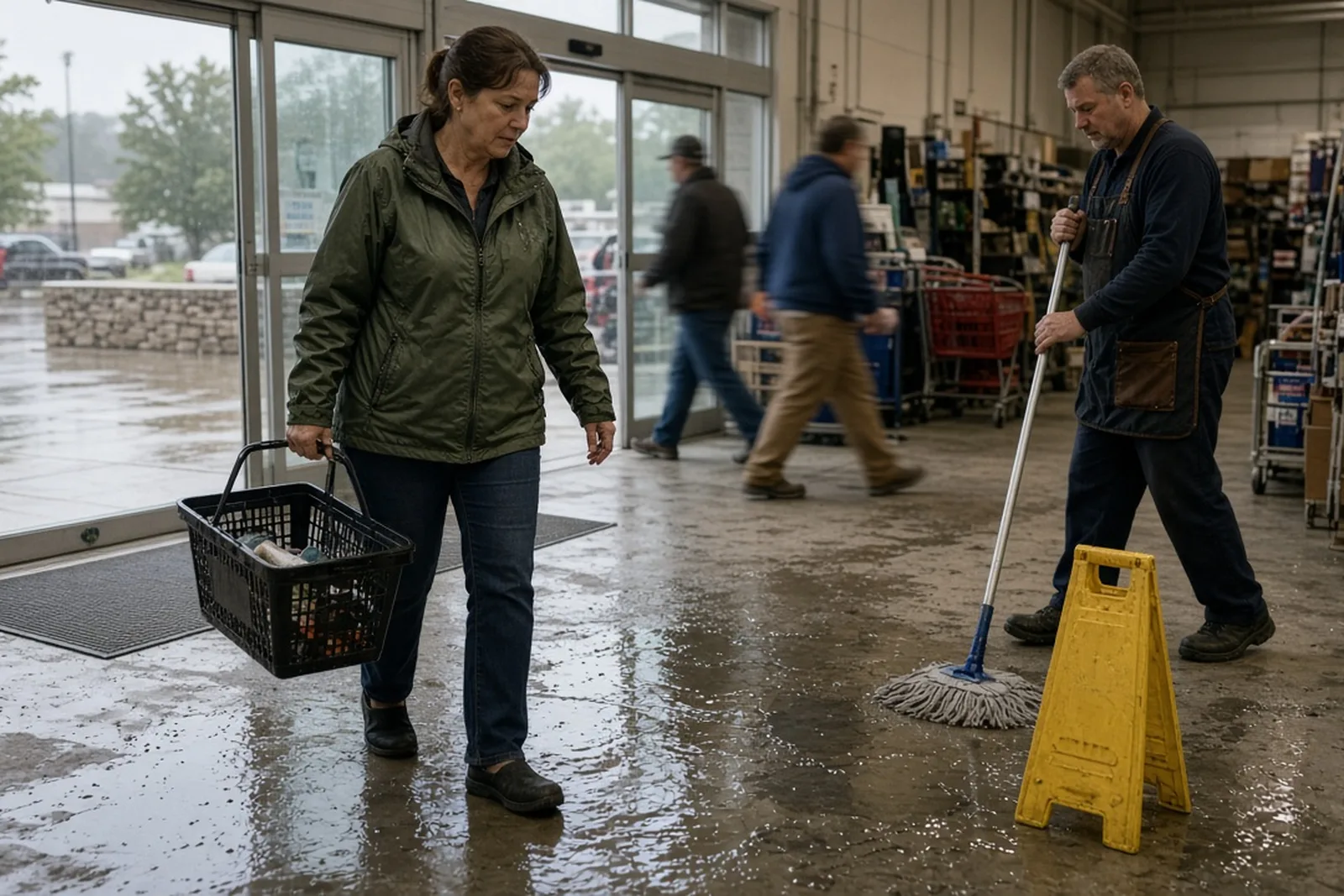
To plead it, a plaintiff needs records that reconstruct the work: cleaning and inspection logs, employee task assignments, shift-change timing, video, and mode-of-operation evidence. For example, a self-service drink station, produce misting, or a mop water trail can each tie the hazard to routine store activity. The evidentiary burden mirrors proving property owner negligence.
Move fast. Send a written preservation request for surveillance video and maintenance records immediately, before those records are purged on a routine schedule. The origin of the hazard can decide the case before the exception analysis is even reached. The defense will argue an employee merely encountered the hazard rather than created it; task records showing who performed the work, and when, answer that characterization.
Counter-Move Three: An Independent Duty to Inspect, Warn, or Maintain
The previous exception turns on who created the hazard. This one turns on what the owner promised, or was legally required, to do regardless of who created it.
The exception requires an obligation running to the visitor beyond the general open and obvious analysis, such as an inspection practice the owner adopted for itself, a statutory or regulatory safety standard, or a maintenance duty written into a lease or contract. For example, suppose a grocery chain’s own manual requires regular floor checks, no check occurred for hours before the fall, and no wet-floor sign was placed.
Why it defeats the defense: a hazard’s visibility does not by itself discharge an independent duty to inspect and warn. The question shifts from what the visitor should have seen to whether the owner actually performed the duty it owed.
The Section 343A carve-out is what keeps those duties alive. Under that provision, a possessor is not liable for known or obvious dangers unless it should have anticipated the harm despite them. Anticipation is the hook. A high-traffic aisle with a known spill pattern is exactly the harm an inspection duty exists to catch.
Facts a plaintiff must be able to allege include missing inspection logs, no sweep schedule for a high-traffic area, and absent wet-floor signage where the store’s own policy required it.
This exception rests on the Section 343 framework and appellate analysis rather than on a single landmark holding. What the records show about the duty owed, and whether it was performed, is where this counter-move is won or lost.
Which exception fits remains a fact question, and that question is where the analysis goes next.
Reading the Facts at Intake: Which Exception Fits
Those three counter-moves are only as strong as the facts behind them, and which one fits is itself a fact question. That question, not the label on the hazard, decides whether a Kentucky slip and fall claim is worth filing.
Four facts drive the analysis:
- Who created the condition. An employee’s mop trail is a different case from a third party’s spill or tracked-in ice.
- How long it existed. Duration is the backbone of both actual and constructive notice arguments.
- Whether it was fixed or transient. For example, a cracked stair nosing with prior complaints supports one theory; a temporary spill supports another.
- What the visitor was doing. In McIntosh, the plaintiff was rushing a critically ill patient into an emergency room. Her failure to notice was foreseeable, so the visitor’s task is doctrine, not color.
Intake should identify which of these the records will actually prove. A fixed condition with a documented history supports unavoidability and independent duty arguments. A transient spill pushes proof toward duration. A hazard an employee created collapses the notice fight. Mixing theories wastes leverage.
The sequencing error is costly. Facts reconstructed after a summary judgment motion is filed are usually facts the defense has already framed in its own favor: the video is gone, the incident report is silent, and the visitor’s account has hardened. Fault allocation works the same way in a disputed Kentucky car crash, where weather conditions shift fault. Build the theory from the first interview, not from a defense motion.
Fixed Versus Transient Conditions
Intake also has to separate fixed conditions from transient ones, because that distinction controls how much work the open-and-obvious defense can do.
Fixed conditions, such as flooring, stairs, a permanent drain, or a structural layout, sit inside the core of McIntosh. Reminger’s defense-side reading confines that decision to fixed conditions the landowner knew of or created. Those conditions usually leave a paper trail: prior complaints, earlier falls, repair orders, and remodeling records that can establish the owner’s awareness.
Transient conditions are different. A spill, a mop trail, or tracked-in ice is where Reminger says the open-and-obvious defense still has real force. Proof shifts from permanence to duration and constructive notice: how long the hazard existed and what a reasonable inspection would have revealed. If the record cannot fix that window, the transient condition tends to support the defense.
The practical point is not that fixed conditions favor plaintiffs and transient ones favor landowners. Each requires different evidence. Fixed conditions call for history; transient conditions call for timing. Origin then becomes the next question.
Who Created the Condition and When
Once you know whether the condition was fixed or transient, the next question is origin, and it sorts into three buckets: employee-created, third-party or invitee-created, and weather or natural. Each bucket opens a different exception, so the label decides which argument is available.
Employee-created. If a worker mopped, stocked, or sprayed the floor, the owner’s own conduct created the hazard. That is the leverage: the duration fight that anchors most transient-condition defenses largely collapses, because the owner cannot argue nobody knew. Reminger’s defense-side reading of McIntosh confines the plaintiff-friendly rule to fixed conditions created by or known to the landowner, and employee-created hazards sit at the center of that surviving territory.
Third-party or invitee-created. Tracked-in rain, another customer’s spill, a dropped item. Proof shifts to duration and constructive notice. In Cooper v. Steak ‘n Shake, a rain-slicked restaurant vestibule with no wet-floor sign visible before the fall survived summary judgment on the main motion.
Weather or natural. Ice, snow, and similar conditions are treated as a separate category, so do not plead them as ordinary employee-created cases.
Four records answer the question: camera footage and its retention window, cleaning and inspection logs, incident reports, and employee schedules for the relevant shift. Request them in writing immediately. They can also expose a hospital’s later mistakes that compounded the injury, an overlap that shows up when a car crash lands a patient in the ER before the fall.
What the Visitor Was Doing When the Fall Happened
Who created the condition is one half of the origin picture. The other half is what the visitor was doing when the fall happened, and Kentucky law treats that as doctrine rather than color.
Kentucky law treats a visitor’s distraction as foreseeable, as this post notes above. A shopper carrying an armload of groceries or a nurse moving a patient is a materially different case from someone walking with eyes down on a clear floor. The first two supply the foreseeability the rule rewards; the third supplies the defense. Distraction is a familiar theme in distracted driving injury cases too, and Kentucky courts apply the same logic to a shop floor.
The consequence is comparative fault, not a bar. KRS 411.182 directs the jury to assign percentages, and open and obviousness now reduces recovery rather than ending the claim. The visitor’s conduct is a damages question as much as a liability one.
The risk is real. Conduct that reads as plain inattention is the fact the defense most wants, and it can outweigh a strong exception if the fault allocation lands badly.
Activity also pairs with unavoidability. A visitor forced to cross the hazard while performing a required task gives the jury a reason to place the fault on the owner rather than on the visitor’s divided attention.
Narrowed but Not Gone: Where the Defense Still Wins
The visitor’s own conduct may shrink recovery, but it rarely ends the case by itself. The defense’s staying power deserves its own accounting.
Defense-side analysis describes open and obvious as a summary judgment tool that has narrowed over time. Reminger’s analysis of McIntosh read the 2010 decision as arguably confined to fixed conditions the landowner created or knew about, with transient conditions like temporary spills still open to early dismissal. In 2015, Carter v. Bullitt Host applied the same comparative fault approach to a natural accumulation of ice, and after Shelton, summary judgment in premises cases is much harder to obtain. The 2023 Reeves and Culp decisions limit the foreseeability shift to open-and-obvious cases rather than repealing the defense. Kentucky slip and fall law is still evolving, which fits a rule that has moved more than once since 2010.
The defense still wins some cases outright, and appellate courts have set aside verdicts for injured visitors on open and obvious grounds. A strong jury result is not the end of the fight if the record on the hazard is thin.
Treat Reeves and Culp as a scope limit, not a repeal. That fault allocation runs through Kentucky’s comparative fault rule, which determines what a plaintiff actually collects.
The frame follows: open and obvious has narrowed but not disappeared. A plaintiff deciding whether a claim is worth pursuing should assume the defense is live and ask which exception the facts can prove.
When a Kentucky Slip and Fall Claim Is Worth Filing
Because the defense still wins some cases, exception strength alone cannot decide whether to file. A slip and fall lawyer evaluating Kentucky premises liability law weighs four variables together: which exception the facts support, how strong the notice and duration evidence is, whether the records survived, and how much comparative fault the visitor’s own conduct invites.
Those variables interact. A strong unavoidability argument paired with a visitor sprinting across a marked wet floor will usually net less than a modest inspection-duty argument paired with clean conduct. Consider a hypothetical: one shopper falls while texting near a fully visible spill, another falls while carrying an armload of groceries past a hazard that left no alternate aisle. The second fact pattern is the better claim even if the first spill sat longer, because fault allocation moves the number more than exception strength does.
Watch the clock. Surveillance video and inspection logs can disappear under ordinary retention and document destruction schedules, so preservation requests should go out early. Kentucky also gives most premises injury claims only one year to file suit under KRS 413.140, so the filing decision cannot wait long.
Then anchor the decision in economics. A claim is worth filing when three conditions align: the facts support an exception, the injury loss justifies litigation costs, and the evidence can survive summary judgment on its best day. A minor soft-tissue injury with contested fault rarely clears that bar. A fracture with documented origin evidence often does.
Generic intake advice misses this. The useful question is not whether everything was documented, but whether the record proves origin, duration, or an independent duty. Answer that, and the filing decision follows from facts rather than hope.
The Defense Decides the Case, So Get the Facts Right Early
The same analysis cuts both ways: the facts that make a claim worth filing are the facts that decide the defense. Open and obvious narrows a Kentucky premises case, but it does not automatically end one, and the real fight is often over breach.
The filing decision turns on which of the three counter-moves the record supports best. Identify it before you draft, not after the defense moves for summary judgment.
Preservation runs on the other clock. Request surveillance video, cleaning and inspection logs, and incident reports immediately after a slip and fall, because origin and duration live in records that routinely disappear.

Conclusion
Facts decide which of the three paths fits, so gather surveillance video, cleaning logs, inspection records, and incident reports early. Larry Forman has tried 50+ jury trials and won 95% of them. For a free consultation on which exception your facts support, call (502) 931-6788. No fee unless we win.
Reviewed by Larry Forman, Attorney.