Reviewed by Larry Forman, Attorney.
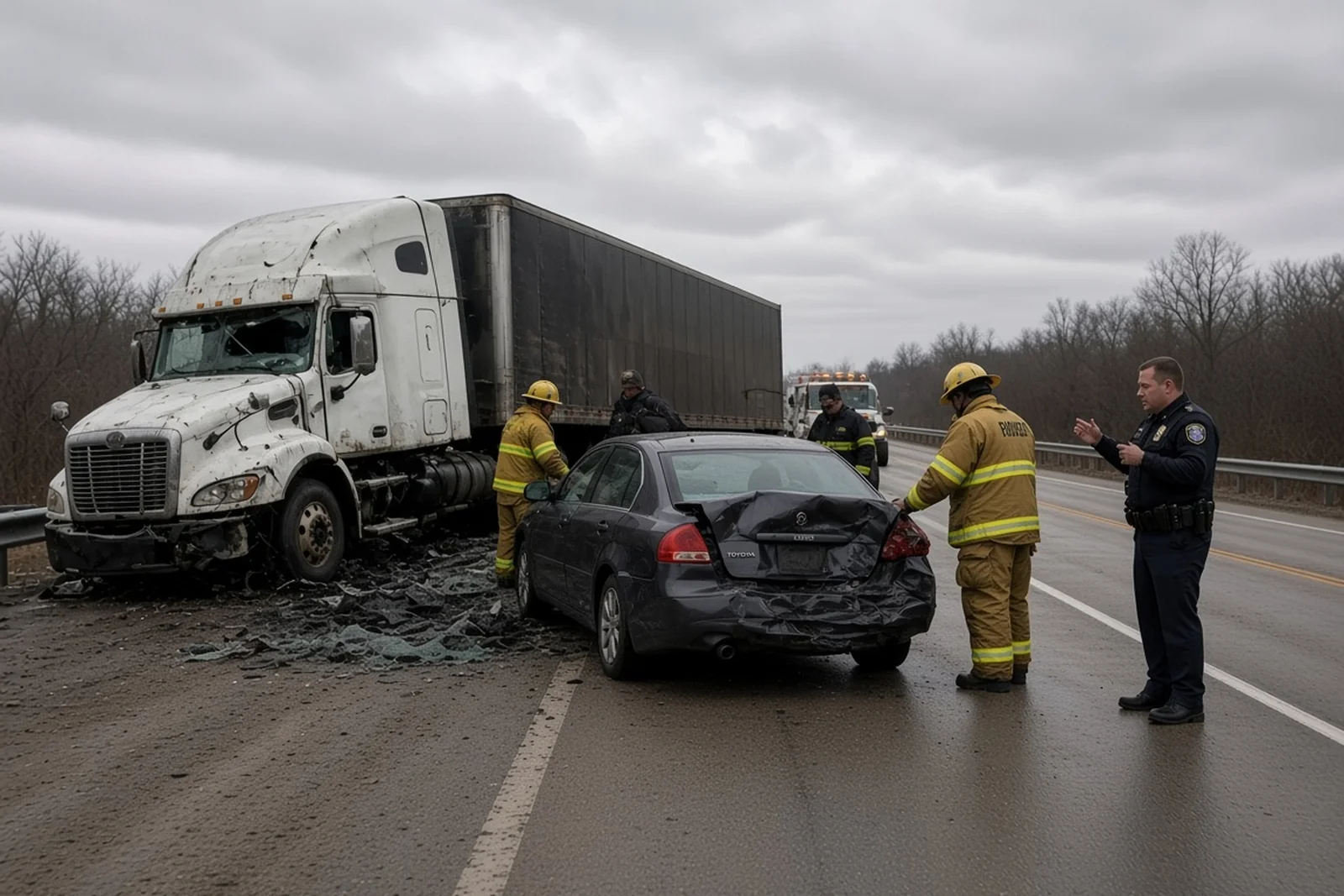
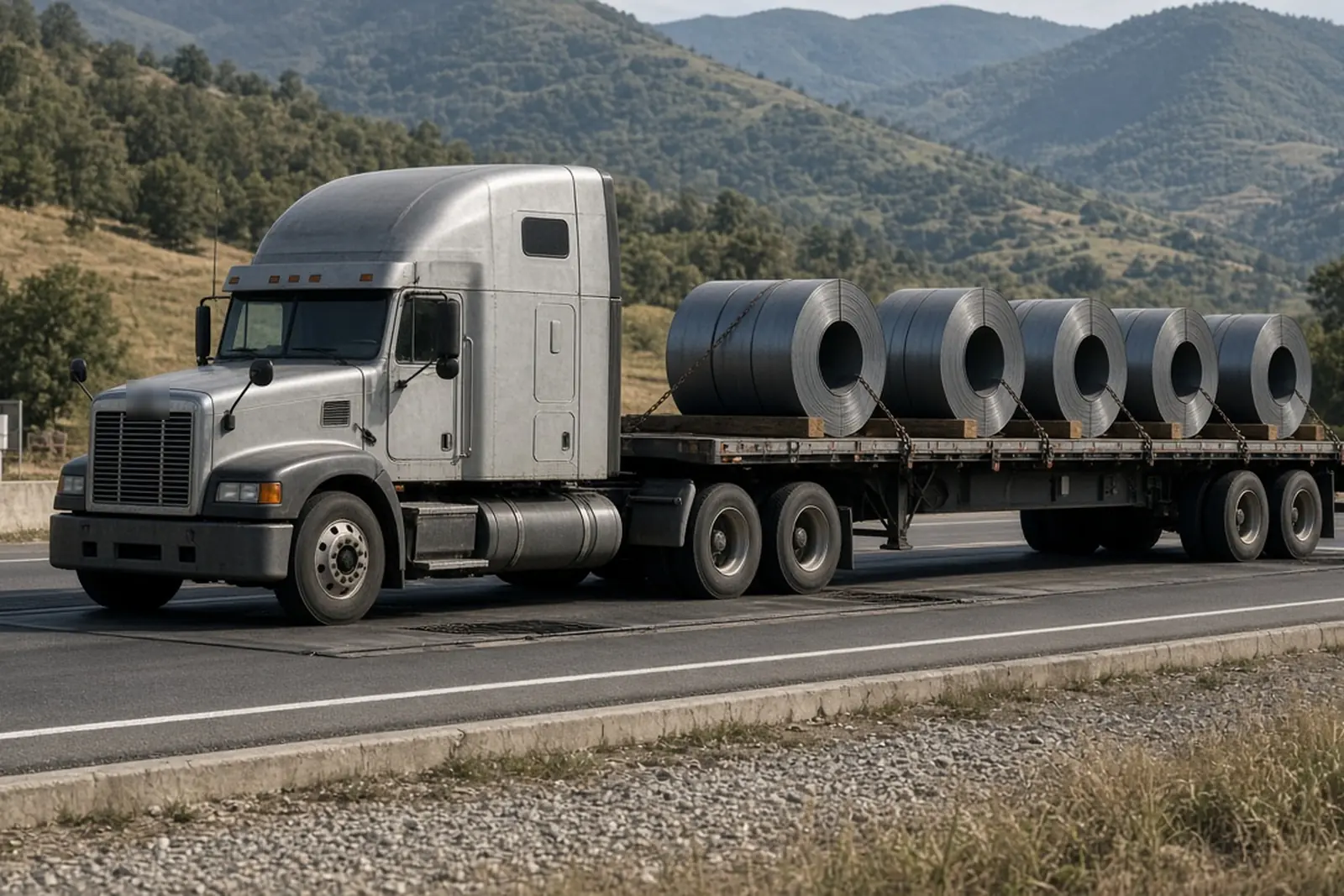
A cargo truck wreck can happen even when the truck is driven perfectly, because a tractor-trailer can still cause a deadly wreck if its load isn’t secured. Steel coils roll off flatbeds. Logs and pipe spill across lanes. Liquid tanks slosh and tip a truck over on an exit ramp. On Kentucky interstates like I-65, I-64, I-71 and I-75, a single lost load can cause a chain-reaction crash. Here is how a cargo truck wreck happens, what the rules require and who may be responsible.
How a cargo truck wreck happens
- Shifting loads: freight that moves during a turn or hard stop can push the truck off balance and cause a rollover or jackknife.
- Spilled or falling cargo: loose items fall onto the road or hit the vehicles behind.
- Overloading: too much weight makes braking take longer and wears out brakes and tires.
- Unbalanced loads: weight stacked to one side or too far back raises the rollover risk on curves like the ramps at Spaghetti Junction.
- Liquid surge: partly filled tankers can push the truck forward or sideways.
The federal cargo securement rules
The FMCSA’s cargo securement rules are at 49 CFR 393.100 through 393.136. In general they require cargo to be contained, immobilized or secured so it can’t leak, spill, blow or fall off, or shift in a way that hurts the truck’s stability. They set strength requirements for tiedowns, minimum numbers of tiedowns based on cargo length and weight, and special rules for things like logs, metal coils, concrete pipe, heavy machinery and cars.
Drivers have duties too. Under 49 CFR 392.9, the driver generally must ensure the load is properly secured before driving, inspect within the first 50 miles, and reexamine it after a duty-status change or after 3 hours or 150 miles, whichever occurs first. Paragraph (b)’s inspection requirements have exceptions for sealed vehicles the driver has been ordered not to open and loads whose arrangement makes inspection impracticable; the general prohibition on operating with inadequately secured cargo remains.
Who can be held responsible for a cargo truck wreck?
The truck driver
The driver must inspect the load and drive safely for it, including slowing down on curves and ramps.
The trucking company (motor carrier)
The carrier is usually responsible for its driver’s negligence and for training drivers on securement. Its inspection and violation history in the FMCSA’s records can show a pattern.
The shipper or loading company
When a separate company loaded and sealed the trailer, it may share the blame, especially for hidden loading defects the driver couldn’t see. Courts have held that a shipper that loads the trailer can be responsible for hidden loading defects, while a defect that was obvious to the driver usually puts more of the responsibility on the carrier.
Equipment makers
A strap, chain or binder that fails under its rated load may point to a product defect.
Kentucky uses pure comparative fault (KRS 411.182), so a jury can divide fault among the driver, carrier, shipper and others. Each pays its share. That’s why naming everyone responsible early matters.
Evidence we preserve after a cargo truck wreck
- The bill of lading, load diagrams and shipping papers
- Photos of the straps, chains and load before the scene is cleared
- The failed securement devices themselves
- Weigh station and scale tickets
- ELD and engine data showing speed on the curve or ramp
- Dash camera video and any available traffic-camera recordings (confirm whether footage exists and is retained)
- The carrier’s driver training records and inspection history
Cleanup crews often haul away spilled cargo and broken straps within hours. We send preservation letters right away. Read more on what to do after a truck accident.
How long do you have?
Most Kentucky truck wreck injury claims, including a cargo truck wreck, generally must be filed within two years after the injury or the last basic or added reparation payment, whichever is later (KRS 304.39-230(6)). Exceptions and other deadlines can apply, especially in death cases or claims against government entities, so don’t wait.
Talk with a Louisville truck wreck lawyer
Larry Forman has tried 50+ jury trials and won 95% of them. If you were hurt in a cargo truck wreck because a load came off a truck or shifted, call (502) 931-6788 for a free consultation, or visit our Louisville truck accident lawyer page. No fee unless we win. Related reading: why commercial truck wrecks are different from car crashes, truck accident settlements in Kentucky, and our wrongful death lawyer page.