
Reviewed by Larry Forman, Attorney.
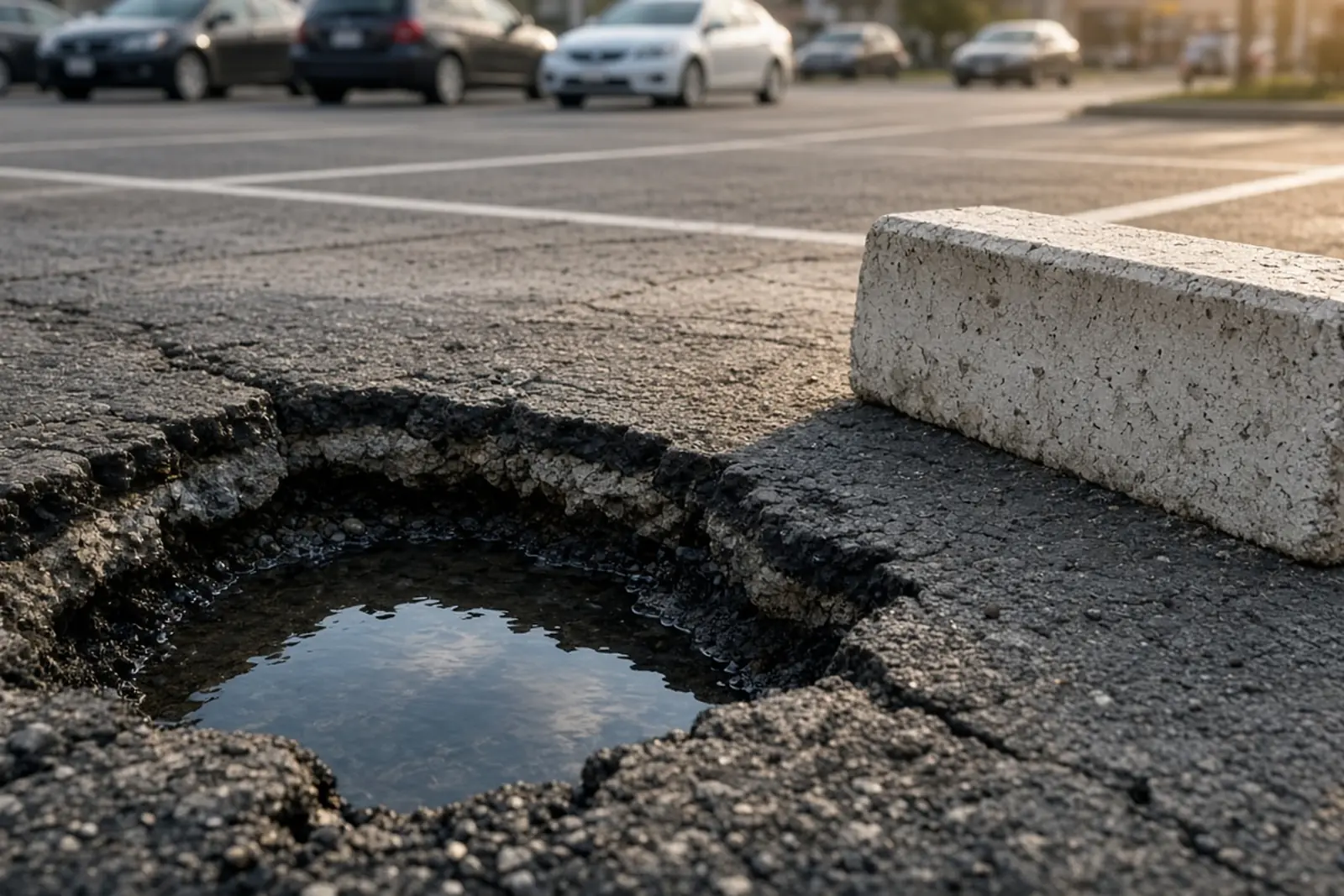
Parking lots are part of the business. Shoppers, diners, tenants and workers walk through them every day, often carrying bags or children and watching for cars instead of the ground. Potholes, crumbling asphalt, broken curbs, unmarked wheel stops, ice and poor lighting all cause serious falls.
Key takeaways
We read the leases and contracts to find everyone who had a duty to keep the lot safe.
Kentucky property owners owe customers and other invited guests a duty to keep the premises reasonably safe and to fix or warn about hazards they know about or should find with reasonable care. Since Kentucky River Medical Center v. McIntosh (2010) and Shelton v. Kentucky Easter Seals Society (2013), an “open and obvious” hazard usually doesn’t end a case on its own; it is weighed when fault is compared. Kentucky uses pure comparative fault: your share of fault reduces your recovery but doesn’t bar it (KRS 411.182).
Owners often patch potholes right after a fall. Photos taken that day can be the most important evidence in the case.
That is a motor vehicle claim with different insurance rules and a different deadline. See parking lot accidents and pedestrian accidents.
Most other Kentucky personal injury claims, including falls on someone’s property, must be filed within one year (KRS 413.140). Use our statute of limitations calculator.
Usually the owner or the business that controls the lot, and sometimes a management company or contractor. The lease often decides who maintains it.
An obvious hazard doesn’t automatically bar your claim in Kentucky. It’s considered when fault is compared.
Claims against government bodies face immunity and notice rules that are very different from private claims. Talk with a lawyer quickly.
We’ll find out who controlled the lot and what they knew. The consultation is free.
Get a free case evaluation or call 502-931-6788.
This page is general information about Kentucky law as of October 2026, not legal advice. Every case is different.