
Reviewed by Larry Forman, Attorney.
Kentucky is a partial helmet-law state, and the Kentucky motorcycle helmet law is short. Many adult riders may legally ride without a helmet, but some riders must wear one, and every operator must use eye protection. Here is exactly what the law says, and what helmet use can mean if you’re hurt by a careless driver.
Key takeaways
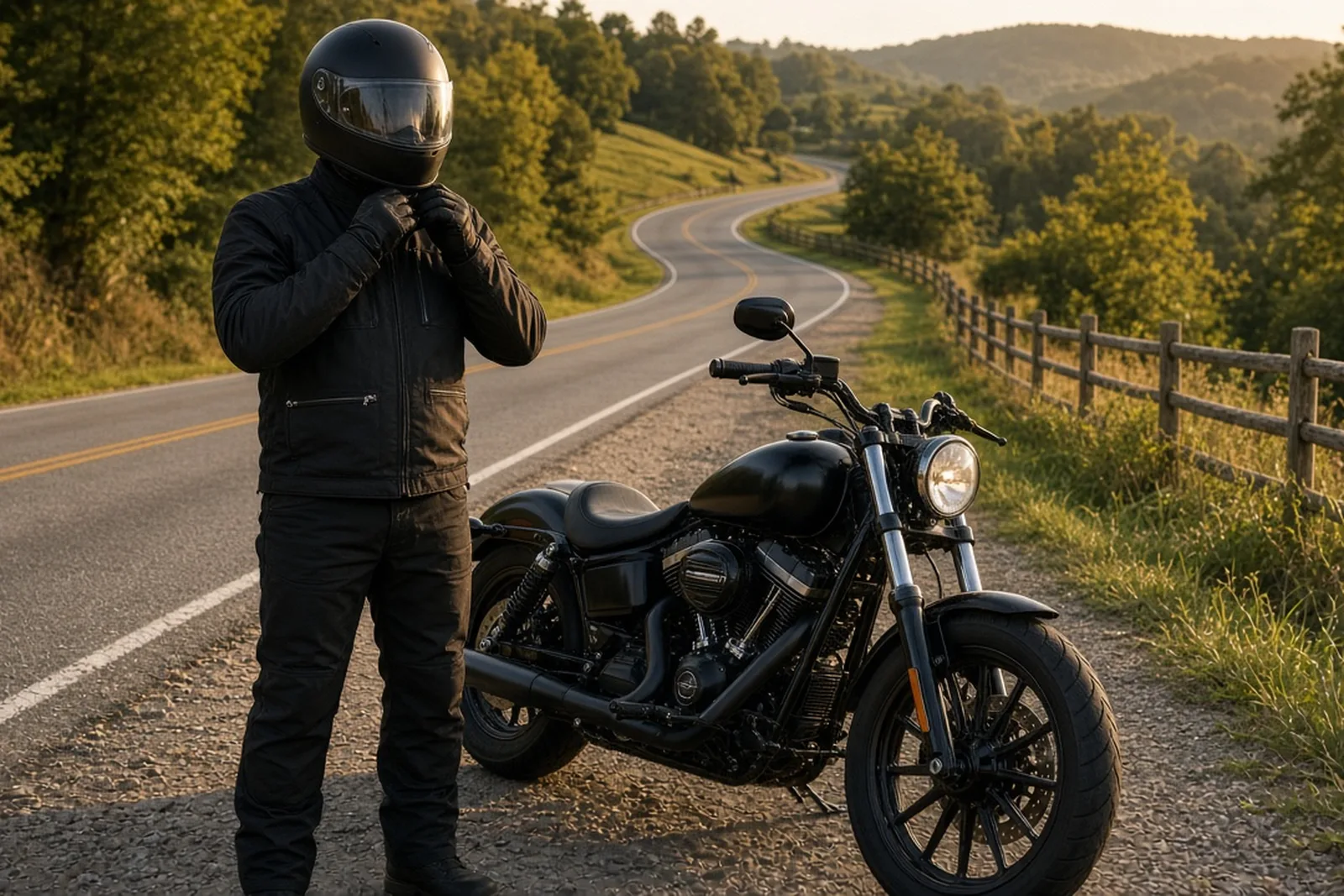
Under KRS 189.285(3), these riders must wear protective headgear whenever the motorcycle is moving on a public highway:
Riders 21 and older who have been licensed for at least a year aren’t required to wear a helmet, though the Transportation Cabinet sets standards for approved headgear.
Every operator must use an approved eye-protective device whenever the motorcycle is in motion, and the motorcycle must have a rear-view mirror (KRS 189.285(1)). Operators and passengers must use permanently attached seats and footrests designed for them (KRS 189.285(2)). A rider on an instruction permit may not carry passengers (KRS 189.285(4)).
Not wearing a helmet doesn’t cause a crash, and it doesn’t bar you from recovering from the driver who did. Insurers sometimes argue that some head injuries would have been less severe with a helmet and ask a jury to assign a share of fault. Under Kentucky’s pure comparative fault rule, any fault assigned to you reduces your damages by that percentage but doesn’t eliminate them (KRS 411.182). Whether and how that argument applies depends on the injuries and the evidence. Helmet use has little to do with leg, arm or spinal injuries.
Kentucky’s no-fault tort threshold, which normally requires more than $1,000 in medical expenses or a serious injury before you can claim pain and suffering, doesn’t limit claims for injuries to a motorcycle passenger (KRS 304.39-060(2)(c)). Motorcycle insurance and PIP work differently from car coverage, so review your policy. See our motorcycle wreck lawyer page.
For other riding and traffic rules, see Kentucky motorcycle and bicycle laws and Kentucky traffic laws.
Partly. Kentucky requires helmets only for riders under 21, permit holders and operators licensed less than a year. All operators must use eye protection.
Passengers under 21 must. Adult passengers 21 and older aren’t required to by KRS 189.285.
Yes. The at-fault driver is still responsible. Any reduction for comparative fault depends on the evidence.
The Transportation Cabinet sets standards for approved eye-protective devices by regulation. Check the current regulation or ask your dealer.
Helmet or no helmet, the driver who caused the crash is responsible. Talk with us, free.
Get a free case evaluation or call 502-931-6788.
This page is general information about Kentucky law as of October 2026, not legal advice. Every case is different.