Reviewed by Larry Forman, Attorney
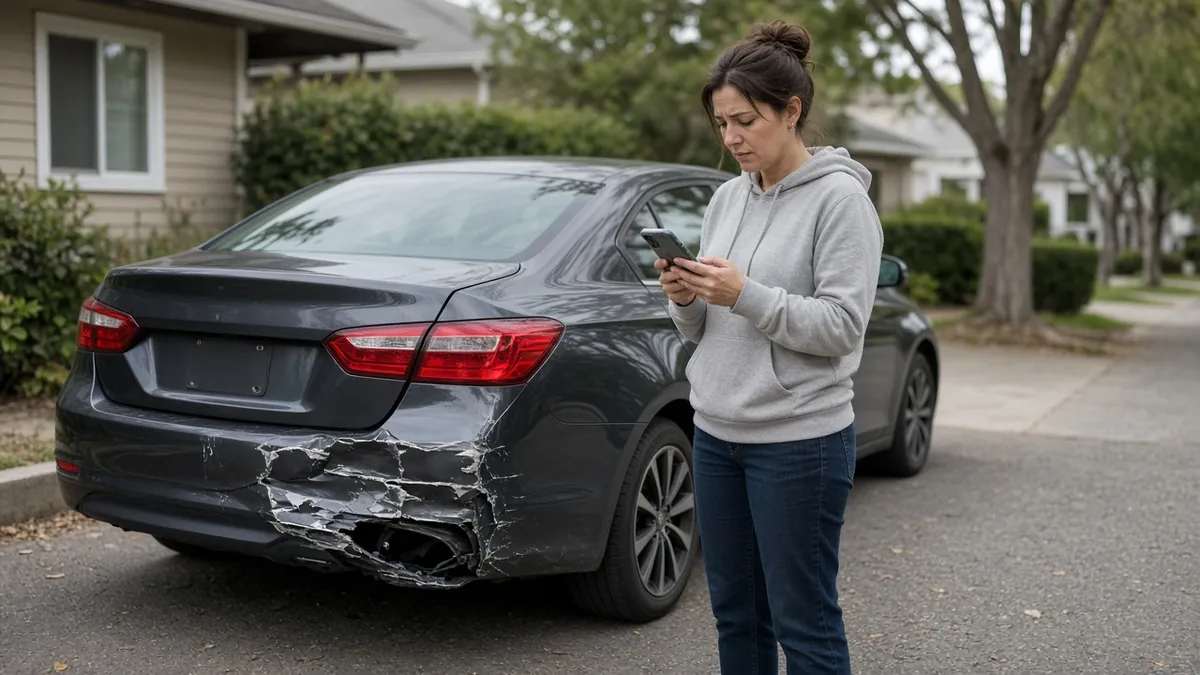
Someone rear-ends you at a red light. You did nothing wrong, but you hesitate to file a claim because you're worried your insurance will go up. After a not-at-fault accident in Kentucky, that fear is common, and Kentucky law speaks to it directly. Here's what the law protects, where the protection stops, and what to do if your premium goes up anyway.
Rate increases after a not-at-fault accident in Kentucky
Kentucky has a specific statute on this. KRS 304.20-045 says:
No insurer shall increase the premium on an automobile liability insurance policy solely as a result of a claim for an automobile accident filed by an insured if the insured was not at fault nor contributorily negligent.
In plain terms: if you weren't at fault at all, your own insurer can't raise your premium just because you filed a claim for that accident. That includes a claim for PIP benefits under your own policy. See how Kentucky PIP insurance works.
Where the protection stops
The statute is narrower than many people think:
- "Solely." An insurer can still raise rates for other reasons, such as a statewide rate change, a new driver or vehicle on the policy, a move, or tickets.
- "Not at fault nor contributorily negligent." If you were even partly at fault, the statute doesn't protect you. Kentucky divides fault by percentage, so an insurer may argue you share some of the blame.
- Premiums, not nonrenewal. The statute talks about increasing the premium. It doesn't say an insurer must renew. If an insurer decides not to renew an auto policy, it generally must give at least 75 days' advance written notice (KRS 304.20-040(5)).
Because fault matters so much, the crash report and photos are important even for your own premium. Here's how to get your Kentucky accident report.
Asking a question isn't filing a claim
Some people avoid calling their agent at all. Kentucky law protects those calls too. Under KRS 304.20-047, an insurer can't cancel, refuse to renew, or raise the premium on an auto or homeowner's policy solely because of an inquiry about your coverage that "does not reasonably apprise the insurer of a claim."
Asking "What does my policy cover if someone hits me?" is an inquiry. Reporting that you were hit last Tuesday is notice of a claim.
Whose insurance should pay?
After a not-at-fault crash, more than one policy may be involved:
- Your PIP pays your first medical bills and lost wages, whoever was at fault, unless you rejected it. Kentucky's no-fault system sends these to your own insurer first.
- The at-fault driver's liability insurance pays for your vehicle damage and, if you meet Kentucky's tort threshold, your pain and suffering.
- Your collision coverage, if you have it, can repair your car faster. Your insurer may then try to recover from the at-fault driver's insurer.
- Your uninsured or underinsured motorist coverage may pay if the other driver has no insurance or not enough. See uninsured motorist claims and underinsured motorist claims.
Under KRS 304.20-045, filing under your own policy for a crash you didn't cause shouldn't, by itself, raise your premium. Don't skip PIP or other benefits you paid for out of fear of a rate increase.
What to do if your premium goes up anyway
- Ask your insurer in writing why the premium went up. Ask whether the claim was a factor and whether it found you at fault.
- Send proof you weren't at fault: the crash report, photos, witness statements, or the other insurer's acceptance of liability.
- File a complaint with the Kentucky Department of Insurance. KRS 304.20-045(2) lets an insured notify the Commissioner in writing if they believe the insurer raised the premium in violation of the statute. The Commissioner must investigate, take appropriate action, and send written notice of what was done. The Department's Consumer Protection Division takes written complaints online at insurance.ky.gov, or by mail or fax.
- Shop around if the insurer won't budge, but keep your coverage in force with no gap.
Tips that protect your rate after a not-at-fault accident
- Get the police report, even for a minor crash.
- Photograph both cars, the scene and any traffic signals.
- Don't admit fault or apologize at the scene. Stick to facts.
- Be careful in recorded statements to the other driver's insurer. See insurance adjuster tactics.
- If you were rear-ended, fault is usually clear, but get it in writing.
How Forman & Associates helps
We gather the evidence that shows you weren't at fault, handle PIP and property damage claims, deal with the at-fault driver's insurer, and pursue your injury claim. When an insurer won't be fair, we're ready for court: Larry Forman has tried 50+ jury trials and won 95% of them. Learn more about our Louisville car accident practice.
Not-at-fault accident FAQ
Will my insurance go up if I wasn't at fault in Kentucky?
Not because of the claim alone. KRS 304.20-045 bars an insurer from raising your premium solely because you filed a claim for an accident in which you weren't at fault or contributorily negligent. Rates can still change for other reasons.
Can my insurer drop me after a not-at-fault accident?
The not-at-fault statute is about premium increases. It doesn't require renewal. If an insurer won't renew an auto policy, Kentucky generally requires at least 75 days' advance notice.
Does using my PIP count as a claim that can raise my rates?
A PIP claim is a claim under your policy. If you weren't at fault, KRS 304.20-045 still bars a premium increase based solely on that claim.
Can I just call my agent to ask a question?
Yes. Kentucky law bars cancellation, nonrenewal or premium increases based solely on a coverage inquiry that doesn't reasonably notify the insurer of a claim.
Where do I complain about an unfair rate increase?
In writing to the Kentucky Department of Insurance. Its Consumer Protection Division accepts complaints online, by mail or by fax.
Talk to a Louisville car accident lawyer
If you were hurt in a not-at-fault accident in Kentucky, call Forman & Associates Accident Injury Lawyers at (502) 931-6788 or get a free case evaluation. Our office is at 1139 S. 4th St., Louisville, KY 40203. No fee unless we win.
This post is general information about Kentucky law, not legal advice. Reviewed October 2026.