Reviewed by Larry Forman, Attorney.
Key takeaways: Wet leaves can be as slick as ice, and if you slip on wet leaves that a Kentucky business or landlord left piled on steps, walkways or entrances, the owner may be responsible for the fall, even when the insurer claims the leaves were “obvious.”
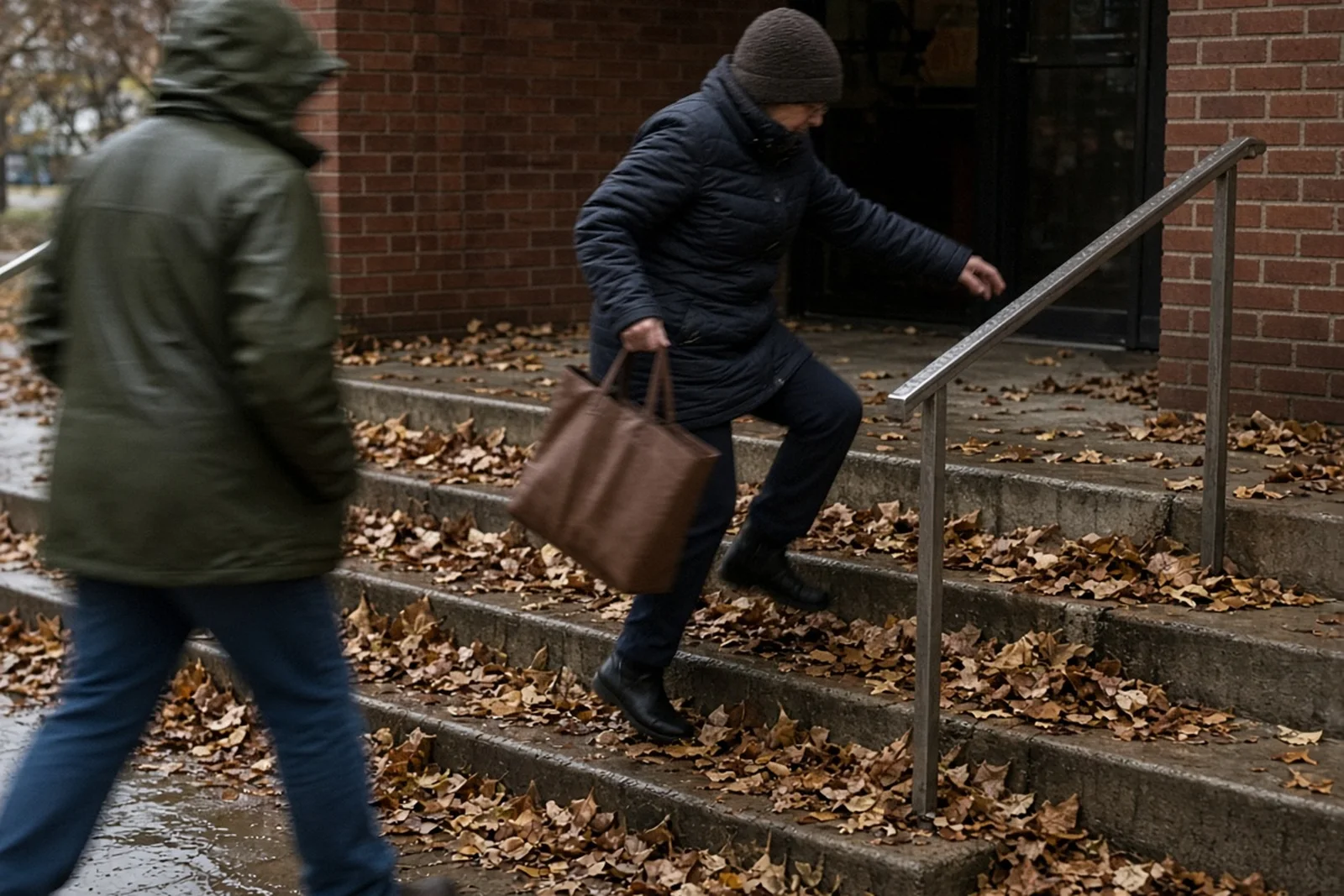
Every November, leaves pile up on parking lots, porches and storefront entrances across Louisville. Add rain, and a pile of leaves becomes a slick, matted layer that hides curbs, potholes and steps. Anyone can slip on wet leaves, and falls on wet leaves cause broken wrists, hip fractures, knee injuries and head injuries, especially for older adults.
Why wet leaves are so dangerous
- They’re slippery. Wet, decomposing leaves create a slick film on concrete, wood and tile.
- They hide hazards. A leaf pile can cover a broken curb, a pothole, a step edge or a drain.
- They get tracked inside. Leaves and water carried into an entrance can make tile floors slick well past the door.
- They build up in predictable places, such as stairs, ramps, gutters, downspouts and the corners of parking lots.
When is a property owner responsible?
Kentucky law, through court decisions and the premises-liability duties they recognize, requires owners and businesses to keep their property reasonably safe for invitees: customers, tenants in common areas, and other people invited onto the property for business. That duty includes inspecting the property, cleaning up hazards, and warning about dangers that aren’t obvious. To win a slip-and-fall case, you generally have to show:

- A dangerous condition existed, such as wet, matted leaves on a step or walkway.
- The owner knew, or reasonably should have known, about it. A leaf buildup that lasts for days, or one that comes back every fall, is hard to call a surprise.
- The owner failed to fix it or warn about it.
- That failure caused your injury.
Typical cases involve a store or restaurant entrance with no leaf removal and no mats, an apartment complex that never clears its stairs, a parking lot where leaves hide a broken curb, and a church, office or medical building with a leaf-covered ramp.
“But leaves are obvious.” Is that a defense?
Insurers often argue that leaves are a natural, obvious condition everyone should expect in autumn. Kentucky law no longer treats that as an automatic win for the property owner. Since Kentucky River Medical Center v. McIntosh (2010) and Shelton v. Kentucky Easter Seals (2013), the Kentucky Supreme Court has treated whether a hazard was “open and obvious” mainly as a question of comparative fault for the jury. In Carter v. Bullitt Host, LLC (2015), the Court held that all open-and-obvious hazard cases, including natural outdoor hazards like ice and snow, fall under comparative fault.
Under Kentucky’s pure comparative fault rule (KRS 411.182), if a jury finds you partly at fault (say, 20%), your damages are reduced by that share. You aren’t barred from recovering anything. The owner’s argument that “you should have seen it” goes to how fault is split, and it usually doesn’t decide the whole case.
Each case still depends on its facts. Comparative fault does not prevent summary judgment where there is no unreasonable risk or no breach of duty, so a claim still needs evidence that the owner failed to act reasonably. Courts look at whether the owner could reasonably have expected people to walk through the hazard anyway, for example when the leaf-covered steps were the only way into the building.
Public sidewalks and city property
If you fell on wet leaves on a public sidewalk or city street, different rules may apply. For a defect in a city’s street, sidewalk or other public thoroughfare, KRS 411.110 requires written notice to the mayor or city clerk within 90 days of the injury. Courts enforce that rule strictly. Whether the city, the abutting owner or nobody is responsible depends on the location and local ordinances. See our sidewalk trip-and-fall page.

Homeowners and social guests
A friend or relative visiting a private home is generally a licensee, not an invitee. The duty owed to licensees is narrower. In general, the owner must warn of known hidden dangers. Homeowner liability coverage may apply, subject to the policy; insurance does not eliminate personal legal responsibility.
What to do after you slip on wet leaves
- Get medical care. Hip, wrist and head injuries can be worse than they first feel.
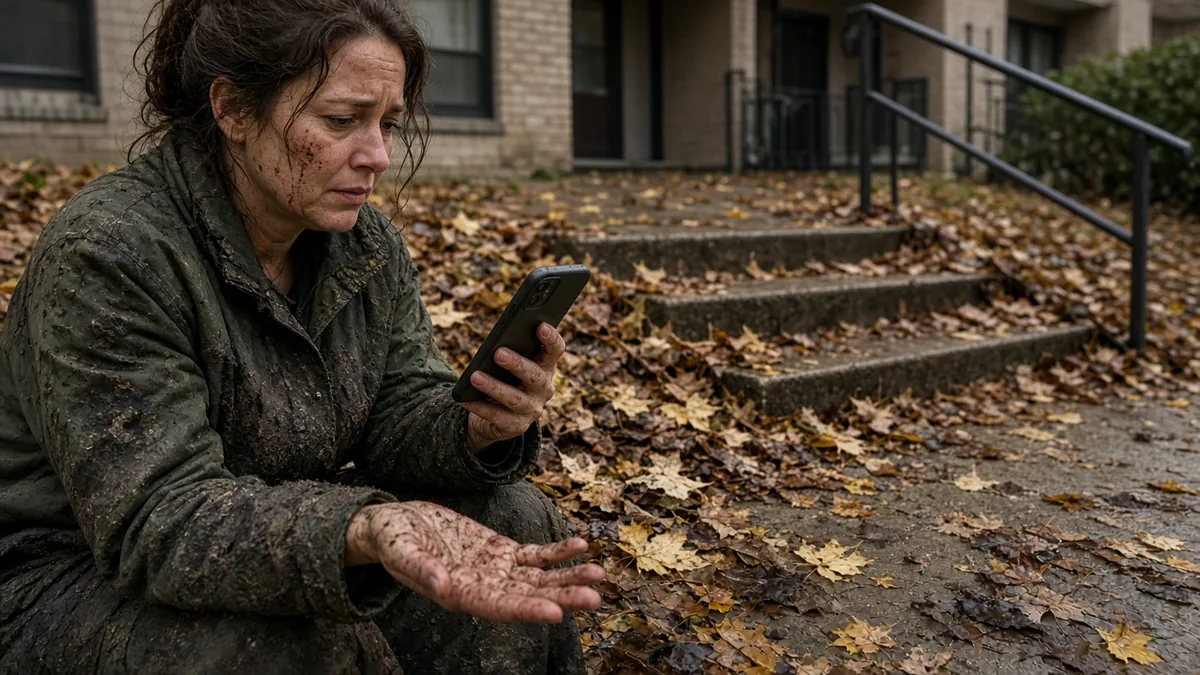
- Photograph the scene right away, before anyone rakes or blows the leaves. Get the leaf buildup, any hidden curb or step, the lighting, and the absence of mats or warning signs.
- Report the fall to the manager or landlord, and ask for a copy of the incident report.
- Keep your shoes and the clothes you wore.
- Get witness names and ask whether cameras cover the area. Footage is often recorded over within days.
- Note the weather. Recent rain and how long the leaves had been there both matter.
- Don’t give a recorded statement to the property owner’s insurer before talking to a lawyer.
Our guide to what to do after a slip and fall in Kentucky has a fuller checklist.
Deadlines
Most Kentucky premises injury claims must be filed within one year of the fall (KRS 413.140(1)(a)), and city-owned property may also require the 90-day notice described above. See our Kentucky statute of limitations guide.
How Forman & Associates helps
We move quickly to preserve video, maintenance and landscaping records, and weather data. We find out who was responsible for leaf removal, whether that’s the owner, the tenant, a property manager or a landscaping contractor, and we push back on the “open and obvious” argument if you slip on wet leaves and the owner blames you. For falls in parking areas, see our parking lot slip-and-fall page, and for all fall cases, our slip and fall lawyer page. Larry Forman has 13 years of experience, and he has tried 50+ jury trials and won 95% of them. You pay no fee unless we win.
Wet leaves slip-and-fall FAQ
Can I sue if I slip on wet leaves at a store?
Possibly. If the store knew or should have known that leaves were piling up at its entrance and didn’t clear them or warn customers, it may be responsible for your injuries.
Doesn’t the “open and obvious” rule bar my claim?
Not automatically. Kentucky courts generally treat an obvious hazard as a comparative-fault issue for the jury. Your recovery may be reduced, but it usually isn’t eliminated.
Who is responsible for leaves on an apartment complex’s stairs?
Usually the landlord or property manager, who controls the common areas. A landscaping contractor may share responsibility.
How long do I have to file a slip-and-fall claim in Kentucky?
Generally one year from the fall. Falls on city sidewalks or streets may also require written notice to the city within 90 days.
Talk to a Louisville slip-and-fall lawyer
Did you slip on wet leaves and get hurt? Get a free case evaluation or call (502) 931-6788. No fee unless we win. Our office is at 1139 S. 4th St., Louisville.
This post is general information about Kentucky law, not legal advice. Every case is different.