
Reviewed by Larry Forman, Attorney.
Trucking companies must inspect, repair and maintain their trucks and trailers, and drivers must check their equipment before every trip. When a carrier skips that work to save time or money, brakes wear out or go out of adjustment, tires fail and lights stop working. The result can be a truck that can’t stop for traffic ahead.
Key takeaways
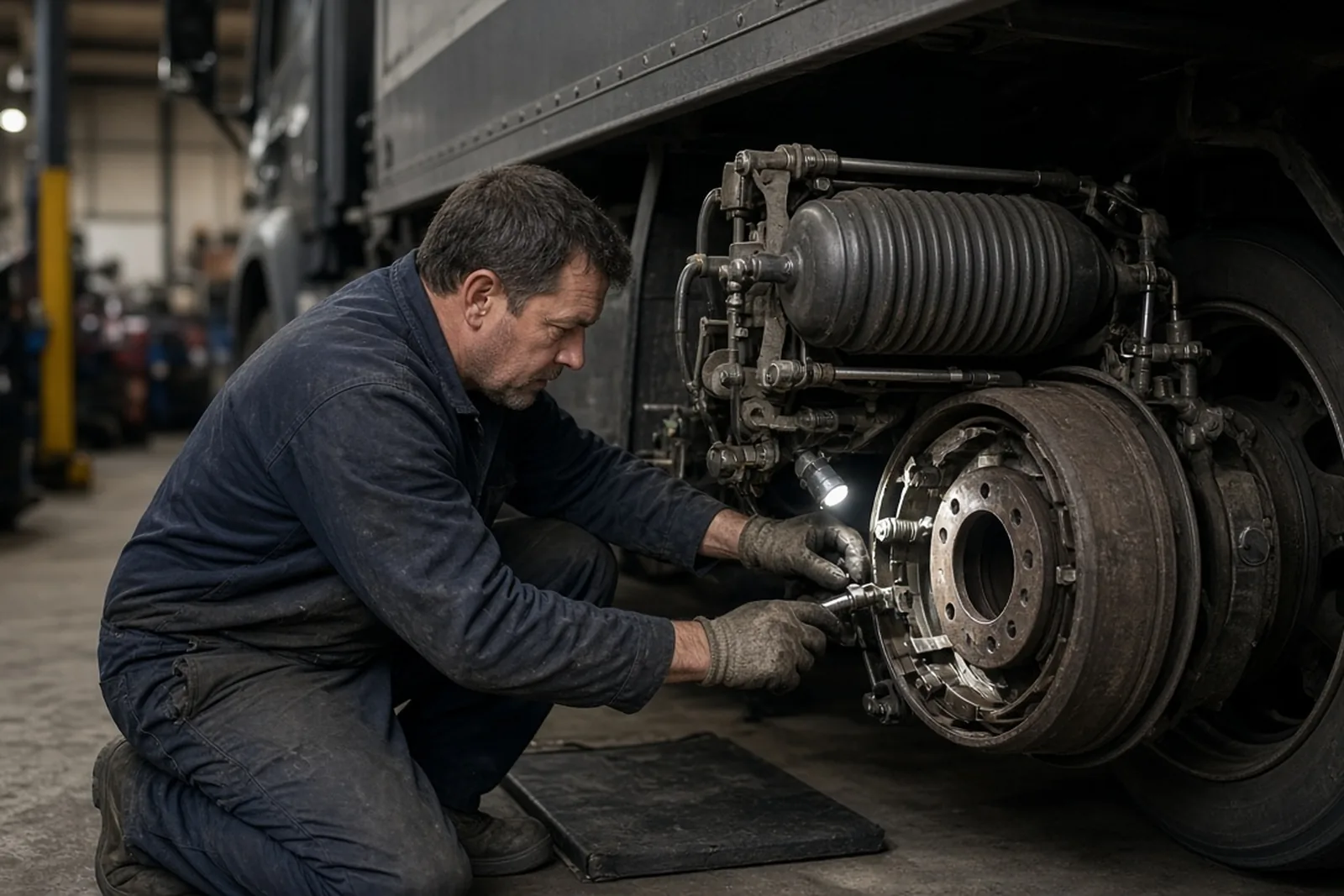
Overloading makes brake problems worse, because a heavier truck needs more distance to stop. See overloaded truck accidents.
See trucking company liability and owner-operator liability on our truck page.
Federal rules let carriers keep some records for only limited periods, so we send preservation letters right away.
Medical bills, lost wages, future care, pain and suffering and property damage, and in some cases punitive damages for conscious disregard of safety. See Kentucky punitive damages. Unless you rejected it in writing, your own PIP (personal injury protection) coverage pays up to $10,000 of medical bills and lost wages regardless of fault. See how Kentucky PIP works.
Most Kentucky motor vehicle injury claims must be filed within two years of the crash or the last PIP payment, whichever is later (KRS 304.39-230). Estimate your dates with our statute of limitations calculator.
Often you won’t know at first. Signs include skid marks that start late, a driver saying the brakes “didn’t grab,” or roadside inspection history. An inspection of the truck and its records tells the story.
If a shop’s poor work caused or contributed to the crash, it can share responsibility with the carrier.
Repair records, photos and data may still prove the problem. Acting fast gives you a better chance to inspect the parts.
We’ll get the maintenance records and inspect the truck before evidence is lost. The consultation is free.
Get a free case evaluation or call 502-931-6788.
This page is general information about Kentucky law as of October 2026, not legal advice. Every case is different.