
Reviewed by Larry Forman, Attorney.
Plumbers, electricians, delivery and service crews, sales reps and contractors drive Louisville roads all day. When one of them causes a crash while working, you may have a claim against the employer as well as the driver. That matters because businesses usually carry more insurance than individual drivers.
Key takeaways
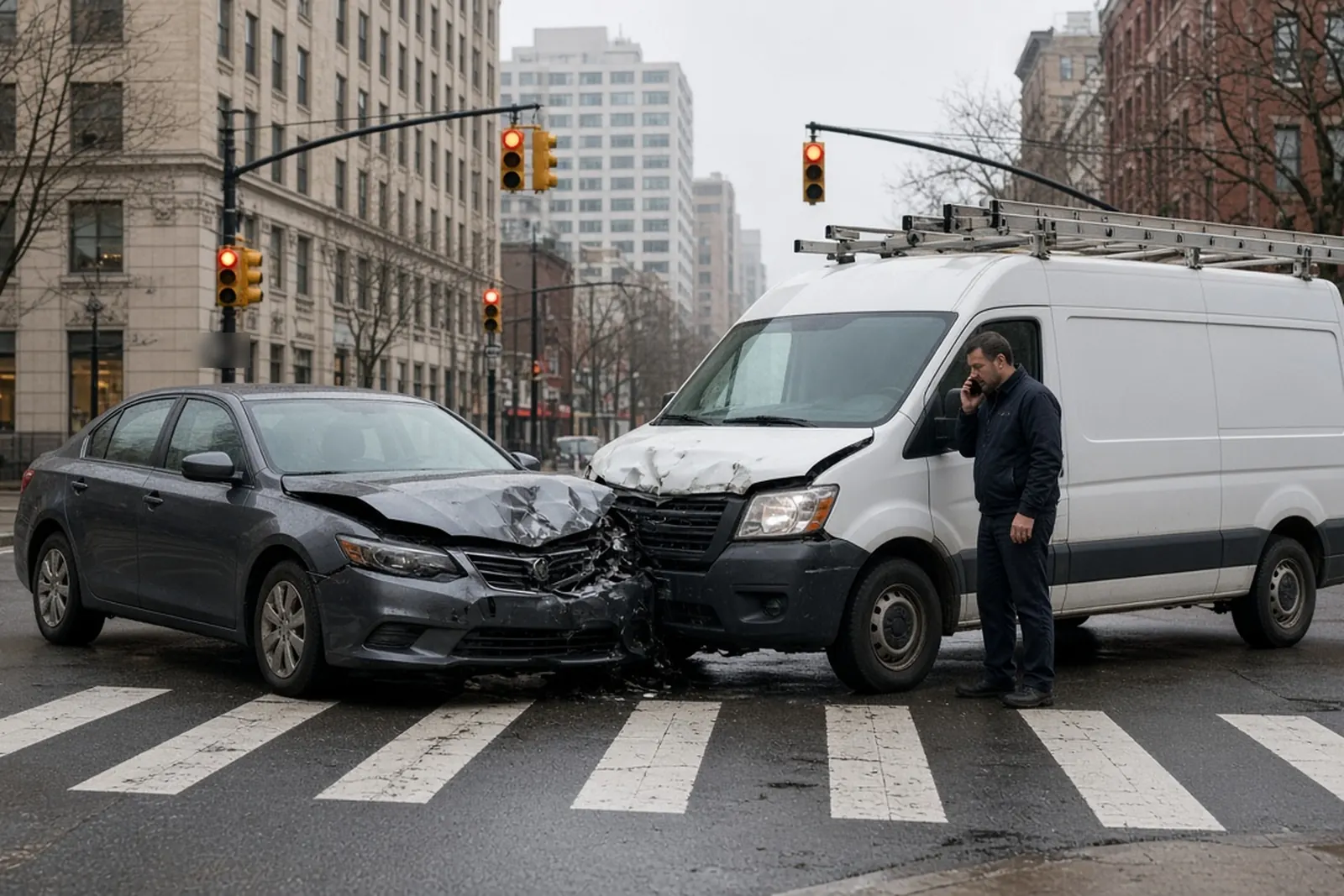
Under a long-standing rule called respondeat superior, an employer is generally liable for an employee’s negligence while the employee is acting within the scope of employment. Kentucky courts look at whether the driver was doing the employer’s work, or acting at least partly to serve the employer, when the crash happened.
If the employee was an independent contractor, the analysis changes. Who controlled the work, whose vehicle it was and what the contract says all matter.
Businesses usually carry commercial auto policies, and many also have umbrella or excess coverage. Larger trucks and vans used in interstate commerce may also fall under federal safety rules for drivers, hours and maintenance. See our commercial vehicle crash lawyer page, FMCSA safety records and the MCS-90 endorsement.
Unless you rejected it in writing, your own PIP (personal injury protection) coverage pays up to $10,000 of medical bills and lost wages regardless of fault. See how Kentucky PIP works. To recover pain and suffering from an at-fault driver, Kentucky’s no-fault law generally requires more than $1,000 in medical expenses, or an injury such as a fracture, permanent injury, permanent disfigurement or permanent loss of bodily function (KRS 304.39-060).
If you were hurt while driving for your own job, workers’ compensation usually covers your medical care and part of your lost wages, and you generally can’t sue your own employer (KRS 342.690). You may still have a claim against the at-fault driver or another company (KRS 342.700). See workers’ comp and injury claims and our third-party workplace injury lawyer page.
Most Kentucky motor vehicle injury claims must be filed within two years of the crash or the last PIP payment, whichever is later (KRS 304.39-230). Claims against a government vehicle follow different rules; see government vehicle accidents. Estimate your dates with our statute of limitations calculator.
We identify every company and policy involved, get the fleet and driver records, and build the case against the business, not just the driver. Larry Forman has tried 50+ jury trials, and we prepare every case as if it may go to trial.
Often, yes. If the employee was doing the employer’s work when the crash happened, the employer is generally responsible for the employee’s negligence.
The employer may still be responsible if the driver was on a work errand. The employer’s insurance may apply after the driver’s personal policy.
Business policies often have higher limits, but every case depends on the policy and the injuries.
We check GPS data, work orders, time records and phone records to show what the driver was doing.
Let us find out who is responsible and which insurance applies. The consultation is free.
Get a free case evaluation or call 502-931-6788.
This page is general information about Kentucky law as of October 2026, not legal advice. Every case is different.