

After a car wreck, most people focus on the immediate chaos: the damaged vehicles, the medical bills piling up, the paychecks they are missing while they recover. But what many accident victims do not realize is that the financial losses they can see and measure are only part of what they may be owed. The law recognizes something deeper. It acknowledges that a serious crash does not just drain your bank account; it can steal your peace of mind, your physical comfort, your relationships, and your ability to enjoy the life you had before.
Understanding the difference between economic and non-economic damages is one of the most important things you can do after a car or truck accident. These two categories form the foundation of nearly every personal injury claim, and knowing how they work puts you in a far stronger position to pursue full and fair compensation.
In this guide, you will learn exactly what each damage type covers, how courts measure them, how to document both from day one, and why having the right legal advocate in your corner can make all the difference in what you ultimately recover.
What Are Damages in a Car Wreck Claim?
In a personal injury claim, damages refers to the monetary compensation a court awards or a settlement provides to make an injured party whole, restoring them, as closely as money can, to the position they were in before the crash occurred.
Most jurisdictions recognize three categories of damages:
- Economic damages: Quantifiable financial losses with a paper trail, such as medical bills and lost wages
- Non-economic damages: Intangible harm without a receipt, such as pain and suffering or emotional distress
- Punitive damages: A punishment-focused award reserved for defendants whose conduct was especially reckless or egregious
Economic and non-economic damages are available in virtually every car wreck or truck crash claim. You can explore the full scope of what is recoverable in what you can recover in a car crash lawsuit and in what you can recover in a commercial vehicle crash lawsuit. Punitive damages, by contrast, are not automatic; they require proof of conduct beyond ordinary negligence, such as drunk driving or deliberate disregard for safety. If a crash left you with both kinds of losses, our Louisville car accident lawyers can help you document them.
The distinction that shapes everything in this article is straightforward: economic damages are calculated, non-economic damages are argued. One category has receipts; the other requires evidence, testimony, and skilled advocacy to translate real suffering into a dollar figure a jury finds credible.
That difference matters because how thoroughly both categories are documented and presented shapes the total value of your claim, not just the size of your hospital bills.
Economic Damages: The Costs You Can Count
Economic damages are the foundation of every car wreck claim: quantifiable, documented financial losses that exist on paper and can be calculated to a specific dollar figure.
Medical Expenses
These are typically the largest component. They include emergency room visits, ambulance fees, surgery, hospitalization, rehabilitation, physical therapy, ongoing specialist care, and prescription medications. Future medical expenses also qualify, covering surgeries, therapy, or treatment a doctor projects you will need as a direct result of the crash.
Property Damage
Your vehicle repair bill or total-loss replacement value counts as an economic loss, as may rental expenses while your car is out of service and the value of personal property destroyed in the collision, such as electronics or a child safety seat, your attorney can document whichever items apply.
Lost Wages and Earning Capacity
Lost wages cover every paycheck missed during your recovery. If your injuries permanently limit your ability to work or force you into a lower-paying role, you can also claim diminished earning capacity, which represents the income you would have earned over your working life but can no longer obtain.
Overlooked Out-of-Pocket Costs
Many victims leave money on the table by missing smaller but legitimate expenses: mileage and transportation to medical appointments, in-home care assistance during recovery, and any home or vehicle modifications required by a permanent disability.
How Economic Damages Are Proven
Every item on this list requires documentation. Medical bills, itemized provider statements, prescription receipts, pay stubs, and employer letters confirming missed workdays all serve as direct evidence. For future losses and diminished earning capacity, attorneys commission expert testimony from economists or vocational specialists to project long-term financial harm. Understanding how attorney fee percentages affect your total net recovery is equally important, since a higher contingency rate reduces what you actually keep from every dollar recovered.
Non-Economic Damages: The Harm That Has No Receipt
Economic damages give a claim its foundation. But some of the most significant harm a crash causes never appears on any bill.
Non-economic damages compensate for real suffering that has no invoice. There is no receipt for waking up at 3 a.m. in pain, no pay stub deduction for the anxiety that hits every time you approach an intersection. The law recognizes these losses as compensable, even when no dollar figure is self-evident.
The main sub-categories break down as follows:
- Pain and suffering: Physical discomfort throughout recovery, including any chronic or permanent condition that outlasts the treatment phase.
- Emotional distress and anxiety: Psychological consequences of the crash itself, such as PTSD, depression, fear of driving, and disrupted sleep.
- Loss of enjoyment of life: If you ran marathons, coached your kid’s soccer team, or played guitar before the crash and can no longer do those things, that loss is compensable.
Loss of consortium addresses what the injury does to the victim’s closest relationships. A spouse or family member may recover compensation for lost companionship, intimacy, and day-to-day support. In fatal crash cases, Kentucky’s wrongful death law governs who can bring that claim and how proceeds are distributed, and the rules are more specific than most families expect.
Disfigurement and permanent scarring stand as their own category. Visible scars and lasting physical changes affect self-image and quality of life in ways that extend far beyond any surgical bill.
Knowing how to make intangible harm real to a jury is a skill that separates a trial attorney from a settlement processor. That variable is decisive.
Economic vs. Non-Economic Damages: A Side-by-Side Look
With both damage categories defined, here is how they compare directly across the four dimensions that determine what your claim is actually worth.
| Economic Damages | Non-Economic Damages | |
|---|---|---|
| Definition | Quantifiable financial losses tied to the accident | Intangible harm with real impact but no invoice |
| Common Examples | Medical bills, lost wages, vehicle repair, rehabilitation | Pain and suffering, emotional distress, loss of consortium, disfigurement |
| How Documented | Bills, receipts, pay stubs, employer letters, medical records | Personal journals, photographs, therapist notes, witness testimony, expert opinion |
| How Valued | Calculated from hard financial records | Argued before a jury using subjective evidence and persuasive presentation |
Economic damages set the floor. Insurance adjusters are comfortable with them because the math is straightforward: add the receipts, confirm the losses, write the check.
Non-economic damages build the ceiling. In serious injury cases, they routinely represent the larger share of a fair total recovery, yet they require skilled advocacy to quantify because no bill exists to hand a jury.
This is precisely where settlement mills fall short. Their volume-based model pushes toward fast closes, which means accepting the economic floor and fighting minimally, or not at all, for the non-economic ceiling. Insurers count on this.
A trial attorney’s courtroom experience is most directly leveraged here. Presenting intangible suffering to a jury, knowing what evidence moves a panel and how to frame lasting harm in human terms, is a skill built across dozens of trials, not negotiation calls.
How to Document Both Damage Types From Day One
Knowing what to claim means nothing if you cannot prove it. Documentation begins the moment the crash happens, and every gap in the record is compensation you may never recover.
Economic Damages: Build a Paper Trail Immediately
Collect every bill, receipt, and Explanation of Benefits your insurer issues. Keep a dedicated folder, physical or digital, for all medical records, treatment summaries, and prescription costs. Request itemized billing from every provider; itemized bills give your attorney and any opposing party a clear, line-by-line record that is easier to substantiate than a consolidated summary charge.
For lost wages, gather whatever employment records confirm your normal income and the time missed, your attorney can advise on the specific documentation your jurisdiction requires.
Future economic losses require professional projection. Medical experts and vocational economists can calculate long-term treatment costs and earning impairment, but commissioning and presenting those reports properly requires an attorney. Do not attempt to estimate these figures on your own.
Non-Economic Damages: Create the Evidence That Doesn’t Come With a Receipt
Start a daily pain and recovery journal the day of the crash. Record physical symptoms, sleep disruption, emotional state, activities you could not perform, and any changes in your relationships. Consistency matters; a journal maintained consistently throughout recovery carries far more weight than a few scattered entries.
As a practical matter, photograph your injuries at every stage of recovery, not only immediately after the crash. The progression from acute injury to scarring or permanent disfigurement tells a story a single photo cannot.
Retain all psychological treatment records. Formal documentation of mental health treatment directly supports emotional distress claims that are otherwise difficult to quantify.
For a broader overview of how evidence preservation protects every part of your claim, Preserve Evidence and Keep a Record of Your Reports outlines the foundational principles that apply across serious injury cases.
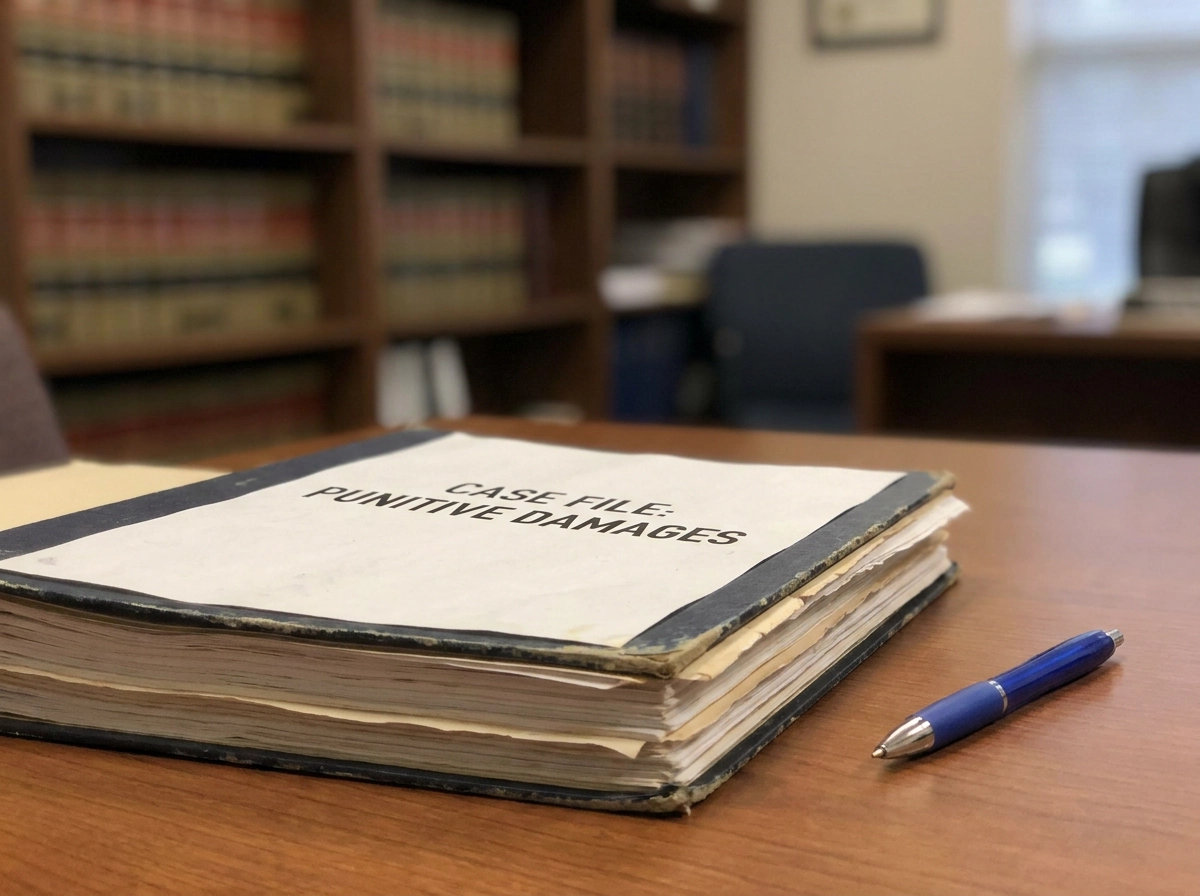
Punitive Damages: When Egregious Conduct Changes the Equation
Documentation builds your compensatory foundation. But in some crashes, the defendant’s conduct is so extreme that a separate category of damages enters the picture.
Punitive damages exist not to compensate you but to punish the defendant and deter others. Where economic and non-economic damages ask “what did this cost the victim?”, punitive damages ask “how badly does this defendant deserve to be penalized?”
When Punitive Damages Come Into Play
Not every wreck qualifies. Common scenarios include:
- Drunk driving or driving under the influence of controlled substances
- Street racing or other deliberate reckless driving
- Commercial trucking companies that knowingly ignored documented federal safety violations
These fact patterns share a common thread: the defendant was aware that serious harm could result and acted anyway.
Jurisdiction Controls Everything
Punitive damages are not automatically available. State law governs whether they can be claimed, the burden of proof required, and any caps on the award. In Kentucky, plaintiffs must prove by clear and convincing evidence that the defendant acted with malice, fraud, or oppression, a significantly higher standard than the preponderance standard used for compensatory damages.
Cases involving punitive claims also rarely settle. Defendants typically force the issue to trial, where the jury’s assessment is guided by standards that demand experienced analysis. That complexity demands experienced trial counsel, not a settlement processor.
If fault is shared, Kentucky’s comparative fault rules also affect your total recovery. Understanding how partly at-fault drivers recover compensation in a Kentucky car crash matters when punitive claims are in play. An attorney familiar with local courts is essential to assess whether punitive damages apply to your specific facts.
Why Non-Economic Damages Require a Trial Attorney, Not a Settlement Processor
Non-economic damages share one critical trait with punitive claims: both require an attorney willing to make the case before a jury, not just at a conference table.
That volume-first approach has a direct cost to the client, and the fee structure magnifies it. When an attorney extracts a high contingency percentage from your recovery, undervaluing non-economic damages compounds the reduction on your actual compensation.
Insurance companies know which attorneys will take cases to trial and which ones will fold. That distinction directly affects how much they offer. A credible trial threat is leverage, and leverage is what converts a low-ball economic-only offer into a settlement that accounts for everything you actually suffered.
Insurance companies often try to settle catastrophic injury cases before victims fully understand the long-term cost of their recovery. You need a trial lawyer prepared to fight for your future, not just your immediate bills.
Larry Forman brings 50+ jury trials and a 95% trial win rate to every case, creating the courtroom credibility that raises settlement value without necessarily going to trial. His contingency fee is 30%, meaning more of every dollar recovered stays with you, making the fight for full non-economic damages worth exactly what it should be.
Know What You Are Owed and Fight for All of It
Together, economic and non-economic damages define the full measure of what you are owed, and both require active pursuit. Reaching that ceiling requires two things: complete documentation and an attorney who will argue every dollar of intangible harm without flinching.
Documentation does not stop at the emergency room. Every unfiled receipt, every skipped journal entry, every undocumented sleepless night is compensation you cannot recover later. The paper trail that starts at the crash scene, and continues through the final day of treatment, is what transforms subjective suffering into provable loss.
The attorney you hire determines how aggressively that case is made. Settlement processors close files; trial attorneys build leverage.
The same principle applies to other serious injury claims. Understanding what you can recover in a burn injury lawsuit illustrates how economic and non-economic damages work together across catastrophic injury types.
Do not accept a settlement offer before you know what your claim is actually worth. Contact Larry Forman Law for a case evaluation covering both your economic and non-economic damages. You cannot fight for what you have not identified.
Conclusion

Understanding the difference between economic and non-economic damages is not optional; it is the foundation of a fair recovery. Economic damages establish what you lost in measurable terms. Non-economic damages capture the full human cost of your injury. Together, they define what you are truly owed.
Three truths determine your outcome: documentation must begin at the scene and never stop, intangible harm deserves the same aggressive pursuit as medical bills, and the attorney you choose shapes what the insurance company is willing to offer.
You survived the crash. Now survive the claim process with everything you are entitled to.
If you were injured in a car wreck, do not guess at your claim’s value. Contact Larry Forman Law today for a comprehensive case evaluation and fight for every dollar, economic and non-economic alike.