
Reviewed by Larry Forman, Attorney
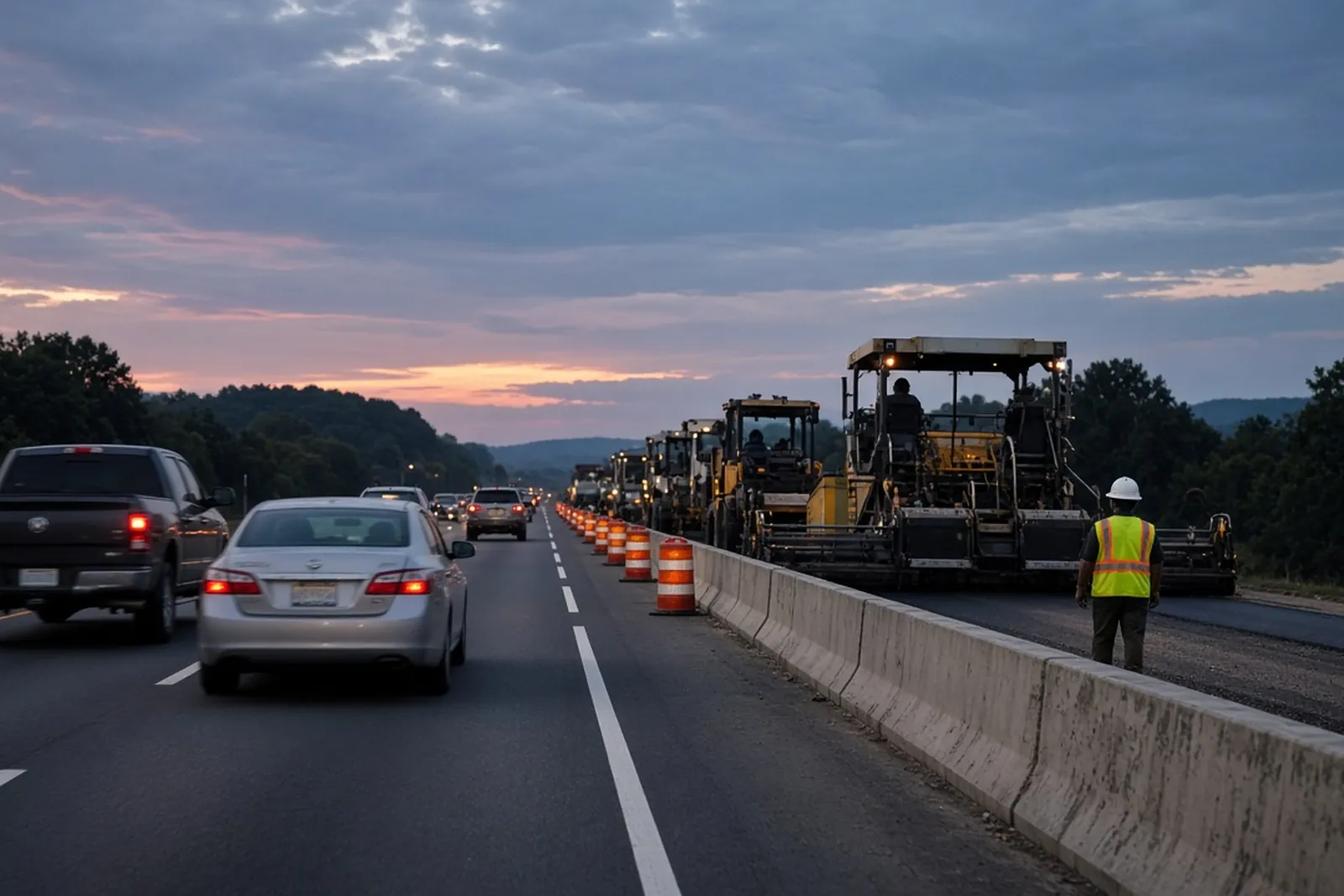
Orange barrels, lane shifts, a sudden merge into a single lane, a flagger stepping out with a sign: Louisville drivers see work zones every day on the interstates and the busy state routes. When something goes wrong, a work zone accident can involve more than two drivers. A contractor's traffic-control setup, the agency that designed the project, and a 2026 change in Kentucky law can all affect who pays.
Forman & Associates represents drivers, passengers, motorcyclists and roadside workers hurt in Kentucky work zones. Here's how these cases work.
The Kentucky State Police 2024 Kentucky Traffic Collision Facts report lists "roadway construction" as a factor in 994 collisions statewide, 4 of them fatal (KSP 2024 Collision Facts). Those are only the crashes where the officer marked that factor.
Common patterns include:
Kentucky raises the fines for traffic violations in a highway work zone. The fine is $500 when no one is hurt and $500 to $10,000 when someone is injured or killed. The increased fines apply only if signs warn drivers of the work zone and the higher fines, and at least one worker is present (KRS 189.2327).
A 2025 law also allows automated speed enforcement in work zones when a driver is going more than 10 mph over the limit, a worker is present and a certified officer is nearby (KRS 189.2326). The law limits who can see those images, so don't count on them as evidence.
The ordinary rules of the road still apply. Drivers must not follow more closely than is "reasonable and prudent," must change lanes only when it's safe, and must slow down for conditions, even below the posted limit. Signs and lane markings in a work zone must follow the state's uniform traffic-control manual (KRS 189.337).
Usually, the driver who caused the crash. But work zones add other possible parties:
Kentucky's comparative fault rule divides fault among everyone responsible, so a claim against a driver and a claim involving a contractor can go forward together.
In 2026 the General Assembly passed Senate Bill 195, which became law on April 12, 2026 without the Governor's signature (2026 Ky. Acts ch. 97). It applies to claims that arise on or after its effective date, July 15, 2026. For crashes involving public road, highway, bridge and street projects, it does three main things:
What it means in practice: claims against road contractors are now harder, and the contractor's contract, plans and traffic-control plan matter more than ever. The presumption in point 1 is tied to the agency's acceptance of the project, so it may not apply in the same way to a crash during active construction. Courts haven't interpreted the new law yet.
SB 195 doesn't change claims against the other driver. In most work zone crashes, that's where the main claim is.
Work zones change quickly. A lane shift may move overnight, and barrels may be reset the next morning. Act fast to preserve:
For a Louisville example, see our article on the Watterson Expressway work zone at US 42.
Highway workers, flaggers and utility crews hit by traffic usually have a workers' compensation claim against their employer. They may also have a separate claim against the driver who hit them or another company that isn't their employer. See third-party workplace injury claims and our construction injury page.
Our statute of limitations guide explains each one.
Learn more about Larry Forman, see our case results (past results don't guarantee a similar outcome), or visit our main car crash page.
Usually the driver who caused it. The road contractor may share fault if its signs, barrels or lane shifts weren't set up or maintained as required, but Kentucky's 2026 SB 195 makes those claims harder.
Sometimes. Under SB 195, once the agency accepts the project, the contractor is presumed to have followed the plans. You must prove a design error, a failure to follow the plans, or a hidden defect created a dangerous condition that helped cause the crash.
Yes. Violations in a highway work zone carry a $500 fine, or $500 to $10,000 if someone is hurt or killed, when signs are posted and a worker is present.
It helps, but it isn't the whole case. The injury claim is decided separately, using the evidence of how the crash happened.
Claims against the state go to the Kentucky Board of Claims and must be filed within one year. The state isn't liable for its contractors' negligence, and Board awards are capped.
Workers' compensation through your employer, plus a possible claim against the driver who hit you. The driver's claim can include pain and suffering, which workers' comp doesn't pay.
We'll find out who set up the work zone, get the plans and protect the deadlines. Get a free case evaluation or call (502) 931-6788. No fee unless we win. Our office is at 1139 S. 4th St., Louisville, KY 40203.
This page is general information about Kentucky law as of October 2026, not legal advice.