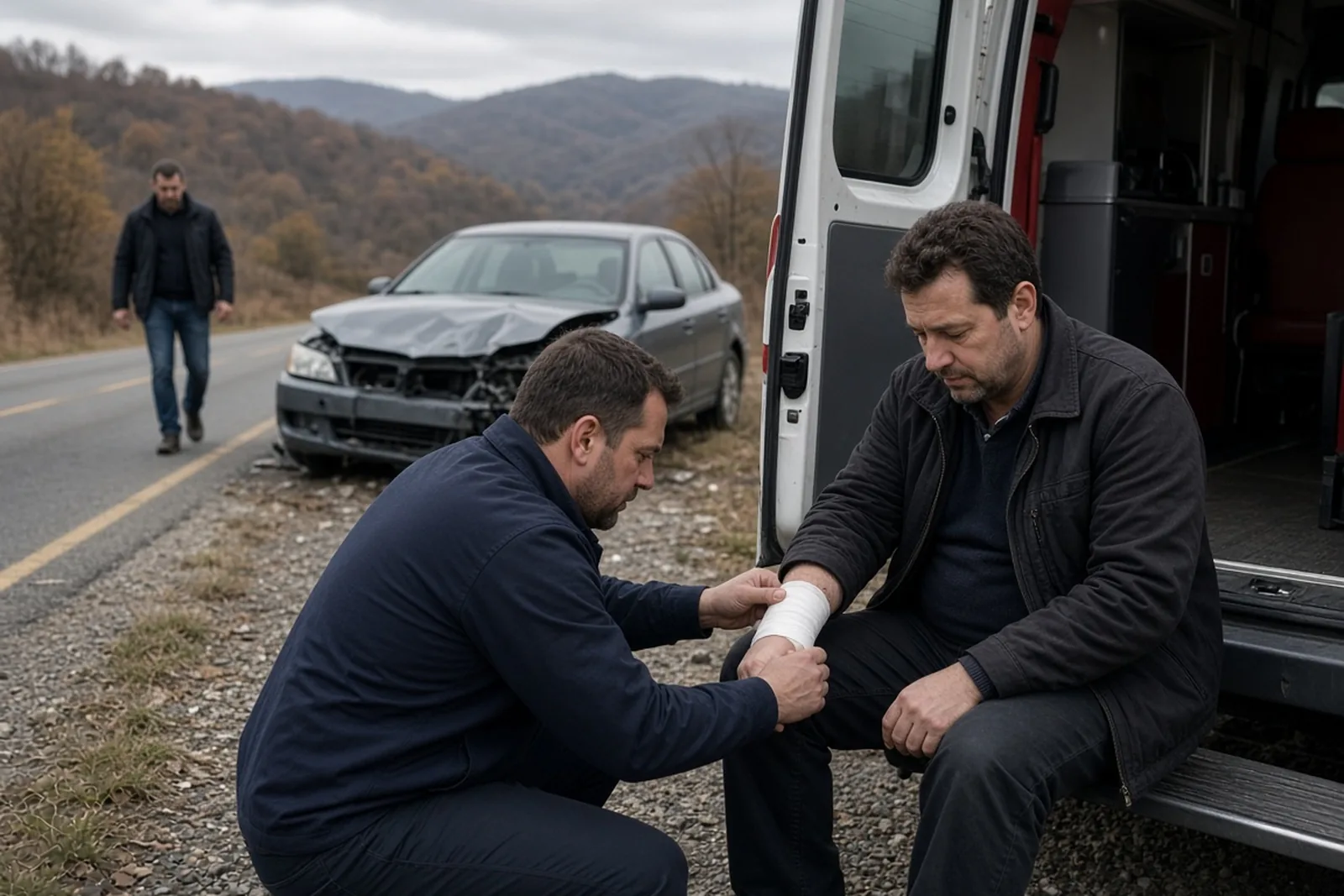
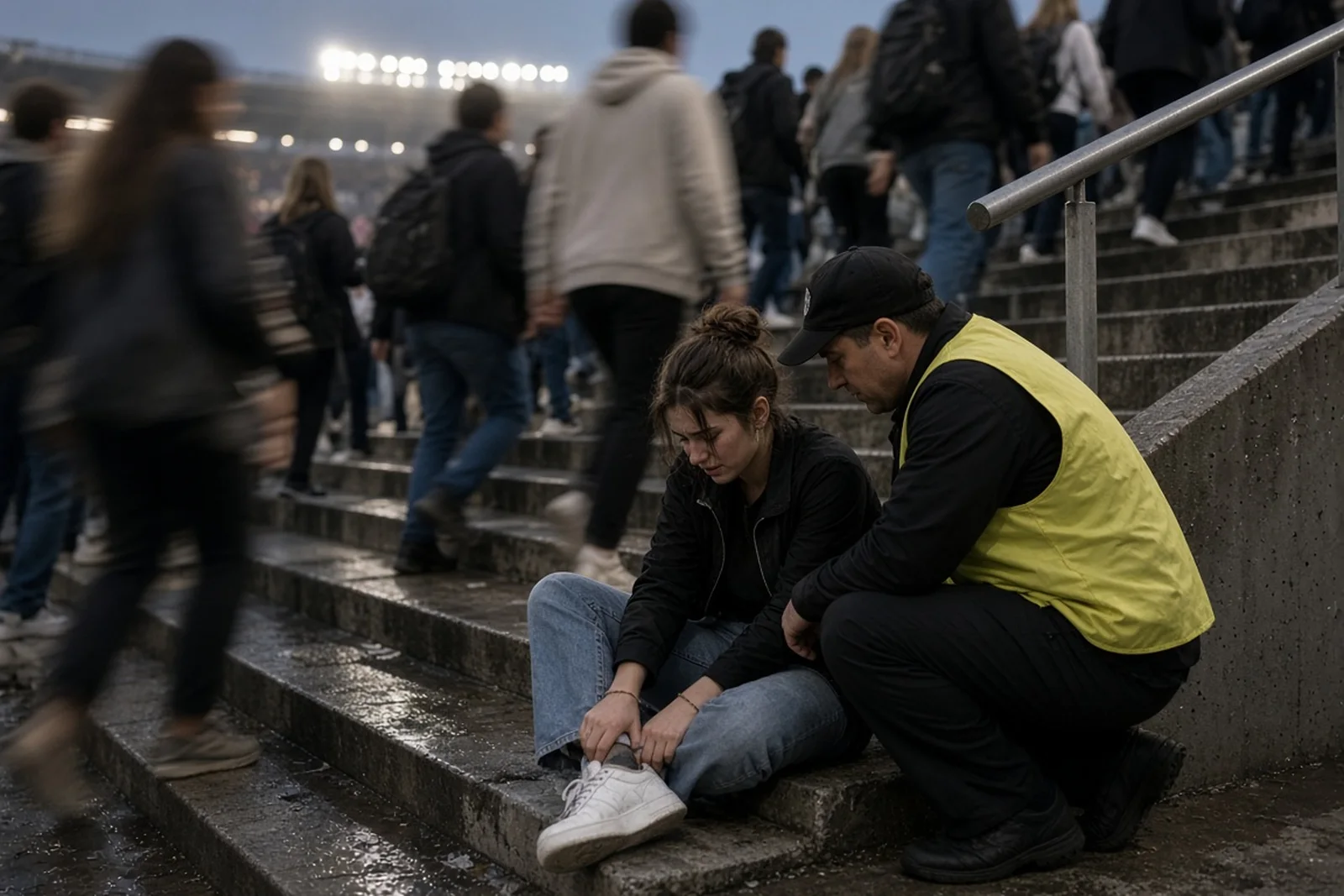
A night at a Louisville stadium, arena, or Derby event should end with a score and a story, not an injury. If you were hurt at a Louisville stadium or concert, the claim is rarely a simple slip and fall. Crowd crush, falls on steep bleachers or stairs, and assaults each raise hard questions about who controlled the space and who failed to keep guests safe.
This guide explains what Kentucky law says about premises liability and what a venue owes its guests. You will learn how responsibility can shift between a venue and a security contractor, how Kentucky apportions fault under KRS 411.182, and whether the fine print on your ticket can block a claim. We also cover incident reports, preserving evidence before it disappears, and the one-year filing deadline under KRS 413.140.
Unlike a typical car accident claim, these cases often involve multiple parties and evidence that vanishes quickly. Read on to understand the first steps that protect your rights. Reviewed by Larry Forman, Attorney. No fee unless we win. Call (502) 931-6788 for a free case review.
Hurt at a Louisville Stadium? Why It Is Not a Simple Slip and Fall
A stadium fall can pull in the venue operator, its staffing contractors, its security vendor, and its concessionaire, each potentially liable under a different theory. That turns a straightforward claim into a multi-defendant dispute.
This guide covers Louisville arenas and concert halls, minor league and college stadiums, fairgrounds, and Derby week events, including infield, paddock, and grandstand areas. Common problems include wet stairs and concourse ramps, bleacher and handrail failures, crowd crush at gates and exits, and assaults in parking lots or on the walk back to the car. For the fairground and midway side of that list, see our overview of common amusement park and fairground injury cases in Louisville and Kentucky.
Recovery usually turns on two proof points: who controlled the specific space, and who had notice of the dangerous condition. Both proof points must be locked down quickly.
Kentucky Premises Liability Basics: What a Venue Owes Its Guests
Premises liability means a property owner or occupier must keep the property reasonably safe for people it invites in and warn them of hazards it knows about or should have discovered. In a Louisville venue, proving that breach follows the same path as any other property owner negligence claim, with more parties involved.
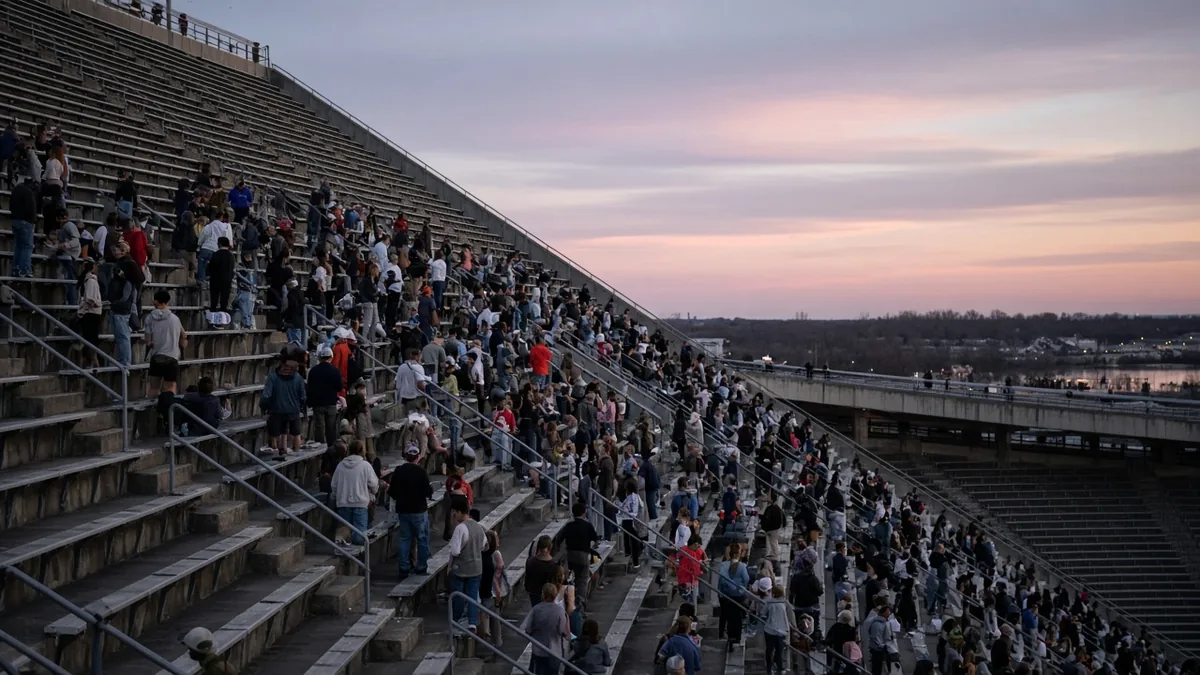
A paying ticketholder, season pass holder, or festival guest is generally an invitee, owed a higher duty than a trespasser or social guest.
Notice is the practical battleground. Inspection logs, maintenance tickets, prior incident reports, and staffing schedules show whether the venue knew, or should have known, about a wet stair, a broken handrail, or a gate plan that funneled too many people into one entrance.
Venues raise open and obvious condition, assumption of risk, and comparative blame. None automatically ends a claim. Kentucky courts have generally treated obviousness as part of the jury’s comparison of fault rather than an automatic bar. Poor lighting, crowd pressure, and venue-created bottlenecks are relevant to whether a hazard was truly avoidable, a question the jury weighs.
Kentucky courts look to what the venue actually controlled, which may include areas beyond the building itself.
Venue or Security Contractor: Who Is Responsible for Your Injury
Because duty follows control, the next question is who controlled the exact space where you were hurt. Event venues commonly contract with separate vendors for security, ushering, cleaning, and other services, each of whom may bear independent liability. One incident, like an unchecked gate crush or a slow medical response, can expose several companies at once.
Contract language decides how responsibility is sorted. Discovery typically targets staffing levels, post orders, training requirements, incident reporting duties, and which crew was assigned to your gate, section, or lot. Indemnity clauses govern cost-shifting between businesses; they generally do not bar an injured guest’s direct claim against the company at fault.
You do not need to map that chain before getting medical care or preserving evidence. Starting early simply makes the chain easier to document. Records identifying who was responsible for the area at that moment, whatever form those records take, can disappear quickly. When two companies end up named in a suit, Kentucky law governs how fault is divided between them, which the next section covers.
How Kentucky Apportions Fault Under KRS 411.182
With more than one company potentially at fault, Kentucky answers the allocation question by statute.
Under KRS 411.182(1), in a tort action where fault is shared by more than one party, the jury assigns a percentage of total fault to each claimant, each defendant, and each third-party defendant. That fits a Louisville venue injury where the stadium operator and its security contractor are both named.
The jury also weighs the nature of each party’s conduct and how directly that conduct caused the damages claimed, and the court then states each party’s equitable share of the obligation.
A settlement with one party, such as a contractor, does not automatically end the claim against the others, but it can change the final calculation. Review any settlement against the remaining claims first.
Do Ticket Waivers and Fine Print Block Your Claim?
Fault allocation becomes more complicated when the venue points to a waiver. Exculpatory language hides in several places: the back of a paper ticket, mobile ticket terms of service, season pass agreements, parking receipts, and signs posted at gates or on the concourse.
Treat that language as a defense the venue may raise, not a guaranteed outcome. Enforceability is fact-specific and depends on Kentucky case law, so do not assume the fine print ends your claim. Courts tend to ask whether the language was conspicuous, whether the injured person actually agreed to it, and whether the waiver covers the specific conduct at issue, such as an intentional assault by staff or a crowd crush the venue’s own gate plan created. Kentucky courts apply close scrutiny to exculpatory clauses and require that the language be clear and unambiguous before enforcement.
Preserve the terms themselves: screenshot the mobile ticket, save the purchase confirmation email, photograph posted signs, and note the seating or entry location tied to those terms.
Incident Reports: Getting the Record Before It Disappears
An incident report is the venue’s own internal write-up: what happened, who responded, what they observed, and when. A venue’s security staff, ushers, or medical personnel may document the incident in an internal report.
Ask the security supervisor for the report number the same night. Write down the name, badge number, and employer of every staff member who responded, because those details identify which contractor had control of the area where you were hurt.
Many venues classify incident reports as internal records and will not hand you a copy. That refusal does not waste your request. A written demand establishes that the venue was on notice of the incident and that a record existed, both of which matter later. For the same reason, keep a record of your reports and requests starting the night of the event. The report itself is often obtainable through discovery once litigation begins, which is one reason early legal involvement protects an injury claim.
Timing matters because venues often restore the event space quickly after an incident. A report generated days later may describe a scene that no longer exists.
Preserving Evidence After a Louisville Arena or Derby Injury
Courts can penalize a party that destroys or fails to preserve evidence once a claim is reasonably foreseeable. Camera systems may overwrite footage on short cycles, so request preservation in writing as soon as possible. Send a written preservation letter to the venue and every contractor, naming specific cameras and angles, gate and turnstile logs, radio and dispatch records, staffing schedules, maintenance work orders, and the incident report.
Third-party witnesses matter just as much. Collect full names, phone numbers, and a short written note of what each person saw while memories are fresh. Ticketholders, ushers, medics, vendors, and nearby police or security officers all count.
Documentation that proves causation later includes medical records, EMS run sheets, hospital intake notes describing the mechanism of injury, and photos of the hazard, the scene, your injuries, and the shoes you were wearing.
Two practical traps: your own social media posts and texts can be used against you, so avoid posting about the injury or the event. And if you were hurt at a Louisville stadium that is government owned, different notice rules and immunity defenses may apply.

Kentucky’s Filing Deadline and What to Do in the First Days
Those preservation steps buy time, but the law does not. KRS 413.140 sets a one-year limitations period for personal injury actions in Kentucky. The clock generally runs from the date of injury, and tolling rules are narrow and fact-specific, so never assume extra time is available. If a government-owned venue is involved, different notice rules may apply, so identify the owner and confirm those rules early.
In the first days:
- Get medical care and follow the treatment plan.
- Report the incident in writing the same night.
- Photograph the scene and the specific hazard.
- Collect witness names and contact information.
- Keep your ticket and every version of the terms.
- Decline recorded statements from venue insurers.
Your Next Step If You Were Hurt at a Louisville Stadium
The deadline analysis above matters only if you act while evidence still exists.
If you were hurt at a Louisville stadium, take the steps above right away: the incident report, preservation letter, witness contacts, and ticket records.

Legal review before the deadline is especially valuable when a waiver or contractor blame is raised. Larry Forman has tried 50+ jury trials and won 95% of them.
No fee unless we win. Call (502) 931-6788 for a free case review.
Reviewed by Larry Forman, Attorney.
Conclusion
A Louisville stadium or arena injury is rarely a simple slip and fall. The venue’s control over the space, its notice of the hazard, and preservation of evidence can decide your claim. If a waiver or contractor blame is raised, get legal review before the deadline forces the issue.
Call (502) 931-6788 for a free case review. No fee unless we win.