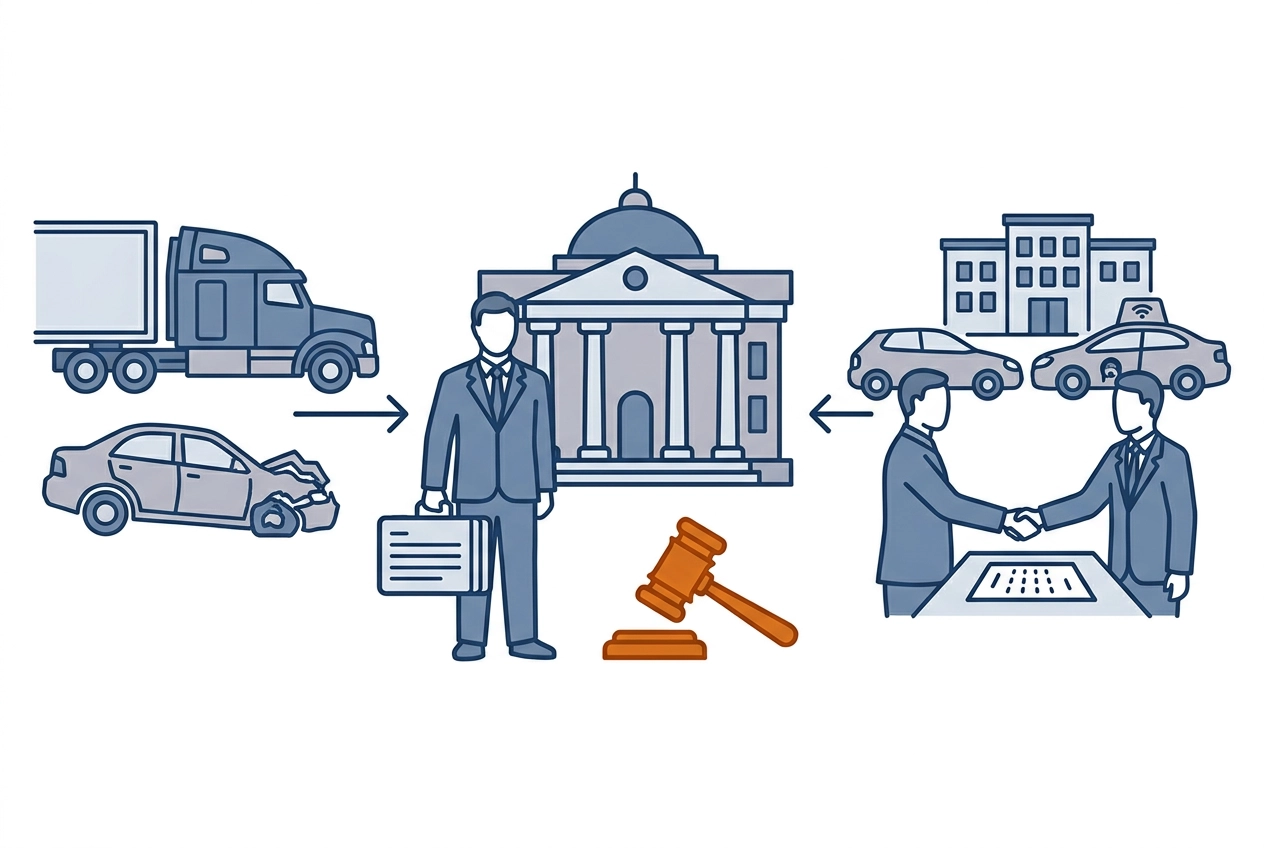
Not every personal injury attorney is built for the same fight. When you are hurt in a commercial truck wreck, an Amazon delivery accident, an Uber or Lyft crash, or a motorcycle or pedestrian collision, the attorney you choose can be the single most consequential decision you make. These cases carry hidden complexity, powerful corporate defendants, and layered insurance systems that reward aggressive legal preparation, not quick settlements.
This post breaks down why certain accident types demand a trial attorney’s approach, what the “settlement mill” model actually costs injured people, and how real negotiating leverage is built in the courtroom, not the conference room. You will learn how commercial trucking data, Amazon’s contractor structure, rideshare insurance phases, and juror bias against motorcyclists all affect your case outcome, and why the right attorney changes the number you actually take home.
The Settlement Mill Problem: What It Actually Costs You
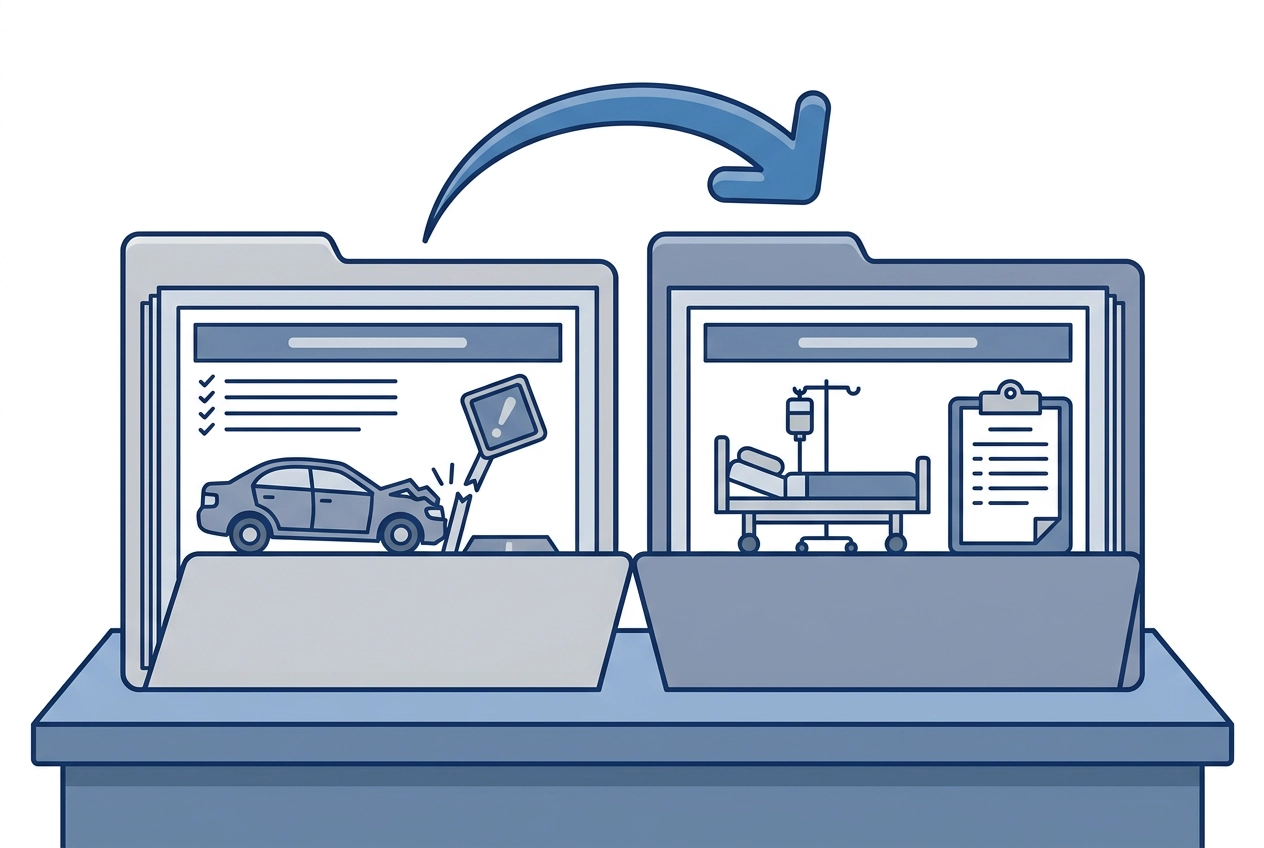
A settlement mill is a high-volume personal injury firm that advertises heavily, signs up as many clients as possible, and resolves cases as fast as possible by accepting whatever the insurance company offers. These firms rarely, if ever, walk into a courtroom. Stanford Law professor Nora Freeman Engstrom, who has studied these practices extensively, describes them as handling legal matters mechanically, doing the same thing for every client regardless of what the case is actually worth.
The fee math tells the real story. The attorney’s percentage is only half the equation: a lower fee rate means nothing if the underlying recovery is wrong because the firm never built credible trial pressure. Understanding what a 30% contingency fee actually means for your car accident settlement shows exactly how that arithmetic plays out on real case values.
Settlement leverage works because credible trial preparation signals genuine financial risk to the defense, a principle supported across practitioner sources. When your attorney has no courtroom record, the defense has no reason to offer full value.
Most victims never realize they were shortchanged. The case closes, the check arrives, and months later the medical bills are still coming. By then, it is too late.
Larry Forman charges 30% on car wreck and personal injury recoveries, and brings extensive jury trial experience to every case. That combination, lower fees and a lawyer the other side genuinely respects, is how victims net more money when it counts.
Why Commercial and Rideshare Accidents Are Not Like Ordinary Car Wrecks
The settlement mill problem gets worse when the accident involves a corporate defendant. Here is why that matters.
A standard two-car wreck is relatively contained: two private individuals, two personal auto policies, and a liability question that usually comes down to who ran the light. Messy, but manageable.
Commercial truck wrecks, rideshare accidents, Amazon delivery crashes, motorcycle injuries, and pedestrian cases are a different category entirely. These cases involve corporate defendants with dedicated legal teams and claims departments whose only job is to pay you as little as possible. You are not negotiating with another driver. You are negotiating against professionals who handle hundreds of claims a year.
The evidence gap makes this even more urgent. In a commercial truck case, critical data lives inside the truck itself: black box event recorders, electronic logging device records that capture location, engine hours, miles driven, and driving hours, and corporate maintenance logs. Rideshare cases carry similar urgency; app data documenting the driver’s status at the moment of impact can disappear quickly without a formal legal hold. The complexity compounds when a corporate defendant is involved.
These cases require subpoenas, expert witnesses, and a lawyer the other side genuinely fears taking to trial. Without that, the corporate machine wins by default.
Commercial Truck Wrecks: The Evidence Is in the Data
Commercial trucks are not like passenger cars when it comes to evidence. Federal law requires carriers to maintain ELD records, creating an auditable evidence trail that is extraordinarily valuable in a liability fight. By federal law, commercial trucks must carry electronic logging devices (ELDs) that automatically record date, time, location information, engine hours, miles driven, and vehicle motion status at regular intervals. This is governed by 49 C.F.R. Part 395, and compliance has been mandatory since December 2017.
Federal hours-of-service rules cap a commercial driver at 11 hours behind the wheel per shift. When ELD records show a driver exceeded that limit before your crash, you have documented federal regulatory violations, which is one of the strongest indicators of negligence available in any trucking case and can significantly increase case value.
Liability rarely stops with the driver alone. The trucking company, the cargo loader, and the truck’s maintenance contractor may each bear responsibility depending on what the records reveal. A blown tire from deferred maintenance is not the driver’s fault; it is the carrier’s.
Trucking company insurers are sophisticated, well-funded, and experienced at handling cases against settlement lawyers. They calibrate their offers based on who is across the table from them.
That calculation changes when a trial attorney is involved. Someone who can put a negligent driver and their employer in court and walk a jury through ELD violations, maintenance failures, and federal regulation breaches is not a comfortable opponent. That credibility reshapes the negotiation before a single hearing is scheduled.
Amazon Delivery Truck Accidents: A Liability Puzzle Worth Solving
Amazon delivery trucks look like a straightforward case. They have the logo on the side. Everyone knows who sent the driver. The liability should be obvious.
It is not.
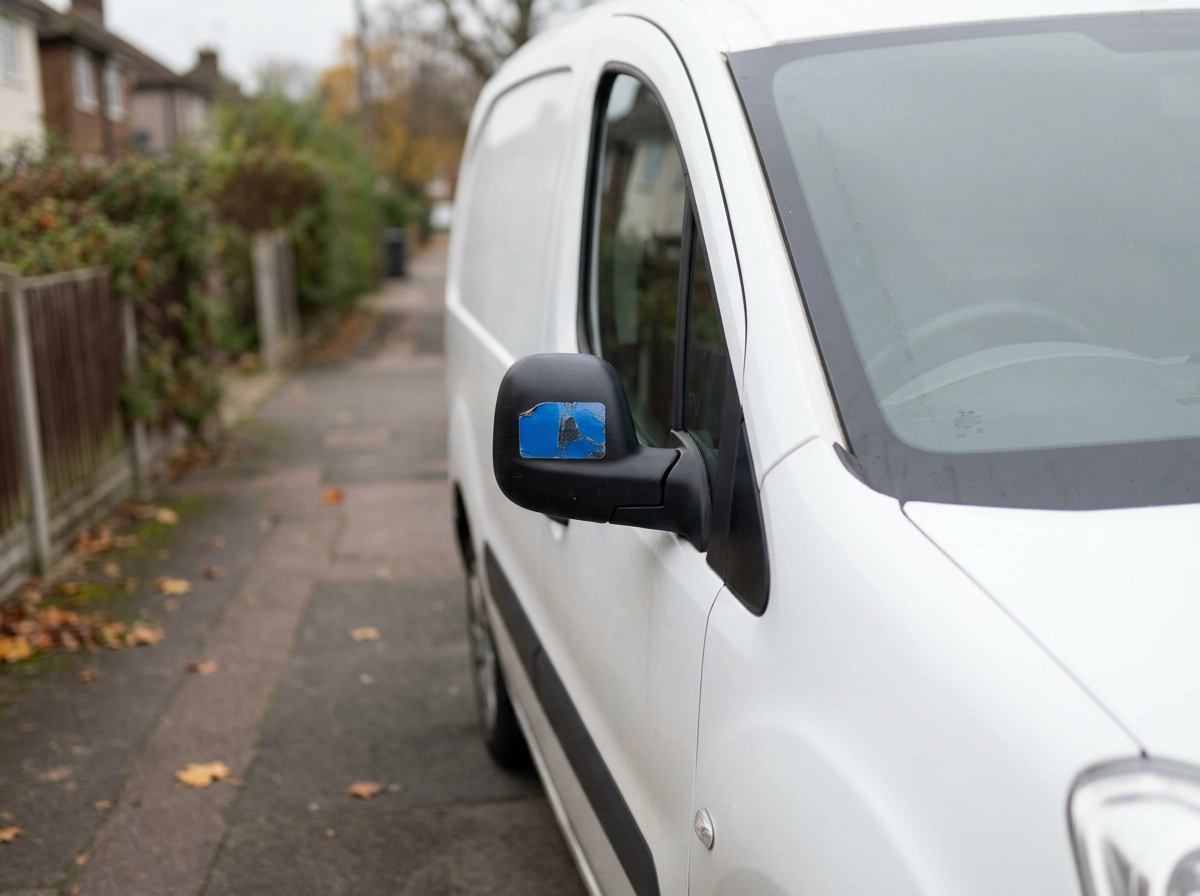
Amazon does not employ most of its delivery drivers directly. Instead, it contracts with hundreds of small businesses called Delivery Service Partners (DSPs), who hire the drivers, lease the vans, and run the routes. On paper, that puts the DSP between you and Amazon when something goes wrong.
But courts have been punching through that paper wall. A motorcycle accident case in South Carolina produced a $44.6 million jury verdict against Amazon after discovery revealed Amazon required drivers to use specific apps that tracked and pressured them, and that Amazon knew about the unsafe driving behaviors those apps created.
Amazon maintains substantial commercial auto coverage, and its claims are handled through a centralized corporate structure rather than a conventional third-party adjuster relationship. That means you are not negotiating with a traditional adjuster. You are negotiating against a corporate system built to protect Amazon’s money.
A settlement lawyer who does not understand this structure may accept the DSP’s insurance policy limit and close the file, leaving Amazon’s far deeper resources completely untouched.
Reaching Amazon requires aggressive discovery, subpoenas targeting the DSP-Amazon contracts and app data, and a lawyer the defense genuinely believes will take the case to a jury.
Uber and Lyft Accidents: Three Insurance Phases and a Corporate Shield
Rideshare accidents introduce a coverage puzzle that Amazon cases do not have: the answer to “which insurance applies” changes depending on what the driver was doing at the exact moment of the crash.
Three phases govern every rideshare accident. When the driver’s app is off, personal auto insurance controls and the company bears zero responsibility. When the app is on but no ride is accepted, Uber and Lyft each carry limited liability coverage of $50,000 per person and $100,000 per accident. Once a passenger is in the vehicle, a $1,000,000 commercial policy activates. That jump gives both companies a financial incentive to argue the accident happened during an earlier, cheaper phase.
Proving which phase applied requires access to app-state data that only the company controls. A settlement lawyer will often accept their characterization. A trial attorney subpoenas it.
The independent contractor classification compounds the problem. Uber and Lyft label drivers as contractors to limit corporate liability. But courts examine actual operational control, including route requirements, performance monitoring, and account deactivation authority, and that scrutiny can expose direct corporate responsibility regardless of the label.
Both companies run centralized claims systems built for speed. A quick resolution benefits them, not you. The same dynamic applies to e-scooter and micromobility crashes, where platform companies similarly process claims before most victims understand their rights.
When opposing counsel recognizes a lawyer who has tried dozens of cases, the file moves from internal claims management to outside litigation counsel. That reassignment signals a recalculated exposure, and a better settlement number typically follows.
Motorcycle and Pedestrian Accidents: Overcoming Built-In Bias
Rideshare companies at least hide behind insurance phase arguments. Motorcyclists and pedestrians face something more corrosive: bias that gets dressed up as fault.
Adjusters may assign partial fault to motorcyclists or pedestrians based on assumption rather than evidence, and under Kentucky’s comparative fault law (KRS 411.182), even an unsupported fault assignment directly reduces your recovery by the same percentage. A $500,000 case becomes a reduced offer, framed as if it reflects what the evidence shows.
It does not always reflect what the evidence shows. It reflects what went unchallenged.
A settlement lawyer who accepts that fault assignment without fighting it may cost a motorcyclist hundreds of thousands of dollars. A trial attorney disputes the attribution with physical evidence, accident reconstruction experts, and witness testimony. If you were injured on your motorcycle, the bias starts immediately, and so does the work required to counter it.
Pedestrian cases carry even higher stakes. These collisions frequently produce traumatic brain injuries, spinal damage, and amputations. Future medical care and lost earning capacity in those cases can dwarf whatever the insurer puts on the table first.
That gap between an insurer’s voluntary offer and a jury’s full assessment of damages is exactly why credible trial preparation is the most valuable tool in these cases.
Trial Leverage Is the Negotiation: How This Actually Works
That dynamic applies across every case type covered above. Here is what it looks like in practice.
Most commercial truck and rideshare cases do settle before trial. But the number on that settlement check is not random. It is a direct reflection of how much the defense fears what happens if the case actually goes to a jury.
Defense teams recalibrate their exposure when facing an attorney with a documented trial record, the credibility is built before anyone files a motion.
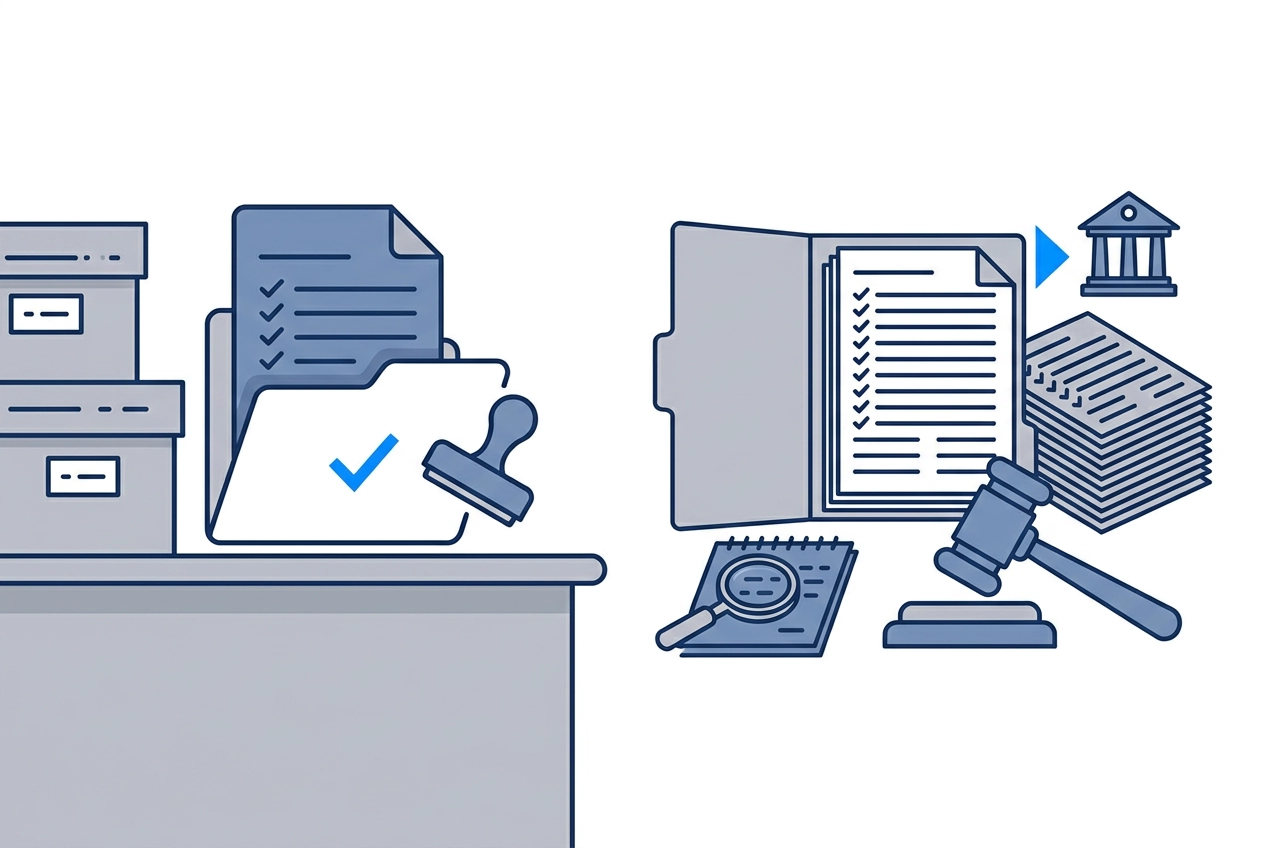
Trial preparation compounds that pressure at every step. Subpoenaed corporate records, retained expert witnesses, scheduled depositions, and filed motions are not paperwork. They are signals that the attorney is not bluffing, and each one typically pushes the insurer to recalculate its exposure upward.
The goal is rarely the courtroom itself. The goal is being so credibly prepared to walk into one that the other side finds a fair number before it ever comes to that.
What This Means for the Money You Actually Take Home
Better leverage produces a better number. But the number that actually matters is what lands in your pocket after fees.
As shown above, the firm’s 30% fee on a higher recovery consistently outperforms a 40% fee on an undervalued settlement.
Credentials matter too. SCOTUS licensure and 11 consecutive years on Super Lawyers tell opposing counsel something specific: this attorney does not settle because it is convenient. Defense teams recalibrate their offers when they recognize a lawyer who operates at that level.
What victims deserve is straightforward: a lawyer who charges fair fees, is genuinely unafraid of a courtroom, and prepares every case as if it will go to trial. That posture alone, without a single day in front of a jury, consistently produces better outcomes.
The same principle applies across serious injury cases. Even in situations far removed from a vehicle wreck, such as understanding when a hospital can be held liable for a doctor’s sexual misconduct, the core standard is identical: full accountability, fair representation, and a lawyer who does not back down.
The Right Attorney Changes the Outcome
The bottom line: commercial truck, Amazon delivery, rideshare, motorcycle, and pedestrian accidents put corporate defendants with professional legal teams on the other side of your case. That environment rewards one thing, which is a lawyer the other side genuinely fears taking to trial.
Three rules apply before you do anything else:
- Do not accept a first offer. Initial offers are designed to close your case cheaply, not to reflect what your case is worth.
- Do not hire a firm without courtroom experience. A lawyer who has never tried a case cannot credibly threaten one.
- Do not sign anything before a consultation. Once you settle, that door closes permanently.
The same principle that applies in truck and rideshare cases extends across complex vehicle litigation. If you want to understand why, read why hiring a trial lawyer for bus wreck cases changes everything.
Contact Larry Forman Law for a free consultation. No obligation, plain English, and a clear picture of what your case may actually be worth.

Conclusion
The cases above share one defining characteristic: a corporate defendant whose strategy depends on you hiring the wrong attorney. The difference between a settlement lawyer and a trial attorney shows up directly in what you take home. Contact Larry Forman Law today for a free, no-obligation consultation.