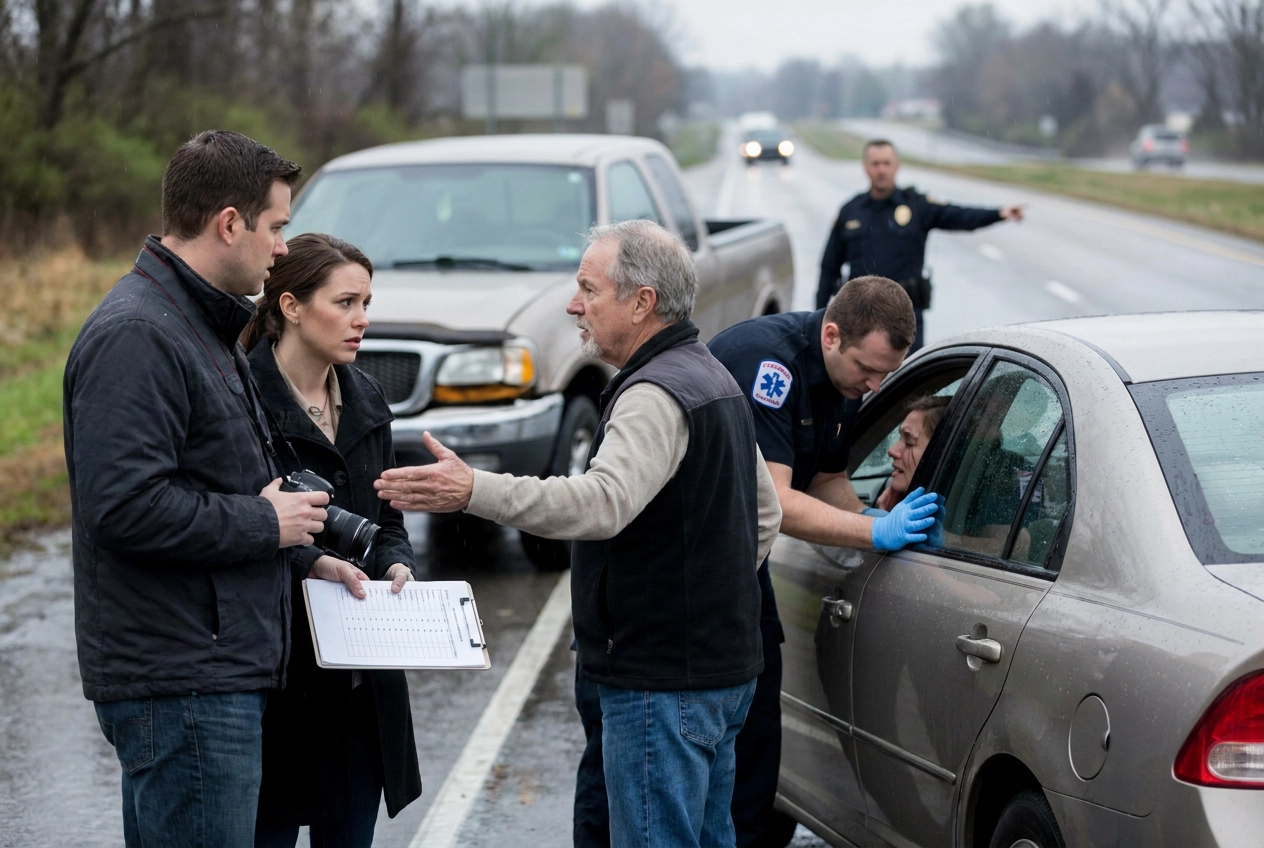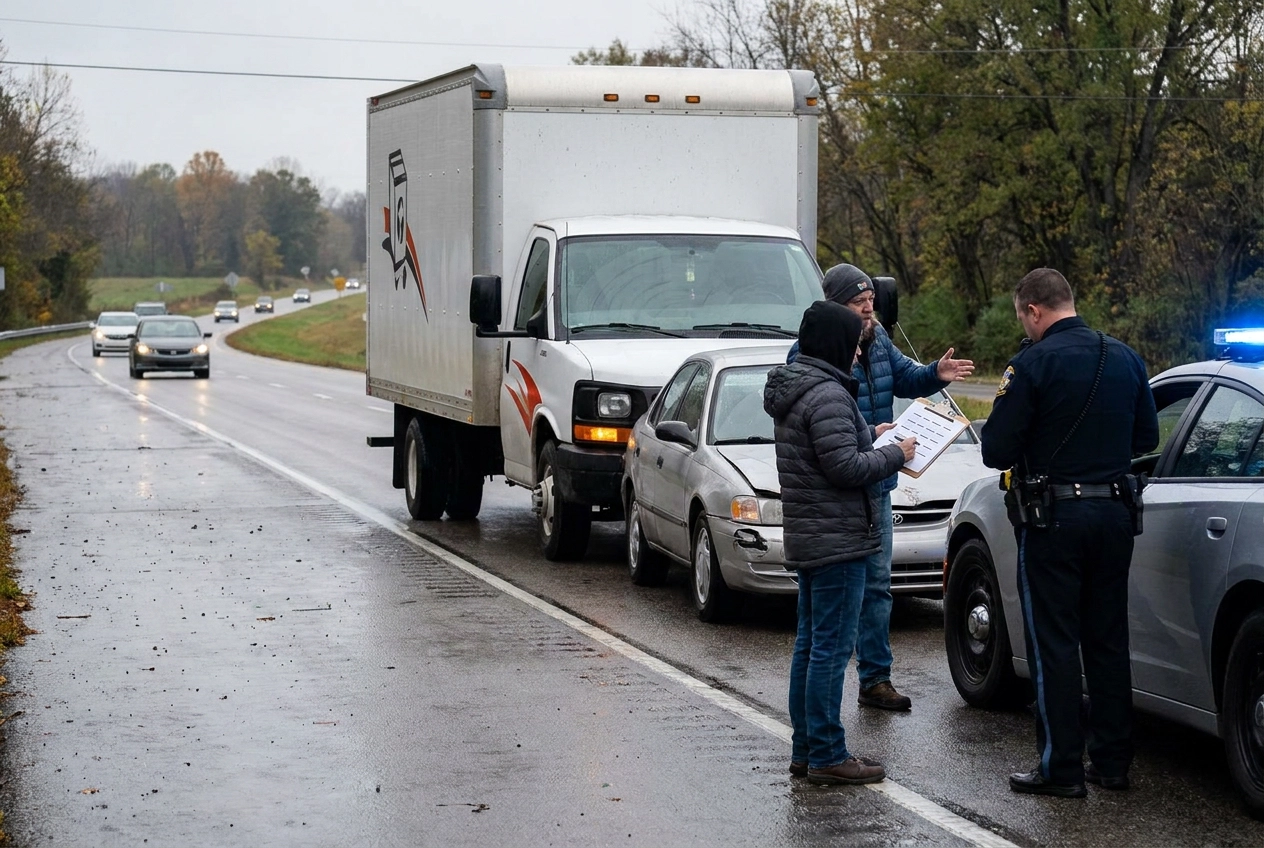
A U-Haul or commercial box truck can leave a smaller car with catastrophic damage, and the first question after a Louisville crash is often deceptively simple: who pays? The answer can involve the driver, a rental company, an employer, and multiple insurance policies. This box truck accident analysis walks through why these crashes raise complicated liability questions, then breaks down when a rental company, driver, or employer may be responsible under Kentucky law.
We will also cover rental insurance, your own auto policy, and Kentucky PIP; blind spots and wide turns that make these trucks dangerous; and the evidence you should gather and preserve immediately. We explain how Kentucky apportions fault when several parties are blamed and what KRS 304.39-230 actually says about deadlines, including the two-year deadline and how PIP payments can extend it. Because deadlines and fault rules can decide a claim, prompt legal review matters.
Reviewed by Larry Forman, Attorney. No fee unless we win. Call (502) 931-6788 for a free case review.
Why U-Haul and Box Truck Crashes Raise Complicated Liability Questions
A rental moving truck is not a big car. It is taller, longer, and heavier than most drivers have ever handled. On Louisville’s tight ramps, one-way streets, and crowded interstates, a misjudged turn or a late brake leaves no margin. Commercial box truck and delivery drivers working against tight schedules add speeding, tailgating, and rushed lane changes to the mix.
Weight changes the physics. A heavy truck needs far more distance to stop than a passenger car, which turns even a low-speed impact into a serious injury event. A box truck accident is unlike the typical two-car collision; commercial truck wrecks are fundamentally different, and a single crash can pull in the driver, the rental company, the driver’s employer, and several insurers, each with its own lawyer and its own version of events.
This guide explains how Kentucky law allocates fault among those parties, how rental counter coverage interacts with your own auto policy, what evidence proves the case, and the deadlines that control it.

Who Is Liable: The Driver, the Rental Company, or an Employer
Liability in a box truck accident follows negligence and control: who acted carelessly, and who had the authority and duty to prevent it. Start with three candidates: the driver, the rental company that owned or leased the truck, and the employer or business that put the driver on the road.
Documents decide who belongs in the claim: the rental agreement, driver’s license and driving record, and truck maintenance history. Multiple defendants are common. Under KRS 411.182, a Kentucky jury assigns a percentage of fault to each party, including the injured person. If you were rear-ended, fault may seem obvious, but who is at fault in a Kentucky rear-end collision explains why other parties can still be named.
Naming every responsible party early matters because each one’s share of fault affects the total recovery.
When a Rental Company Can Be Liable
Owning the truck is not enough. A rental company is typically liable only for its own negligence, not merely because its name is on the door.
Common theories include negligent entrustment, renting to a driver it knew or should have known was unfit, and failure to maintain brakes, tires, lights, or mirrors. Federal law, specifically 49 U.S.C. § 30106, addresses owner liability for rented vehicles, and it generally shields rental companies from liability based only on ownership.
Rental companies routinely argue the driver alone caused the box truck accident. That defense is why the truck’s condition, the rental screening file, and the maintenance record become central evidence, and why these cases call for a trial attorney rather than a quick settlement.
When the Driver Is Liable
A rental company’s own fault is only part of the picture. The driver’s negligence is usually the core of the claim. Standard negligence theories, speeding, following too closely, unsafe lane changes, and turning without first clearing the lane, drive these claims.
Admissions at the scene, dashcam footage, and phone records often decide this part of the case, so capture them before memories fade or data is overwritten. If the driver was impaired, distracted, or unlicensed, the same evidence supports claims against whoever handed over the keys.
Even when driver fault is obvious, an employer or rental company may carry far more insurance, so the person behind the wheel should not be the only named defendant.
When an Employer Can Be Liable for Its Driver
Under the respondeat superior doctrine, an employer is generally responsible for an employee’s negligence committed within the scope of employment. Kentucky courts apply this rule to commercial drivers making deliveries or running a route. The employer can also be directly liable for negligent hiring, training, or supervision, or for pressuring a driver to violate federal hours-of-service limits to finish a route.
Qualifying commercial trucks fall under FMCSA safety standards. Driver hours are governed by 49 C.F.R. Part 395, which covers motor carriers and their drivers; maintenance and recordkeeping carry separate parts. Logs, telematics, and inspection reports become the proof, which is why those records often decide the case.
When an employer argues the driver was an independent contractor, control over the work decides that question, not the label.
Pleading vicarious and direct liability together can reach additional insurance policies and leave more room to recover. Even a strong employer claim still leaves a jury dividing fault among everyone involved.
How Kentucky Apportions Fault When Several Parties Are Blamed
With several defendants named, Kentucky law decides how the blame is split. As noted above, KRS 411.182 distributes that fault among all parties, and that includes the claimant. Kentucky’s comparative-fault statute (KRS 411.182) does not bar recovery based on the claimant’s own percentage of fault; it reduces it. Each defendant then pays only its own allocated share. See how Kentucky juries actually decide fault percentages for the mechanics.
Expect every party to point elsewhere, and at you. Your speed, lane position, and reaction time in the final seconds will be scrutinized. Physical evidence, vehicle data, and witness statements gathered early keep those assigned percentages grounded in what actually happened rather than in the loudest lawyer’s version of events. That same evidence anchors the coverage fight that follows.
Rental Insurance, Your Own Auto Policy, and Kentucky PIP
Kentucky’s no-fault system pays first and assigns blame later. Basic PIP covers medical expenses and lost wages regardless of fault, up to the $10,000 limit per person per accident. Which policy pays first depends on the vehicle and the policies involved, so have an attorney review them.
Rental counter coverage is usually secondary and limited, and it typically protects the truck rather than your body. Read what you bought. Your own auto policy often follows you into a rental, and medical payments or uninsured and underinsured motorist coverage may respond too, which is one reason who pays after a Louisville interstate crash is rarely simple.
PIP does not pay pain and suffering. Only a fault-based claim against the driver, rental company, or employer reaches those damages.
Blind Spots and Wide Turns: Why These Trucks Hit Smaller Vehicles
PIP pays bills. The crash mechanics decide fault.
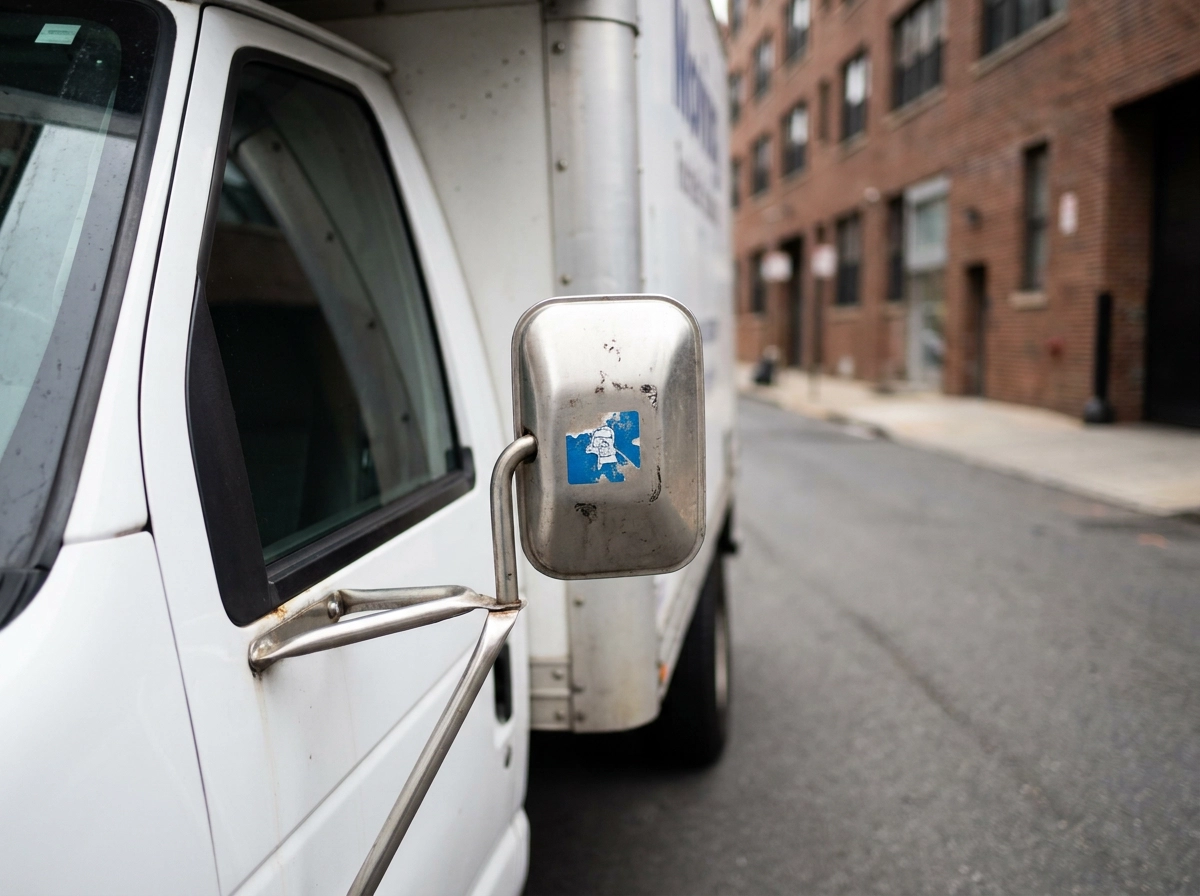
FMCSA warns that trucks have large blind spots: no-zones directly behind the box, ahead of the cab, and low along both sides, where a car can vanish from the driver’s mirrors. If you cannot see the driver’s face in the side mirror, assume the driver cannot see you.
Off-tracking is the second hazard. A long truck’s rear wheels cut inside the front wheels, so a right turn sweeps the box into the lane the truck needs.
Stopping distance compounds it. A loaded truck needs much more room to stop than a car. Unfamiliar, rushed drivers underestimate height, clearance, and braking.
Evidence to Gather After a Box Truck Accident
What you preserve in the first days after a box truck accident often decides how the rest of the case unfolds.
- Get the police report and crash number. Photograph the truck’s placards, DOT number, rental markings, license plate, and the damage to every vehicle before repairs begin.
- Collect witness names and phone numbers at the scene, and note nearby businesses or intersections whose surveillance cameras may cover the impact.
- Send a written preservation letter to the driver, the rental company, the employer, and their insurers demanding retention of driver logs, electronic logging device data, telematics, GPS, dashcam video, and maintenance records.
- Move urgently. Telematics and camera systems have limited retention windows, and a rental truck can return to service quickly, erasing physical evidence.
- Keep your own file complete with medical records and bills, wage loss documentation, injury photographs, and receipts for out-of-pocket costs.
For a fuller checklist, see what to do after a truck accident in Kentucky. With that evidence secured, the calendar becomes the next battleground.
Kentucky Deadlines: What KRS 304.39-230 Actually Says
With evidence preserved, the calendar governs. Kentucky’s general personal injury deadline is one year under KRS 413.140. For motor-vehicle claims, KRS 304.39-230 allows two years after the injury, the death, or the last PIP payment, whichever is later. That payment date is part of the same whichever-is-later test, so a later payment can extend the filing date.
If no PIP was paid, the two years generally run from the date of the injury.
Calendar the injury date and every PIP payment date, and have an attorney confirm the controlling deadline.
Where a Kentucky Truck Crash Attorney Fits Into the Claim
Once the deadlines are calendared, a box truck accident claim is built through investigation, not a demand letter: identifying every party, locating every policy that could respond, and locking down logs, telematics, and maintenance records before they are overwritten. Learn more about our Louisville truck accident lawyer services.
Larry Forman has tried 50+ jury trials and won 95% of them.
That record matters in a truck crash claim. Insurers evaluate a file on whether the lawyer will actually take the case to trial, so courtroom experience changes the leverage. A claim that will not be tried invites a low offer. No fee unless we win.
That work begins now, and the steps below show where to start.
Your Next Steps After a Box Truck Accident
Whether you handle this yourself or bring in counsel, the sequence below protects both your evidence and your deadlines.
- Identify every party. Name the driver, the rental company, and any employer, then locate every insurance policy that could respond.
- Send written preservation letters immediately for driver logs, telematics, and dashcam video.
- Treat your injuries. Get medical care, then document everything as it happens: symptoms, missed work, and out-of-pocket costs.
- Watch the calendar, the KRS 304.39-230 deadline turns on the injury date and every PIP payment date.
- Remember: PIP covers medical bills and wage loss, the fault-based claim carries pain and suffering.
No fee unless we win. Call (502) 931-6788 for a free case review.
Conclusion
A U-Haul or box truck accident in Kentucky can involve multiple at-fault parties, strict deadlines under KRS 304.39-230, and PIP limits that stop short of pain and suffering, all reasons the claim requires careful, early action.
Do not face the insurers alone. Call (502) 931-6788 for a free case review. Our team protects your evidence, your deadlines, and your right to fair compensation. No fee unless we win.