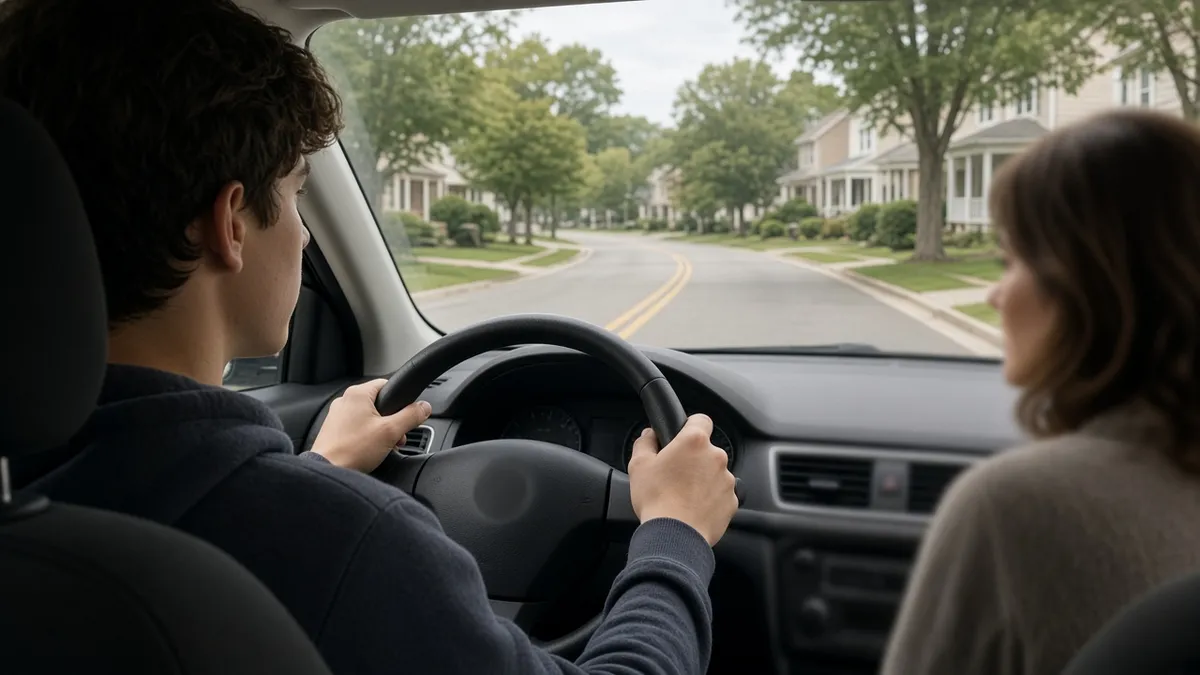
Kentucky teens can start driving with a permit at 15, and new drivers are far more likely to crash than experienced ones. A teen driver accident raises questions most families have never thought about: Who pays when a 16-year-old causes a wreck? Can the parents be sued? What if your own teen was the one hurt? Here’s how Kentucky law answers them.
Key takeaways: teen driver accident
- Kentucky teens may apply for an instruction permit at 15 (KRS 186.450).
- Permit and intermediate drivers under 18 can’t drive from midnight to 6 a.m. or carry more than one unrelated passenger under 20, with limited exceptions.
- The adult who signed a minor’s license application can be jointly liable for the minor’s driving negligence (KRS 186.590).
- Drivers under 18 can’t use a phone or other personal communication device while driving (KRS 189.294).
Kentucky’s teen driving rules
Kentucky uses a graduated licensing system. A teen may apply for an instruction permit at 15 (KRS 186.450). A permit holder must drive with a licensed adult 21 or older in the front seat. To move to an intermediate license, a teen must be at least 16, hold the permit for 180 days and log at least 60 hours of supervised driving, 10 at night (KRS 186.452).
- Curfew: no driving from midnight to 6 a.m. for permit and intermediate drivers under 18, unless there’s good cause like school or work.
- Passengers: no more than one unrelated passenger under 20 unless a driving instructor is present.
- Phones: drivers under 18 can’t use a personal communication device while driving (KRS 189.294).
Breaking these rules can be evidence of negligence in a crash case. See distracted driving accidents.
When parents are liable for a teen driver
Under KRS 186.590, the negligence of a driver under 18 is imputed to the person who signed the minor’s license application, making that person jointly liable for the damages. That rule doesn’t apply while proof of financial responsibility (insurance) is maintained for the minor. The same statute also makes a vehicle owner who knowingly lets a minor drive, or anyone who gives a minor a car, jointly liable.
In practice, the family’s auto policy is usually the first source of payment. When the damages are larger than the policy limits, these rules can matter a lot.
If a teen driver hit you
Your own PIP pays first for medical bills and lost wages, regardless of fault. See how Kentucky PIP works. Then a claim goes to the teen’s family insurer. If their coverage isn’t enough, your underinsured motorist coverage may help.
If your teen was hurt
A teen injured as a passenger or driver has the same rights as an adult, but a settlement for a minor often needs court approval. See our guide to Kentucky minor settlements. Minors also get extra time for some deadlines, but don’t rely on that without advice.
Deadlines
Most Kentucky car crash injury claims must be filed within two years of the crash or the last PIP payment (KRS 304.39-230(6)). See our Kentucky statute of limitations guide.
Teen driver accident FAQs
At what age can you drive in Kentucky?
You can apply for an instruction permit at 15 and an intermediate license at 16 after holding the permit for 180 days.
Are parents responsible if their teen causes a car accident in Kentucky?
They can be. Under KRS 186.590, the adult who signed the minor’s license application can be jointly liable, unless insurance meeting state requirements is maintained for the minor. An owner who lets a minor drive can also be liable.
Can teen drivers have passengers in Kentucky?
Drivers under 18 with a permit or intermediate license can’t carry more than one unrelated passenger under 20, unless a driving instructor is present.
Who pays if a teen driver hits me?
Your PIP pays first, then the teen’s family auto policy. Your underinsured motorist coverage may help if their limits are too low.
Hurt in a crash with a teen driver?
We’ll sort out PIP, the family’s policy and your underinsured coverage so nothing is left on the table. Call (502) 931-6788 or request a free consultation. No fee unless we win.
This post is general information about Kentucky law as of October 2026, not legal advice.