Imagine waking up from surgery only to discover that your doctor operated on the wrong body part, left a surgical instrument inside your body, or performed a procedure meant for someone else entirely. These are not rare accidents or acceptable risks of medical care. They are called “never events,” and as the name suggests, they should never happen.
Yet they do happen, and when they do, patients are often left confused, in pain, and unsure of their legal rights.
This post is designed to walk you through everything you need to know about surgical never events, from understanding what they are and why they occur, to knowing who can be held legally responsible and what compensation you may be entitled to recover. You will also learn how Kentucky law specifically addresses these cases and why having the right attorney on your side can make all the difference.
Whether you or a loved one has been harmed by a preventable surgical error, or you simply want to understand your rights as a patient, this guide will give you clear, honest, and actionable information every step of the way.
What Is a “Never Event” in Healthcare?
A never event is a serious, preventable medical error so fundamentally avoidable that it should, by definition, never happen in a hospital. The term traces to the National Quality Forum, which introduced it in 2002 to describe what its chief executive called the “most egregious” failures in patient safety. Today, the Leapfrog Group serves as the primary authority tracking never events, alongside The Joint Commission and the Centers for Medicare and Medicaid Services (CMS). All three organizations maintain separate lists, require hospitals to report these errors, and use the data to measure institutional accountability.
The phrase carries real legal weight. When a never event occurs, hospitals are generally presumed to have deviated from the accepted standard of care. That presumption matters because it shifts how a malpractice case is built and argued.
Never events are not the same as medical complications. A complication can occur even when a surgeon performs a procedure correctly. A never event, by contrast, represents a failure of basic safety protocol, not an unavoidable risk of surgery. Operating on the wrong body part, leaving a surgical instrument inside a patient, or performing a procedure on the wrong person entirely are not bad-luck outcomes. They are breakdowns in systems that exist precisely to prevent them.
For patients, this distinction is significant. Because never events fall outside the category of acceptable procedural risk, they are not a legal gray area. The classification makes it substantially easier to establish that something went wrong and who bears responsibility, which is why identifying a never event early is one of the most important steps in any surgical malpractice case.
The Most Common Surgical Never Events
Four specific failures account for the majority of surgical never events documented in U.S. hospitals, and each carries direct legal consequences under Medical & Institutional Negligence frameworks.
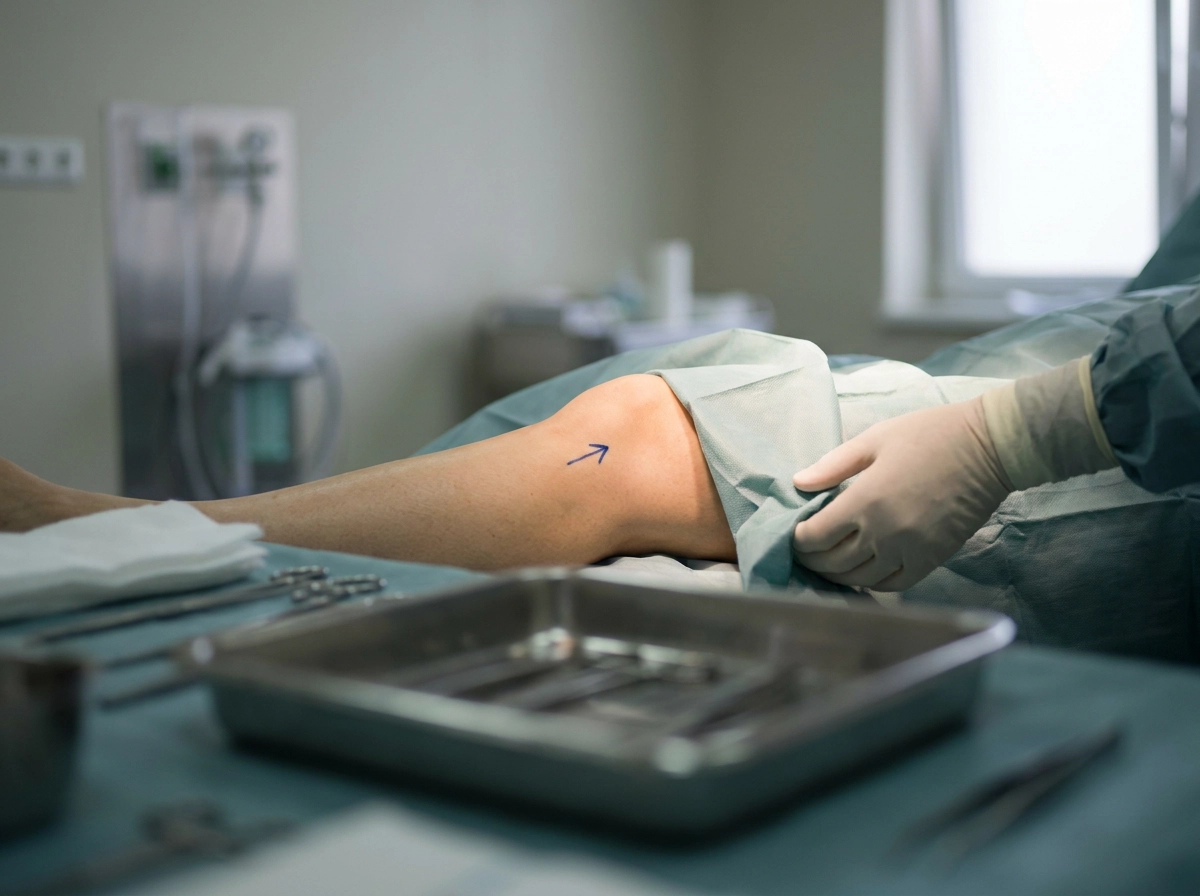
Wrong-site surgery occurs when a surgeon operates on the wrong body part, the wrong side of the body, or the wrong spinal level. CMS identifies this as a core never event and initiated three Medicare coverage proceedings specifically targeting wrong-surgery cases. It is among the most documented and legally actionable errors a hospital can commit.
Wrong-patient surgery results from a patient identification failure, meaning a surgical procedure is performed on an individual who was never supposed to have that operation. This is a distinct category from wrong-site surgery and represents a complete breakdown of basic intake and verification protocols.
Retained foreign objects involve surgical sponges, instruments, gauze, or needles left inside a patient’s body after wound closure. Medicare stopped reimbursing hospitals for complications arising from retained foreign objects beginning in October 2008. Critically, these injuries are often not discovered for months or years after surgery. That delayed discovery is legally significant, because it triggers the discovery rule for calculating your statute of limitations deadline, a concept covered in detail later in this post. If you have experienced complications following surgery, the attorneys at What Happens After a Defective Medical Device Injury can offer relevant context on how latent harm affects your legal options.
Unintended puncture or laceration refers to accidental perforation of an organ, vessel, or tissue that had no involvement in the planned procedure, resulting in serious harm.
Patients can research a specific hospital’s reported history with these events through the Leapfrog Group’s public hospital safety database before or after a procedure.

Who Is Legally Responsible When a Never Event Occurs?
Knowing what went wrong is only part of the battle. Understanding who is legally responsible determines whether you can recover.
Hospital liability does not depend solely on what the surgeon did. Under the doctrine of corporate negligence, hospitals have an independent legal duty to maintain safe operating systems, verify staff credentials, and enforce surgical safety protocols. When a never event occurs, the institution itself may have failed, regardless of which individual held the scalpel.
Liability in these cases typically falls across three parties:
- The operating surgeon bears direct negligence for the hands-on error
- The hospital faces institutional liability for systemic failures, inadequate protocols, or negligent credentialing
- The surgical team (nurses, anesthesiologists, surgical technicians) may share liability when their role contributed to the error
One powerful legal principle frequently applies here: res ipsa loquitur, Latin for “the thing speaks for itself.” When an error is so obvious that negligence is self-evident, like a surgical sponge left inside a patient’s abdomen, a court can infer negligence without requiring extensive expert testimony in some circumstances.
Hospitals routinely respond to never event claims by attributing the outcome to unavoidable complications or a patient’s pre-existing risk factors. An experienced trial attorney can dismantle this defense using CMS reporting data and internal hospital incident records obtained through discovery.
Vicarious liability adds another layer. Even when a negligent surgeon holds independent contractor status, the hospital may still be held responsible if you reasonably believed that surgeon was a hospital employee. This same principle of institutional accountability appears in other contexts too, including cases where a hospital can be held liable for a doctor’s misconduct. The facility’s responsibility extends further than most patients realize.
How Kentucky Law Handles Surgical Never Events
Once liability is established, the clock starts running. Kentucky imposes a one-year statute of limitations on medical malpractice claims, measured from the date the injury occurred or was discovered. That is among the shortest filing windows in the country, and missing it almost always ends the case permanently.
The discovery rule provides critical relief in surgical never event cases. For retained foreign objects or latent injuries, the one-year clock does not begin on the day of surgery. It begins when the patient knew, or reasonably should have known, that the injury was caused by the procedure. A surgical sponge discovered two years post-operation still opens a valid window from that discovery date, not the original surgical date.
Federal CMS reporting rules require hospitals to document never events. Those records are not sealed from patients or their attorneys. In a malpractice claim, a hospital’s own federally mandated incident report can become powerful evidence confirming both that the event occurred and that the facility classified it as a preventable failure.
Certain patients receive additional time. Minors and individuals under a legal disability may qualify for extended filing windows under Kentucky law. Because these exceptions are fact-specific, consult an attorney immediately rather than assuming extra time applies.
One misconception costs patients their claims: believing that a hospital’s apology, internal investigation, or goodwill payment resolves the matter. It does not. Kentucky law preserves your right to pursue full compensation regardless of any voluntary hospital response. Just as Kentucky’s wrongful death law controls who can file and who gets paid after a fatal injury, the rules governing surgical malpractice claims are technical and unforgiving of delay.
What Compensation Can You Recover After a Never Event?
Once you understand Kentucky’s tight filing deadlines, the next critical question becomes: what is your claim actually worth?
Economic damages form the financial foundation of any never event claim. These include the cost of corrective surgeries, additional hospitalizations, rehabilitation, and ongoing care you would not have needed otherwise. Lost wages during recovery count, and if your ability to earn a living is permanently diminished, loss of future earning capacity is recoverable as well. Learn more about the full scope of what you can recover in a medical malpractice lawsuit.
Non-economic damages address what cannot be itemized on a medical bill: physical pain and suffering, emotional distress, loss of enjoyment of life, and loss of consortium for family members whose relationships were disrupted by your injury. These are real, compensable harms under Kentucky law.
In cases of gross recklessness or willful disregard for patient safety, Kentucky law under KRS § 411.184 also permits punitive damages, designed not to compensate you but to punish the institution and deter future misconduct.
The fee structure you choose directly affects your take-home recovery. A firm charging 33 to 40% in contingency fees on a $500,000 settlement takes $165,000 to $200,000. At 30%, that figure drops to $150,000, putting up to $50,000 more in your pocket from the identical outcome.
Beyond fees, the full scope of damages is routinely undervalued when patients settle without trial-ready counsel. Hospital insurers negotiate aggressively because they know most attorneys will accept early offers rather than face a jury. That risk calculus shifts entirely when your attorney is genuinely prepared to try the case.
Why Surgical Never Event Cases Demand a Trial-Ready Attorney
Knowing what your case is worth is only half the equation. The other half is having an attorney who can actually compel a hospital to pay it.
Hospital defense teams and their malpractice insurers are among the most well-resourced opponents in civil litigation. They retain specialized defense counsel, prepare detailed case strategies, and build their files as if every case will reach a jury, even when settlement is the likely outcome. They do this because preparation is leverage, and they count on plaintiff attorneys who lack the same resolve.
That calculus changes completely when the attorney across the table has tried 50+ jury trials and genuinely welcomes a courtroom verdict. Hospitals and insurers negotiate differently with a trial lawyer they know will not fold. A settlement-mill attorney, by contrast, signals willingness to accept whatever is offered. That difference in posture translates directly into settlement dollars.
Expert witnesses amplify that leverage further. Never event cases require credentialed surgical experts who can establish the deviation from standard care, patient safety specialists who can trace systemic hospital failures, and medical economists who can project the full lifetime cost of harm. A trial-ready attorney maintains those relationships before a case demands them.
Larry Forman brings exactly this profile. He is licensed to practice before the United States Supreme Court, has been selected for Super Lawyers 11 consecutive years (2016 to 2026), holds Trial Masters certification, and carries a 95%+ win rate across more than 50 jury trials. As explained in why hiring a trial lawyer as your elevator injury lawyer changes everything, verified courtroom experience reshapes what defendants are willing to offer.
The fee structure reinforces every advantage. At a 30% contingency, compared to the industry standard of 33% to 40%, clients of Larry Forman Law retain more of their recovery from the same outcome, stronger representation and a better net result.
Steps to Take After a Surgical Never Event
Knowing the right steps to take immediately after a surgical never event can protect both your health and your legal rights. Act on each of the following in order.
Get an independent medical evaluation first. See a physician who has no affiliation with the hospital where the error occurred. An unaffiliated provider can document your injuries objectively, without any institutional interest in minimizing what happened. That documentation carries significant weight as evidence.
Preserve every record. Request your complete medical file, including surgical notes, operative reports, imaging studies, and any internal incident reports. Kentucky law requires hospitals to produce these upon request, and under KRS 411.167(5), if a hospital delays producing records, your filing deadline is extended accordingly. For a step-by-step walkthrough of this process, see how to request medical records after suspected medical malpractice.
Do not sign anything the hospital offers. Release forms, “goodwill” payments, and early settlement documents are frequently drafted to waive your right to full compensation. No matter how reasonable the language sounds, consult a malpractice attorney before signing.
Start a personal journal today. Write down your symptoms, complications, pain levels, and how the injury affects your daily life. Contemporaneous notes, written close in time to the events they describe, carry real evidentiary value that reconstructed timelines cannot replicate.
Contact a malpractice attorney without delay. Kentucky’s one-year statute of limitations is among the shortest in the country. Early engagement gives your attorney time to gather evidence, consult the required medical expert under KRS 411.167, and build the strongest possible case before deadline pressure forces any compromise.
Your Right to Recover Is Real and Legally Protected
Once you have taken those protective steps, the path forward becomes clear: you have legal rights, and Kentucky law is built to support them.
Surgical never events are not unfortunate accidents. They are preventable failures, the product of broken protocols and systemic lapses, and the law assigns clear accountability to the hospitals and surgical teams responsible. Calling one an “accident” is a defense strategy, not a fact.
Kentucky law provides a meaningful pathway to full compensation, including medical costs, lost income, pain and suffering, and more. But that pathway has a hard deadline. With a one-year statute of limitations, delay is the single greatest threat to your recovery. The clock may already be running.
The quality of your attorney directly determines how much you keep. Hospitals retain experienced defense teams who prepare every case for trial, even when they plan to settle. A lawyer with 50+ jury trials, SCOTUS licensure, and Trial Masters certification commands a fundamentally different settlement conversation than one who rarely sees a courtroom. At 30% contingency, compared to the industry standard of 33% to 40%, Larry Forman Law also puts measurably more of any recovery directly into your hands.
If you or someone you love may have experienced a surgical never event, do not wait. Contact Larry Forman Law today for a free consultation. The difference between acting now and acting later could be the difference between full recovery and none at all.
Conclusion
Surgical never events are preventable failures with legal consequences, and you have the right to hold negligent parties fully accountable. Kentucky law provides a clear path to compensation, but the one-year statute of limitations means time is not on your side. The attorney you choose matters enormously; a trial-tested lawyer commands far better results than one who settles from weakness. And with Larry Forman Law’s 30% contingency rate, more of your recovery stays where it belongs: with you.
If you or a loved one has experienced a surgical never event, the worst thing you can do is wait. Take your protective steps, preserve your evidence, and get experienced legal counsel in your corner immediately. Justice is available, but only if you pursue it. Contact Larry Forman Law today for a free consultation and take the first step toward the full recovery you deserve.