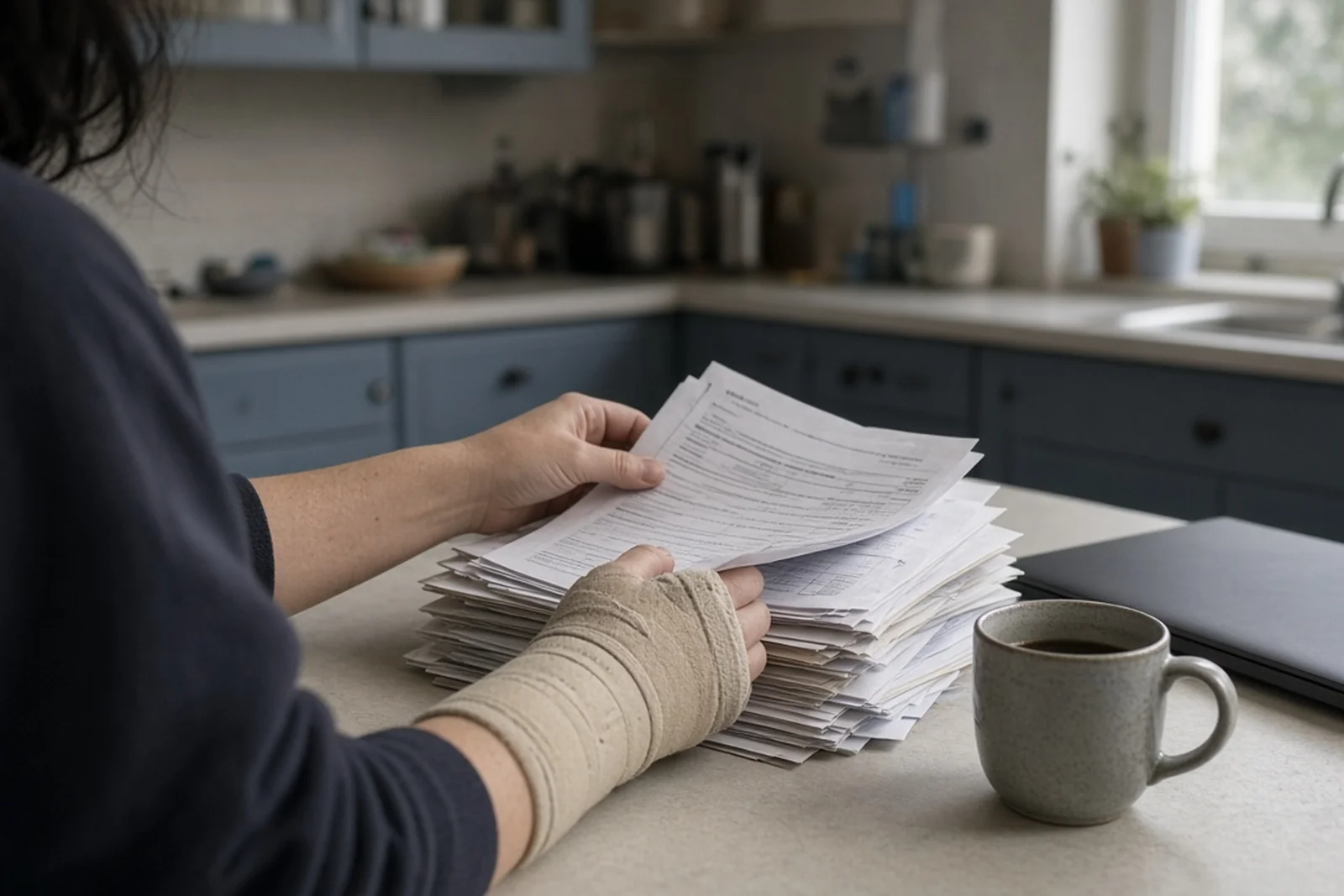
You filed a personal injury claim. You are in pain, your life has been turned upside down, and you deserve fair compensation. But right now, at this very moment, an insurance defense attorney may already be scrolling through your social media profiles looking for anything that can be used against you.
This is not a scare tactic. It is standard practice in personal injury litigation, and it catches injured people off guard every single day.
A smiling photo at a family dinner. A brief status update saying you are “doing better.” A friend tagging you at a birthday party. Any one of these completely innocent posts can be pulled out of context, presented to a jury, and used to argue that your injuries are not nearly as serious as you claim.
In this guide, you will learn exactly how insurance companies monitor your accounts, how defense attorneys twist ordinary posts into damaging evidence, and what steps you need to take right now to protect your claim. Understanding these risks before you post another thing could make all the difference in the outcome of your case.
Why Your Social Media Is Already Being Watched
If you have an active personal injury claim, your social media profiles are almost certainly being reviewed right now.
Insurance adjusters are trained to pull claimant profiles within days of a reported accident. This is not an occasional tactic reserved for suspicious claims; it is a standard workflow applied across the industry. The National Association of Insurance Commissioners has documented that insurers formally analyze social media content, including post quantity, topics, activity patterns, and geolocation data, as part of claims evaluation strategy.
Industry language frames this as a tool to “improve claims outcomes.” In plain terms, that means finding reasons to pay you less.
No court order is required. Anything visible to the general public on your profiles is fair game for defense teams before a lawsuit is ever filed. Insurance companies monitor social media across all publicly visible content the moment a claim is reported.
The core vulnerability is the gap between how your life looks online and how seriously you are actually injured. A smiling photo, a check-in, a single comment, none of these show pain levels, functional limitations, or what your day cost you physically. Defense teams are specifically trained to exploit that gap.
Most injured people never see this coming because the monitoring begins immediately and silently. By the time you hire an attorney, screenshots may already exist.

How Innocent Posts Get Twisted Against You in Court
Knowing you’re being watched is one thing. Understanding exactly how a routine post becomes a weapon in a deposition room is another.
Defense attorneys don’t need you to confess anything. They need a single image, stripped of every fact that explains it, presented to a jury that will decide what it means in three seconds.
Scenario 1 (Auto Accident): Six weeks after a rear-end collision, you post a smiling family photo from a cousin’s birthday dinner. You were in pain all night but pushed through it for your kids. At your deposition, defense counsel projects that photo and asks: “Does this look like someone suffering from debilitating neck pain?” Your honest explanation sounds rehearsed. The jury sees the smile.
Scenario 2 (Slip and Fall): Three months after a grocery store fall injures your lower back, you post a beach photo from a pre-planned trip you couldn’t cancel without losing thousands of dollars. Defense counsel introduces it during cross-examination as proof you were “well enough to vacation,” omitting that you spent most of the trip flat on the hotel bed.
Scenario 3 (Tagged Content): A friend tags you in a gym check-in from an event you attended briefly and left early. You didn’t post it. Didn’t approve it. It still gets introduced as evidence of physical activity inconsistent with your claimed limitations.
The timeline doesn’t protect you, either. Posts made months after the accident are treated exactly like posts made the same week. Defense teams conduct rolling reviews throughout the entire claims process, not just at filing.
Deleting posts also carries real risk. Courts have sanctioned plaintiffs for destroying evidence, and deleted content frequently survives through screenshots others took, cached data, and platform metadata. “I’ll just delete it later” is not a strategy.
What Going Dark Actually Means and When to Start
Now that you have seen what a single post can do in a deposition room, here is exactly what “going dark” means in practice and when it must begin.
Going dark means a complete suspension of active posting across every platform you use: Facebook, Instagram, X (Twitter), TikTok, Snapchat, LinkedIn, and any others. Not a pause. Not a reduction. A full stop for the entire duration of your active claim.
The clock starts the day of your accident. Not the day you hire an attorney, not the day you file a claim. Insurance companies begin reviewing public profiles early in the claims process, meaning, as noted above, screenshots may already exist before you speak with a lawyer.
Do not deactivate your accounts. Stopping posts and deactivating are two different things. Deactivation can trigger spoliation arguments in litigation, suggesting you were hiding evidence. It also does nothing to erase content that has already been captured.
Going dark also means stopping all visible activity, not just original posts. Likes, comments, shares, and reposts are visible and examinable. Being tagged by someone else carries the same risk as posting yourself.
Brief your inner circle immediately. A spouse posting a family dinner photo, a friend tagging you at a cookout, a sibling sharing a group picture from a holiday: each carries identical risk to a post you made yourself. They need to know not to tag you or post about shared activities until your claim is resolved.
Before you adjust, delete, or restrict anything on your existing profiles, call your attorney first. Evidence preservation rules apply to social media the same way they apply to text messages and emails, and the wrong move made without legal guidance can create its own legal problem.
What Privacy Settings Actually Protect (And What They Do Not)
Many injured people switch their profiles to “Friends Only” immediately after an accident, believing that step protects them. It does not.
Privacy settings reduce casual public visibility. They do not create legal protection once litigation is underway. Courts have consistently ruled that setting a profile to private does not establish a reasonable expectation of privacy that shields content from civil discovery. In Hinostroza v. Denny’s, Inc., defendants successfully obtained all social media account information spanning five years before and after the accident, regardless of how the plaintiff’s privacy settings were configured. A private profile is not a sealed record.
Defense counsel can go further still. Through a formal subpoena served directly on the platform, attorneys can compel production of content and metadata that goes well beyond what any follower could see: deleted posts, private messages, check-in history, and timestamps. The American Bar Association’s guidance on social media evidence discovery confirms that platforms are subject to this process, and the George Mason Law Review’s analysis of modern discovery documents requests spanning years of private communications across multiple account types.
There is also a vulnerability that requires no court process at all. Any mutual contact who saw your content before you adjusted your settings can produce a screenshot. That image can be introduced as evidence without a subpoena, a judge’s approval, or any notice to you.
Platform settings compound this problem. Privacy configurations change with every major update; content that was restricted under one version of a platform’s settings may become visible under a later release.
The only content that cannot be discovered is content that does not exist. Privacy settings are a secondary measure. Not posting is the only reliable one.
The Most Damaging Mistakes Injured People Make on Social Media
These are the mistakes defense counsel counts on.
Describing the accident online. Venting frustration or recounting what happened, even once, creates a written record defense attorneys will compare against every later statement. Any inconsistency becomes a credibility weapon. The same caution applies before giving a recorded statement to an insurer.
Posting about treatment or recovery. “Feeling better after PT today” sounds harmless. To defense counsel, it argues your injuries are resolving faster than your claim suggests. Positive framing is evidence, not protection.
Forgetting automatic fitness data. Strava, Apple Health, Fitbit, and similar apps often post activity summaries to connected social profiles without a manual action. A 2,000-step day recorded during your “debilitating” injury period can surface in discovery.
Checking in at active locations. A tag at a hiking trail, theme park, or sporting event implies physical capacity regardless of how little you actually did. Defense counsel presents the location, not your explanation of it.
Casual comments that reveal too much. Replying “just got back from Nashville” on a friend’s public post discloses travel and physical capacity without you realizing it. Comments are discoverable evidence just as posts are.
Assuming past posts no longer matter. If you made any of these mistakes before hiring an attorney, stopping now still matters. Every post you do not create going forward is content defense counsel will never have. The universe of usable material stops growing the moment you go dark.
Who you hire matters. An attorney with real trial experience understands exactly how these mistakes reduce what you recover and advises you before the damage is done.
Inside the Deposition Room: How Defense Attorneys Use Your Posts

Knowing the mistakes is one thing. Watching them detonate inside a deposition is another.
By the time you sit down for your deposition, opposing counsel has already organized the screenshots by date.
The exchange looks something like this:
Defense counsel slides a printed screenshot across the table. “This is your Instagram post from March 14th. You are smiling and appear to be standing at a concert. Is that you in the photo?”
Whatever you say next, the damage has already started. The image is now part of the record, and the jury will eventually see it.
The goal is not to prove you lied. It is to introduce doubt about consistency. Even a small crack in consistency is enough to reduce settlement value and erode jury sympathy, which is exactly the leverage defense counsel needs. Learn more about what a Kentucky injury case is worth.
Even a completely truthful response creates risk. Telling the jury, “I was in terrible pain that night, but I did not want to ruin my daughter’s event,” is honest. It is also abstract. The smiling photo is vivid. A vivid image can leave a stronger impression than verbal testimony, which is precisely why defense counsel introduces photos early and often.
The only reliable defense is eliminating the evidence before it exists. No post means no screenshot, no deposition question, and no moment where a jury watches you explain yourself against a photo that tells a different story.
How an Experienced Trial Attorney Protects Your Claim From the Start
Avoiding that deposition trap requires more than willpower. It requires guidance from someone who has watched social media evidence land in front of a real jury and seen the damage it does.
Larry Forman brings 50+ jury trials to every personal injury case. That firsthand Kentucky courtroom experience means he knows exactly how defense counsel introduces a screenshot, frames a question, and lets a photo do its damage before a claimant says a word. That knowledge shapes the advice he gives clients at the very first meeting, before a single harmful post is made.
Early counsel matters because mistakes on social media cannot be undone. Screenshots exist. Cached data persists. The attorney who tells you this on day one is protecting something real.
Fee structure matters too. Most firms take 40 to 50 percent of your recovery. Larry Forman Law charges 30 percent, meaning every dollar of claim value you protect from social media damage actually reaches you.
SCOTUS-licensed and named to Super Lawyers for 11 consecutive years (2016 to 2026), Larry Forman carries courtroom credibility that insurance companies weigh when deciding whether to fight or settle. His broader experience across complex and high-stakes personal injury matters reflects a practice built for serious outcomes, not quick settlements.
Protect Your Claim Before You Post Anything Else
The steps below are your action checklist. Complete them in order, starting today.
- Stop posting across every platform immediately. Facebook, Instagram, TikTok, Snapchat, LinkedIn, X, all of them. Do not resume until your claim is fully resolved.
- Brief your family and close friends now. A tagged photo, a shared check-in, or a group picture from a family event creates the same exposure you are working to avoid.
- Do not treat privacy settings as protection. In Johns v. United States (S.D. Fla. 2023), a federal court ruled that privacy settings do not exempt social media content from discovery when physical or mental health is at issue.
- Call a trial attorney before you touch your existing profiles. The wrong move made without legal guidance can create a spoliation problem that damages your case far more than the post itself would have.
- Choose an attorney with real courtroom experience. Social media credibility damage is a live trial threat. Understanding what verified credentials like SCOTUS admission and Super Lawyers recognition actually mean for your case helps you distinguish trial attorneys from settlement processors before you sign anything.
The most expensive post you ever publish might be the next one. Go dark now.
Conclusion
Your social media activity is not private, not protected, and not irrelevant to your personal injury claim. Defense attorneys are watching, courts are compelling disclosure, and a single post can unravel months of legal work. The strategy is straightforward: go dark immediately, brief the people around you, and treat your existing profiles as live evidence rather than personal outlets.
Do not wait until deposition prep to think about this. The damage usually happens long before you ever enter a courtroom.
If you have been injured and have not yet spoken with a trial attorney, that call should happen before your next login. An experienced attorney will protect your claim from the first conversation forward, not just at the finish line.
Your case is worth protecting. Take the steps that keep it intact.