
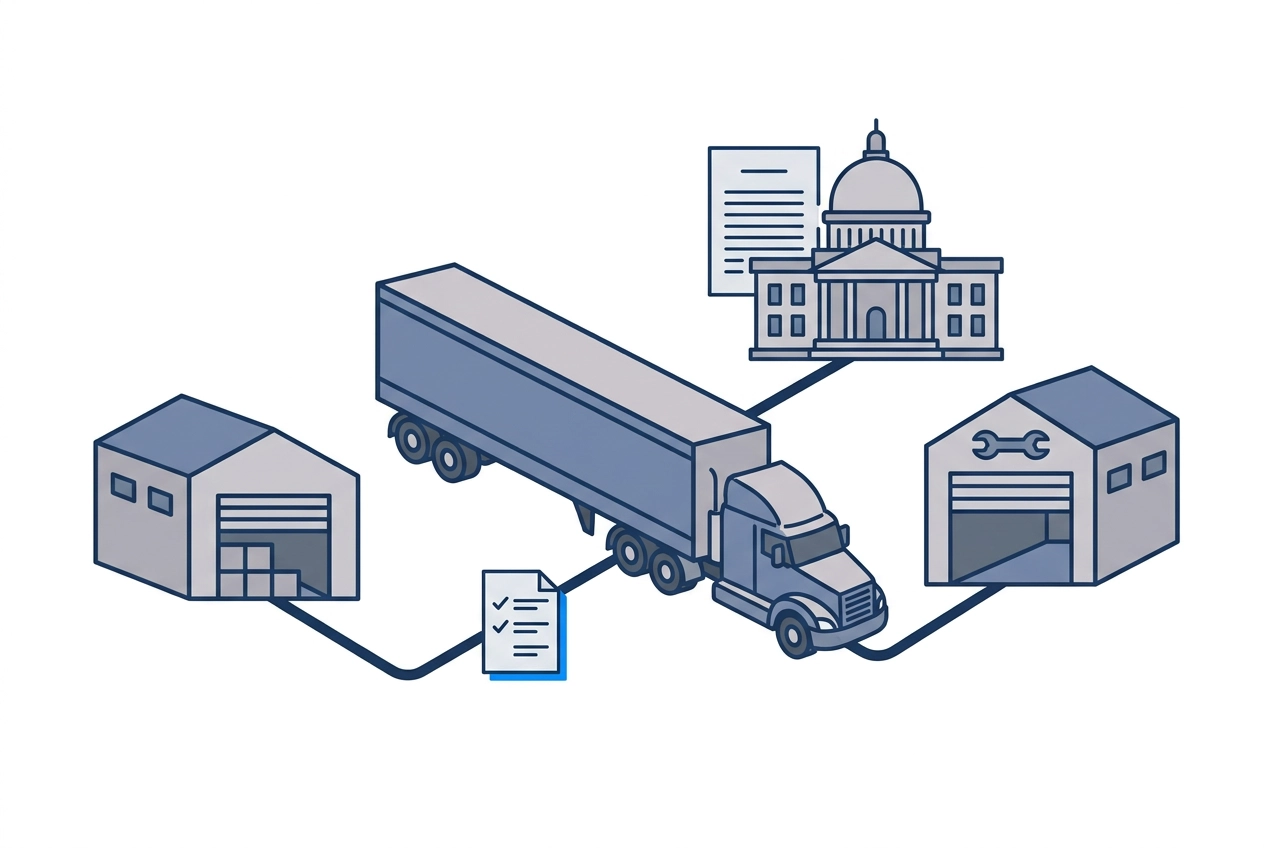
Most people assume a serious crash is a serious crash. But when a commercial truck is involved, that assumption can cost you everything.
Commercial truck crashes operate in an entirely different legal world from standard car accidents. Federal regulations, multiple liable parties, mandatory data recorders, and strict compliance requirements transform what looks like a straightforward collision into a complex, high-stakes legal case. The driver is rarely the only responsible party. The trucking company, cargo loaders, and even equipment manufacturers may all share liability under rules that simply do not exist in ordinary car crash cases.
This post breaks down exactly why that distinction matters. You will learn how federal FMCSA regulations govern commercial trucking, who can actually be held liable when a truck causes a crash, and what kinds of electronic evidence, including black box data and electronic logging records, can make or break a case. You will also understand why settling a truck crash claim requires fundamentally different legal strategies, leverage points, and courtroom experience than resolving a typical two-car collision. If you or someone you know has been involved in a commercial truck crash, this analysis is your starting point.
Commercial Trucks Operate Under a Separate Legal Universe
When a car crash happens, the legal analysis centers on state traffic laws and the behavior of one or two drivers. When a commercial truck crash happens, that framework is supplemented by a parallel body of federal law that most people never knew existed.
Commercial trucks are governed by the Federal Motor Carrier Safety Administration (FMCSA), which administers comprehensive regulations codified at 49 CFR Parts 300 through 399. These rules apply exclusively to commercial motor carriers and have no equivalent in private passenger vehicle law. Your personal auto insurance policy, state DMV records, and local traffic ordinances are simply irrelevant to this regulatory framework.
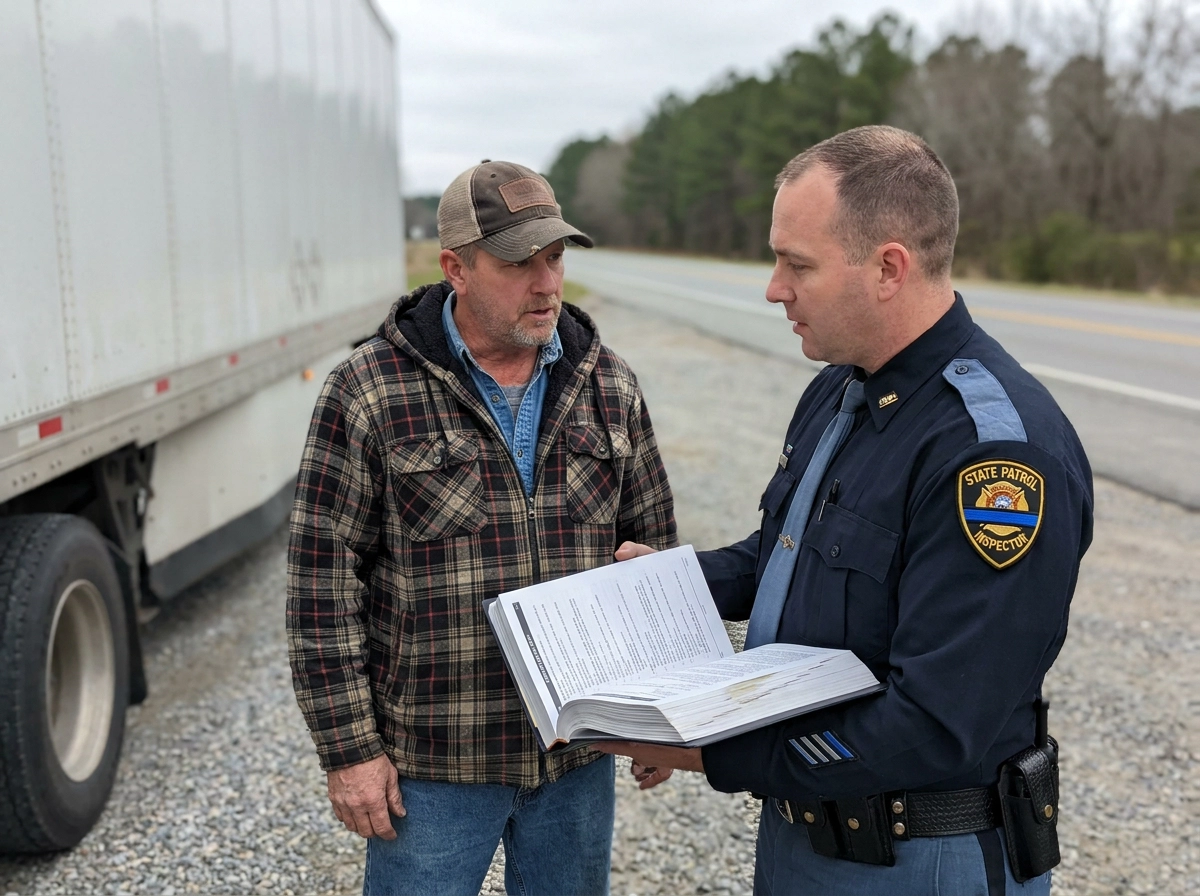
49 CFR Part 390 establishes baseline operational standards covering accident recordkeeping, employee coercion prohibitions, vehicle marking requirements, and penalties for falsifying records. Every requirement generates its own compliance record, and those records become evidence in litigation.
That evidentiary distinction is where the practical consequences begin. A car crash investigation asks what one driver did wrong. A truck crash investigation must ask whether the carrier, driver, and vehicle were each in compliance with dozens of overlapping federal mandates before the first deposition is ever taken.
The stakes of non-compliance are significant. FMCSA violations that Kentucky has adopted by regulation can support negligence per se arguments — a doctrine that lets an attorney argue the defendant broke the law, not merely made a bad decision. That is a fundamentally stronger legal position than arguing general carelessness.
This is why working with a commercial vehicle crash lawyer who understands how to make the company behind the truck pay matters from the start. Federal regulations create both the liability pathways and the evidentiary tools. Knowing how to use them is what separates a thorough truck crash investigation from a routine car crash claim.
Who Can Be Held Liable in a Truck Crash? It Is Not Just the Driver
That federal regulatory framework sets the stage for a question that surprises most people who have never been involved in a commercial truck crash: who, exactly, is legally responsible when an 80,000-pound truck causes serious harm?
In a car crash, the answer is almost always one or two drivers. In a commercial truck crash, there are up to five distinct categories of potentially liable parties, each with independent legal exposure.

The truck driver is the most obvious starting point. A driver can be held personally liable for negligent operation, including fatigue, distraction, speeding, and impairment. But in many cases, the driver’s individual liability represents only a fraction of the total exposure.
The trucking company or motor carrier carries its own independent liability on two separate tracks. First, under the legal doctrine of respondeat superior, an employer is responsible for an employee’s actions taken within the scope of employment. Second, the FMCSA confirms that carriers cannot transfer regulatory compliance responsibility to drivers, and carriers remain liable for Hours of Service violations even when they claim they did not require or permit them. Carriers can also face direct liability for negligent hiring, inadequate training, and pressuring drivers to violate safety rules.
Cargo loaders and third-party logistics providers can be liable when improperly secured loads shift during transit and cause a crash, even when the cargo company had no contact with the driver that day. Federal cargo securement rules create a direct liability pathway for these parties. Similar principles apply to other transportation contexts, as explored in who is liable in a Kentucky bus wreck.
Vehicle maintenance providers and equipment manufacturers can be liable when mechanical failure, defective parts, or improper repairs contribute to a crash, requiring entirely separate investigation tracks from driver and carrier liability.
This multi-defendant structure produces a critical practical outcome: a thoroughly investigated truck crash case can access more liability pathways and more potential defendants than a car crash case, a structural difference with real financial consequences.
How Trucking Companies Create Their Own Liability
The trucking company’s liability does not begin and end with what its driver did in the final seconds before a crash. Carriers are independently subject to FMCSA regulations and can face direct legal accountability for systemic failures that existed long before the collision occurred.
Negligent hiring is one of the most powerful theories. Federal regulations under 49 CFR Part 382 require carriers to verify drug and alcohol testing compliance before a driver ever operates commercially. When a carrier skips that process, ignores a driver’s prior license suspensions, or overlooks a documented history of moving violations, it has placed an 80,000-pound vehicle in unqualified hands. That failure belongs to the company, not just the driver.
Negligent entrustment goes further. When a carrier knows a driver has accumulated violations or carries a disqualifying medical condition and continues putting that driver on the road, the consequences belong to the company. That corporate accountability, established through federal compliance obligations, is independent of what the driver did in the final seconds.
Carrier pressure creates a third category. Dispatch communications demanding faster delivery, incentive pay tied to mileage, and scheduling that physically cannot be completed within legal Hours of Service limits can all establish institutional negligence. The legal narrative shifts from one tired driver to a company that built fatigue into its operations by design.
Discovery is where these theories become evidence. Truck crash litigation can surface internal compliance audits, dispatcher text messages, driver qualification files, and safety review records that reveal exactly what the company knew and when. That kind of institutional paper trail simply does not exist in car accident cases. Similar principles apply in other contexts too, where courts have found that a larger organization can bear direct responsibility for harm caused within its walls, as explored in cases examining when institutions are held liable for the misconduct of individuals they employ or supervise.
The carrier, in short, is rarely a passive bystander.
Electronic Logging Devices and the Hours of Service Evidence Trail
FMCSA Hours of Service regulations under 49 CFR Part 395 cap consecutive driving hours and mandate rest breaks before a driver can continue. These limits exist because fatigued driving in an 80,000-pound vehicle is not a minor risk; it is a documented public safety catastrophe with predictable, catastrophic consequences.
Since the ELD mandate took effect under the MAP-21 Act, every covered commercial truck must be equipped with an Electronic Logging Device. The ELD automatically records when the truck is moving, how long the driver has been on duty, and whether Hours of Service limits are being respected, creating a tamper-resistant digital record that cannot be quietly rewritten after a crash.
Modern ELDs may capture additional telematics data beyond driving hours, depending on the device and carrier configuration. That combination can produce a meaningful behavioral profile of what the driver was doing in the minutes and hours leading up to impact.
The evidentiary power of that profile is significant. If an ELD record shows a driver exceeded Hours of Service limits at the moment of the crash, that data point links regulatory non-compliance directly to driver fatigue and, by extension, directly to causation. No comparable record exists in a car crash case.
Federal regulations require carriers to retain ELD records for specified periods; an attorney’s litigation hold letter creates a legal obligation to preserve this data. An experienced truck crash attorney sends that letter to the carrier immediately after a crash, before any records can be lost.
Black Box Data: What the Truck’s Own Computer Records About the Crash
ELD data tells the story of a driver’s behavior over hours. The black box tells the story of the final seconds.
Commercial trucks are equipped with Event Data Recorders (EDRs), the devices commonly called black boxes, that capture critical vehicle data in the moments immediately before, during, and after a collision. EDRs capture dynamic vehicle data in the moments before and during a crash — the precise elements recorded vary by manufacturer and vehicle type, but typically include crash-sequence mechanics rather than behavioral history. Where ELD data builds a behavioral profile over a shift, EDR data isolates the precise mechanical sequence of the crash itself.
That distinction matters enormously in court. Accident reconstruction experts use EDR data to answer specific questions: Did the driver brake? How hard? At what speed? Was any evasive action attempted? Those answers are objective and come directly from the truck’s own systems, not from a witness who may have seen only a blur, and not from skid marks that weather erases within days.
The evidentiary power becomes clear in concrete terms. When black box data shows a truck operating above the speed limit with no brake application recorded before impact, that data output is more devastating than almost any witness testimony a defense team can counter. It eliminates the “unavoidable accident” argument entirely.
EDR data requires technical interpretation by qualified accident reconstruction specialists before it can be presented as courtroom evidence. That translation step is technical, expensive, and non-negotiable for effective presentation.
This is one reason preserving all available evidence after a serious crash is so critical from the first hours. An attorney who handles only car accidents will typically lack the working knowledge to obtain EDR data through proper legal channels, retain the right specialists, and present those findings in a way that holds up under cross-examination.
Cargo Securement Rules and Why Shippers Can Be Liable for Crashes
Black box data tells you what happened in the final seconds. Cargo records tell you what was wrong before the truck ever left the loading dock.
Under 49 CFR Part 393, Subpart I, FMCSA regulations specify exactly how freight must be loaded, blocked, braced, and tied down. These rules bind everyone who touched the load: the driver, yes, but also the warehouse crew, the third-party logistics company that arranged the shipment, and the individual shipper that tendered the freight.
When secured cargo fails, the consequences extend far beyond the truck itself. A shifting load can tip a trailer, trigger a jackknife, or scatter debris across multiple lanes, injuring drivers who never saw the truck coming and had no connection whatsoever to the carrier or its driver.
That reach is why cargo liability matters so much strategically. A third-party logistics company, a warehouse operator, or an independent shipper may be an entirely separate corporate entity from the trucking company, carrying its own liability insurance policy. Identifying that entity as a defendant can add a distinct coverage layer to the case, one that simply would not exist if the case stopped at the carrier.
Building that liability requires documentary evidence. Attorneys pursuing cargo securement claims examine:
- Bills of lading, which identify who tendered the freight and under what terms
- Loading manifests and weight tickets, which establish what was loaded and whether weight limits were respected
- Pre-trip inspection records, which show whether the driver or carrier signed off on an improperly loaded vehicle
That chain of documents reveals who loaded the vehicle, what standards applied to them, and precisely where compliance broke down.
None of this exists in a car crash case. A private vehicle has no shipper, no loading manifest, and no federal securement regulation governing its cargo. The liability pathway is unique to commercial trucking.
Mandatory Drug and Alcohol Testing and What Violations Reveal About Carriers
Cargo securement liability shows how federal compliance records open doors to defendants that simply do not exist in car crash cases. Drug and alcohol testing compliance works the same way, but the institutional paper trail it creates cuts even deeper.
Under 49 CFR Part 382, every commercial motor carrier must maintain a mandatory testing program covering six distinct categories: pre-employment, random, post-accident, reasonable suspicion, return-to-duty, and follow-up testing. Each test generates a record. Each record is subject to federal retention requirements. Together, they form a compliance history that belongs to the carrier, not law enforcement.
When that compliance history reveals failures, the consequences go beyond regulatory penalties.
A carrier that skipped required random testing, allowed a driver with a failed result to keep driving, or falsified testing documentation has not merely broken a rule. It has created evidence of institutional negligence that can materially affect both litigation strategy and the damages a plaintiff pursues. Juries respond very differently to a company that made one bad decision than to a company whose records show a pattern of ignoring known risks.
Post-accident testing is especially significant in litigation. Section 382.303 mandates testing after crashes meeting specific severity thresholds. When a carrier fails to conduct that required testing after a serious wreck, the failure itself becomes evidence. An experienced attorney can argue to a jury that the carrier had both the obligation and the opportunity to test, and chose not to, raising legitimate questions about what that test might have shown.
This is where the contrast with car crash cases becomes stark. In a standard impairment investigation, law enforcement must order a field sobriety test or blood draw, and the evidence lives or dies on what happened roadside that day. In a commercial truck crash, an attorney can subpoena years of carrier testing records and establish a documented pattern of allowing impaired driving long before the crash date.
That institutional paper trail changes settlement leverage fundamentally.
Federal Insurance Requirements Versus Direct Negligence: Why Both Matter
The compliance paper trail extends beyond testing records into the financial architecture of the case itself.
Congressional legislation in the early 1980s established minimum liability insurance requirements for commercial motor carriers under 49 CFR Part 387. Those federal minimums apply to for-hire general freight carriers, passenger carriers operating in interstate commerce, and hazardous materials carriers. Federal law establishes minimum coverage levels that apply specifically to commercial motor carriers — a mandatory floor that does not exist in standard private auto insurance. Carriers transporting hazardous materials are subject to elevated requirements beyond those that apply to general freight. When a crash involves a chemical spill or fuel fire, that elevated mandatory coverage means greater insurance availability for victims from the outset.
Federally mandated insurance and direct negligence are two separate tracks, and both belong in your case.
Many victims assume they are limited to filing an insurance claim against the carrier’s policy. That assumption costs money. Direct negligence claims against the driver, the carrier, the cargo loader, and the maintenance provider operate completely independently of the insurance framework. They can be pursued simultaneously. As described in earlier sections of this post, each of those parties carries its own potential liability based on federal compliance failures, and when a driver’s negligence puts you in the hospital, we put them in court alongside every other responsible party.
The critical distinction is this: insurance claims are constrained by policy terms, while direct negligence claims operate on a separate legal track — an important reason to pursue both channels simultaneously.
An attorney experienced in commercial truck litigation pursues both channels at once. The federal compliance record built through ELD data, maintenance logs, and testing files creates leverage in the insurance negotiation while simultaneously building the negligence case for trial.
How FMCSA Violations Change Settlement Leverage Compared to Car Crash Cases
That insurance framework establishes the coverage landscape. What determines how much of that coverage you actually recover comes down to leverage, and this is where truck crash cases separate decisively from car crash cases.
In a standard car crash, settlement leverage is bounded by a narrow set of variables: medical bills, lost wages, pain and suffering documentation, and which driver was at fault. The negotiation has a ceiling, and that ceiling is usually the at-fault driver’s policy limits.
Commercial truck crash cases operate differently. Every documented FMCSA violation uncovered during investigation adds a distinct pressure point. An Hours of Service violation links regulatory non-compliance directly to driver fatigue. A failed drug test raises impairment as a causation argument. A cargo securement failure pulls a new defendant into the case. A gap in maintenance records suggests the carrier had prior knowledge that the vehicle was unsafe. Each finding does not just strengthen the case; it expands it.
Carriers and their insurers understand this dynamic clearly. FMCSA violation records are discoverable in civil litigation, and institutional negligence findings documented through FMCSA records can materially strengthen a plaintiff’s litigation position and alter settlement dynamics. That exposure changes how defense teams approach settlement discussions from the first conversation.
As described throughout this post, the regulatory evidence trail — ELD records, black box data, testing files, and cargo documentation — is time-sensitive and must be preserved through immediate legal action. That work is what builds maximum leverage before any settlement discussion begins.
Understanding what a lower contingency fee actually means for your recovery matters here too; on a larger truck crash case, retaining more of your award has real financial consequences. That is why trial experience and genuine willingness to litigate are not optional credentials in this practice area.
What Steps Matter Most in the Immediate Aftermath of a Truck Crash
Knowing what leverage exists in your case means nothing if the evidence needed to build that case disappears before your attorney can act. What you do in the hours immediately following a truck crash directly determines what recovery is possible.
Get medical attention first. Even if you feel functional at the scene, seek documented treatment that same day. Insurance adjusters routinely argue that gaps between a crash and first treatment prove the injuries were minor or unrelated. A continuous medical record closes that argument before it starts.
Do not give a recorded statement to any insurance company without an attorney present. The trucking carrier’s adjusters arrive trained and experienced. Their goal is to capture language that limits the carrier’s liability. A single offhand comment about feeling “okay” or “not seeing it coming” can be used to reduce your recovery significantly.
Photograph everything you can before leaving the scene. Vehicle positions, debris fields, road markings, tire tracks, and your visible injuries are evidence that vanishes within hours. Road crews clean up. Vehicles get moved. Your photos may be the only record of the physical scene as it actually existed at the moment of impact.
Contact a truck crash attorney immediately. The statute of limitations is one reason; the more urgent reason is the litigation hold letter. That letter legally compels the carrier to preserve ELD data, black box records, maintenance logs, and driver qualification files. Without it, carriers may lose that data through routine operations. Once it is gone, it cannot be recovered.
Understand that the other side is already working. The carrier’s attorneys and adjusters begin their investigation within hours of the crash. For step-by-step guidance on what to do after a car crash applies here too, but in truck cases, the speed and complexity of the opposing response make experienced legal representation from day one the single most important protection you have.
Why Trial Experience Matters More in Truck Crash Cases Than in Car Crash Cases
Once you’ve taken those immediate steps, the quality of your legal representation becomes the single largest variable in what you ultimately recover.
Trucking companies and their insurers do not assign these cases to general practitioners. They retain specialized defense firms with deep FMCSA regulatory knowledge, certified accident reconstruction experts, and attorneys who have tried commercial truck cases before juries. Victims who walk into that fight without equivalent firepower are at a structural disadvantage from day one.
Settlement mills are poorly matched to this litigation. High-volume personal injury firms built around quick car crash settlements lack the infrastructure these cases demand: sustained multi-defendant investigation, retained technical experts to decode ELD and black box data, and the willingness to carry a complex case all the way to trial. Carriers recognize a firm that will settle cheap, and they price their offers accordingly.
The real leverage comes from deposing dispatchers, safety managers, and maintenance supervisors; commissioning expert reports on electronic logging and black box evidence; and filing motions that place documented FMCSA violations directly in front of the jury. That work is expensive, time-consuming, and requires an attorney who knows exactly what to look for.
Larry Forman Law brings 50-plus jury trials and admission to practice before the United States Supreme Court. That courtroom record signals to carriers and their defense teams that a low-ball offer will be tested in front of a jury, not quietly accepted.
The fee structure matters on larger recoveries. A 30% contingency fee means more of your recovery stays with you. That difference on a substantial truck crash award translates directly into more money in the victim’s pocket, not the attorney’s.
The Bottom Line: Commercial Truck Crashes Demand a Different Kind of Legal Representation
Everything covered in this post leads to one conclusion: a commercial truck crash is a categorically different legal event, not simply a larger version of a car crash.
The FMCSA regulatory framework creates a distinct evidentiary universe. ELD records, black box data, drug testing compliance files, cargo securement documentation, and driver qualification files are all discoverable, and any one of them can determine the outcome of a case. That evidence does not exist in a standard car crash. It exists here, and it must be obtained before it disappears.
As described throughout this post, the regulatory evidence trail — ELD records, black box data, testing files, and cargo documentation — is time-sensitive and must be preserved through immediate legal action.
The evidence window is not forgiving. If you or someone you love was injured in a commercial truck crash, the right attorney is not a settlement-volume firm that negotiates fast and takes a large percentage of your recovery. The right attorney is one who knows federal trucking regulations, has stood before juries in complex cases, and charges fees that leave more money in your pocket.
Larry Forman Law brings SCOTUS-licensed trial representation, 50-plus jury trials, a strong case win rate, and a 30 percent contingency fee structure to every commercial truck crash case. That combination of trial credibility and lower fees is not common. In a case this complex, it matters.
Conclusion
Commercial truck crashes are not bigger car crashes. They are legally, procedurally, and financially different in ways that determine whether victims recover what they deserve or settle for a fraction of it.
The framework explained above — federal regulations, multi-party liability, and time-sensitive electronic evidence — determines whether victims recover what they deserve.
You were seriously injured. The trucking company already has lawyers working to limit what you recover. You deserve representation that matches that effort.
Call Larry Forman Law today. With 50-plus jury trials, a 30 percent contingency fee, and a genuine willingness to take your case to trial, you get serious representation that keeps more money where it belongs: with you.